

Article
C. Raja Mohan, Darshana M. Baruah
{
  "authors": [
    "C. Raja Mohan"
  ],
  "type": "legacyinthemedia",
  "centerAffiliationAll": "dc",
  "centers": [
    "Carnegie Endowment for International Peace",
    "Carnegie India"
  ],
  "collections": [],
  "englishNewsletterAll": "ctw",
  "nonEnglishNewsletterAll": "",
  "primaryCenter": "Carnegie India",
  "programAffiliation": "SAP",
  "programs": [
    "South Asia"
  ],
  "projects": [],
  "regions": [
    "South Asia",
    "India",
    "Europe",
    "Western Europe"
  ],
  "topics": [
    "Foreign Policy",
    "Economy",
    "Trade"
  ]
}
Source: Getty
An India that is less inhibited about trade liberalization and more open to commercial, technological, and civil society partnerships will find Nordic countries ready to accelerate its internal modernization and international rise.
Source: Indian Express
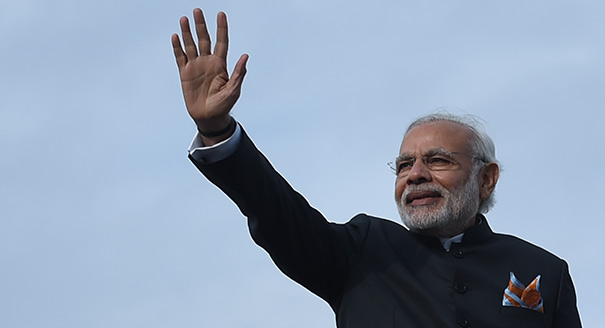
When he travels to Sweden this week, Prime Minister Narendra Modi will be confirming a new trend in Indian diplomacy — collective engagement with key regional groups. Earlier this year, at the annual Republic Day celebrations, the PM hosted all the 10 leaders of the Association of South East Asian Nations.
In 2016, the PM had invited colleagues from the Bay of Bengal littoral to join the BRICS summit in Goa. And in 2015, he hosted all leaders from Africa in Delhi. Many major powers like the US and China do take advantage of the possibilities for joint engagement with regional leaders. In the past, Indian diplomacy was excessively focused on the bilateral. Today, it is breaking from that mould.
In Stockholm, Modi will meet the leaders of the Nordic group — Denmark, Finland, Iceland, Norway and Sweden — both collectively and individually. This marks an end to the prolonged Indian neglect of a very important sub-region that has always punched way above its weight in the world.
The focus on great power relations and on the neighbourhood since the end of the Cold War has meant that Delhi did not have much bandwidth left for nurturing inherited good relations with small but influential countries like Sweden or build new ones. India can reap significant long-term rewards if Modi’s visit can lay the foundation for a sustained engagement with a part of the world that is often called the “Norden” — or simply the north.
The Nordics do not see themselves as a mere sub-region of Europe. They value their own unique international identity. Two of the five Nordic countries, Iceland and Norway, have stayed out of the European Union. Copenhagen’s attitude has, for long, been regarded as a barometer of Euro-scepticism and Greenland, an autonomous part of Denmark, had walked out of the EU.
The special significance of the Norden was underlined by former US President Barack Obama, when he hosted the leaders of the group at the White House at the end of 2016. The world might be a better place, Obama said, if the Nordic leaders were left in charge for a while. The Nordics are widely admired for their instinct for promoting peace, strengthening universal human values and more broadly for doing good.
The Nordics were not always peace-mongers. They have the awesome warrior legacy of the Vikings. But over the last century, they have tended to reject Europe’s martial tradition and colonial legacies. The Nordic enthusiasm for moralpolitik inevitably found great affinity with Nehruvian India.
If India was non-aligned, Sweden was neutral. Both championed decolonisation and a more just global order. From the 1950s to the mid 1980s, as leaders of the neutral and non-aligned nations, India and Sweden led the campaign for nuclear arms control and disarmament.
The shared commitment to moralpolitik, of course, ran into some difficulties when India wanted to become a recognised nuclear weapon power after Pokhran-2, in the summer of1998. Some of the Nordic countries found it very hard to endorse the US campaign for a nuclear exception for India. That obstacle is now largely behind us, thanks to the political engagement in recent years.
The idea of mediating conflicts, which is very much part of the India’s internal and international experience, is quite dear to the Nordics. Recall Norway’s successful role in launching the Middle East peace process in 1993. Oslo’s interest was not limited to the Middle East. India was initially wary as Norway sought to promote peace between Tamils and Colombo during the 2000s. Although the effort was unsuccessful, it opened up paths to peace that remain relevant for Sri Lanka and India.
The Nordics are not all about utopian idealism. They also have a strong pragmatic streak that is quite evident in their current strategic outreach to emerging Asian powers. Nor do all of them have the same international orientation. If Sweden and Finland stayed out of NATO, Denmark, Iceland and Norway are active members of the NATO. But they have managed, through strong sub-regional cooperation, to insulate the Norden from the negative impact of great power rivalries.
Sweden might be neutral but it always had strong defence industry. If the Bofors purchase was not trapped in the kind of political controversies that followed, it could have the laid the foundation for a strong defence industrial cooperation with Sweden, which has been eager to restore that possibility with an aerospace partnership around the sale of Gripen fighter aircraft to India.
Beyond defence, there is a deep engineering talent in the Norden and the region is an impressive champion of technological innovation. That fits in well with Delhi’s current hopes for igniting the innovation revolution in India. At the dawn of Independence, India was deeply attracted to the Nordic claims of finding a “third way” between capitalism and socialism. As a region that helped advance the idea of an efficient welfare state, the Norden can be important partner for India’s own experiments to strengthen its social sector through technological and policy innovation.
An India that is less inhibited about trade liberalisation and more open to commercial, technological and civil society partnerships will find the Norden ready to accelerate its internal modernisation and international rise. India’s political discovery of the Norden this week should also be the first step towards a more substantive outreach to different sub-regions of a very diverse continent — from the Baltics to the Balkans to Iberia to Mitteleuropa.
This article was originally published in the Indian Express.
Former Nonresident Senior Fellow, Carnegie India
A leading analyst of India’s foreign policy, Mohan is also an expert on South Asian security, great-power relations in Asia, and arms control.
Recent Work

C. Raja Mohan, Darshana M. Baruah


Alexander Gabuev, Paul Haenle, C. Raja Mohan, …
Carnegie does not take institutional positions on public policy issues; the views represented herein are those of the author(s) and do not necessarily reflect the views of Carnegie, its staff, or its trustees.

Minsk clearly expected the dialogue with Washington to yield more results, in particular the lifting of EU sanctions and permission to export potash.

Artyom Shraibman

A summer of escalation in the Black Sea has hurt Ukraine economically and is exacerbating world food security. A truce is needed—as is a broader reframing of Europe’s Ukraine strategy.

Thomas de Waal
Why governance of rapidly evolving technology will be distributed and complex.


Stewart Patrick, Scott Singer
It should address the shortcomings of previous crisis communication efforts and adapt to the demands of frontier AI.

Lucy Luo

If the Russian-speaking community in Latvia cannot articulate their interests without being seen as disloyal, they could end up embracing a pro-Kremlin agenda.

Sergejs Potapkins