

Article
Garima Mohan
{
  "authors": [
    "Garima Mohan"
  ],
  "type": "other",
  "centerAffiliationAll": "",
  "centers": [
    "Carnegie Endowment for International Peace",
    "Carnegie India"
  ],
  "collections": [],
  "englishNewsletterAll": "",
  "nonEnglishNewsletterAll": "",
  "primaryCenter": "Carnegie India",
  "programAffiliation": "",
  "programs": [],
  "projects": [],
  "regions": [
    "Europe",
    "Indo-Pacific",
    "China"
  ],
  "topics": [
    "Foreign Policy"
  ]
}
Source: Getty
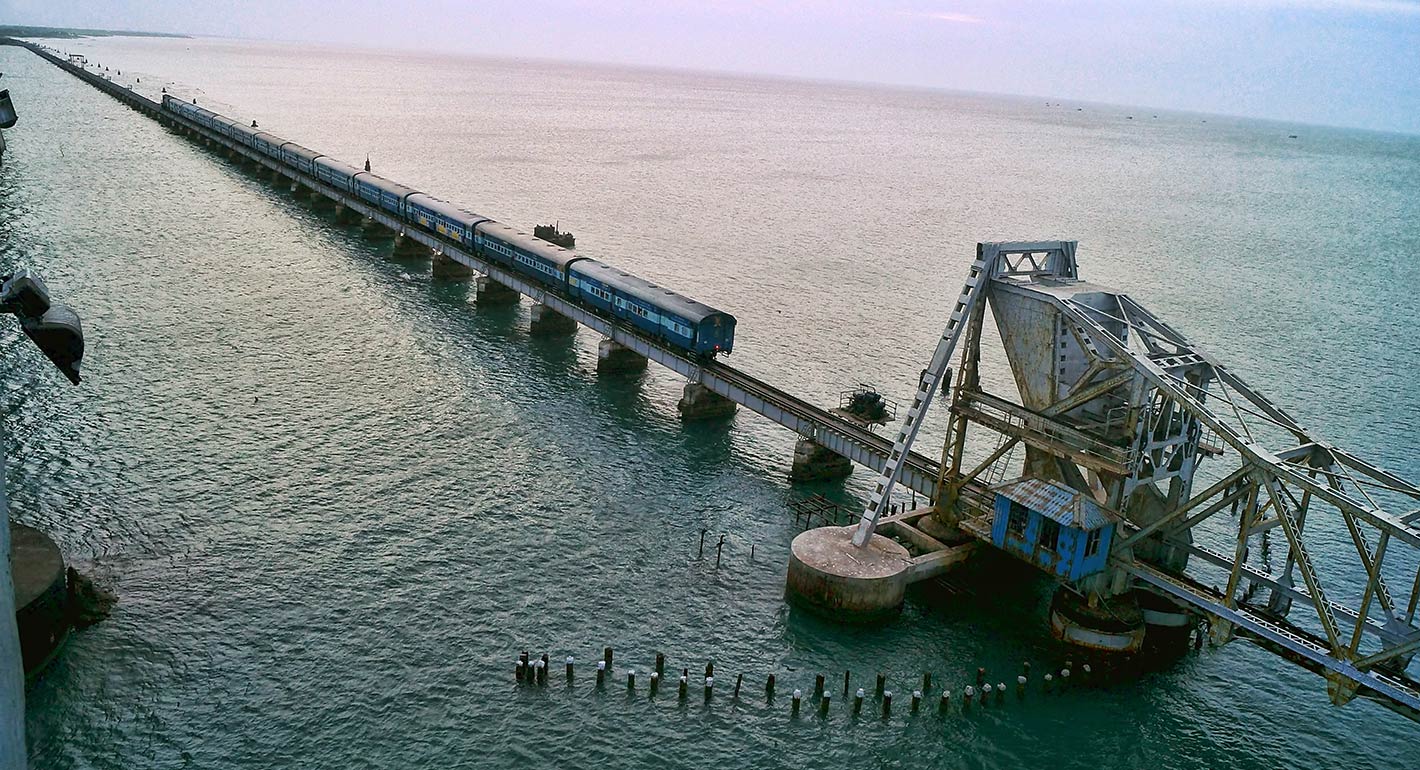
Both the European Union and its member states have talked about the importance of multilateralism and a rules-based order in their foreign policy approaches. It is time to implement this in the Indian Ocean.
Source: Global Public Policy Institute
Despite its geographical distance, the Indian Ocean has immense economic and strategic importance for Germany and Europe. A majority of European sea-trade transits through the Ocean, including half of Germany’s sea-borne trade and two-thirds of all containers carrying German exports. The Indian Ocean is also Europe’s primary gateway to the Asia-Pacific markets: more than 35 percent of all European exports go to Asia and four of its top 10 trading partners are in the region. The Indian Ocean is also bookended by the strategic chokepoints of the Straits of Hormuz and Malacca – narrow passages through which most of the world’s trade and around 34 million barrels of crude oil and petroleum are transported towards Europe and Asia every day. Europe is highly dependent on unimpeded maritime highways or ‘sea lines of communication’ (SLOCs) through the Indian Ocean. And yet, while the South China Sea dispute is still covered by the German media and features in the political landscape, fairly little attention has been paid to the changing dynamics and increasing competition and militarization in the Indian Ocean thus far.
China’s entry in the Indian Ocean region, through economic investments, political influence, and military presence along the Maritime Silk Road is significantly altering regional dynamics. It has spurred India-China rivalry, which overlaps with US-China competition. Japan, Australia and other regional actors are increasingly concerned. And the waters are already crowded: 10 Indian Ocean countries have large standing navies and discernable strategic interests.
In order to protect its economic investments along the Silk Road, we can expect China to increase its military footprint in the Indian Ocean. The 2015 Defense White Paper establishes China’s ambition to become a major maritime power and expands the Chinese navies’ duties from “offshore waters defense” to “open seas protection” for the first time. This indicates that China has interests beyond the South China Sea, particularly securing its trade routes and access to natural resources in the Middle East and Africa, on which China it is critically dependent. In fact, the Chinese navy has been increasing its presence in the Indian Ocean since 2008, first with anti-piracy patrols and later followed by nuclear and conventional submarine deployments. Its first overseas military base in Djibouti, which is sizeable and sophisticated, demonstrates China’s rise as a maritime power as well as its use of naval power to protect overseas interests in the Indian Ocean. At the end of January 2018, a Chinese “surface action group”, which included amphibious vessel for troops to make a marine landing, crossed into the Indian Ocean through Indonesia’s Sunda Straits. Countries like India, Indonesia, and others have raised concerns about the motives behind these amphibious drills. What is more, the first ever joint Russian-Chinese naval exercise in the Baltic Sea shows the PLA navy’s growing reach in Europe’s near seas.
China is also setting up port projects along vital SLOCs as part of the Maritime Silk Road, a long section of which passes through the Indian Ocean. It has ongoing projects in Sri Lanka, Bangladesh, Myanmar, Pakistan, Djibouti, Kenya, and Tanzania. The ‘dual use’ of these ports for commercial and military purposes is an emerging trend in the Indian Ocean. For example, Colombo, Gwadar, and Djibouti have been used to refuel or station PLA Navy (PLAN) ships. The unannounced stationing of a PLAN submarine and warship at the commercial Colombo Port City Project immediately set alarm bells ringing in India. Analysts argue that China’s acquisition of strategically located deep water ports in Myanmar, Pakistan, Sri Lanka, and Maldives could eventually serve a military purpose.
China’s economic investments have also been accompanied by increasing political influence in a number of Indian Ocean countries. An influx of Chinese workers and raw materials as well as the injection of large amounts of money – often perpetuating weak and corrupt governments – have led to political upheaval in a number of countries. Sri Lanka and Myanmar both saw protests against land acquisition by China and the influx of Chinese labor. Economically unsustainable projects like Hambantota contributed to the collapse of the last Sri Lankan government. Importantly, they are also a debt trap. Recent studies show that Chinese investments have left eight countries in the region – including Djibouti, Pakistan, Maldives, and Laos – financially vulnerable. Many of these debts are converted into equity by China. For instance, China now controls the majority of Hambantota port on a 99-year lease. Pakistan is considered at ‘high risk’ of a debt trap . As Beijing invests more in these countries it will, willingly or unwillingly , be compelled to intervene in their domestic affairs. Maldives, for example, owes over 70 percent of its current foreign debit to China. Maldives is a small but strategically important country, located next to some of the most important shipping lanes in the world. As one expert put it, Chinese debt traps and land acquisitions in Maldives “will have clear security ramifications.” Furthermore, Maldives has been in a crisis of democracy since February this year, when its President ordered the arrest of opposition leaders and judges. He has the backing of the Chinese government, which has made a lot of investments in the country and now needs to protect them. China’s economic investments elsewhere might also give undemocratic, weak, and corrupt governments a new lease of life.
As Chinese investments, land acquisitions, and military projection in the Indian Ocean grow, will Beijing take a more aggressive approach in the region? Countries in the region seem to think so and see China as undercutting the unwritten rules of collaboration. One response to Chinese aggressiveness is the championing of the idea of a free and open Indo-Pacific: countries like the US, India, Japan, and Australia have proposed a vision for a rules-based order to govern this strategic space.
Europe is watching these developments from the sidelines, at least for the time being. However, political instability and security developments in the Indian Ocean will have a direct impact on Europe’s maritime interest as well as its trade and energy routes. Europe has significant vulnerabilities through the maritime domain. Crises developing far from Europe will still have far reaching implications for European prosperity and security. Both the EU and its member states have talked about the importance of multilateralism and a rules-based order in their foreign policy approaches. It is time to implement this in the Indian Ocean. Europe can engage both diplomatically, by strengthening multilateral institutions and partnerships with countries like India, and by building upon the long established presence of member states such as France. These steps are necessary and urgent, because when it comes to Europe’s prosperity and security, sea-blindness is not an option.
This article was originally published by the Global Public Policy Institute.
Former Nonresident Fellow, Carnegie India
Garima Mohan was a nonresident fellow at Carnegie India. Her research focuses on the foreign and security policies of rising powers, particularly that of India, and on Europe-India relations.
Recent Work
Garima Mohan
Carnegie does not take institutional positions on public policy issues; the views represented herein are those of the author(s) and do not necessarily reflect the views of Carnegie, its staff, or its trustees.

The books, podcasts, and films that explain the world it made.

Andrew Leber
U.S. trading partners in Asia are closely watching the dispute for signs of how it may affect their own interests.

Barbara Weisel

The aftermath of the Ceuta crisis shows Europe has drawn the wrong lessons. Rather than doubling down on failed migration policies, the EU needs to address the underlying roots of such episodes.

Richard Youngs
By abandoning past U.S. pro-democracy policies and adopting several lines of pro-autocratic action, the Trump administration has fundamentally repositioned the United States vis-à-vis democracy in the world.

Thomas Carothers
Chinese strategists are once again debating whether American power is declining and whether U.S. hegemony is experiencing irreversible decay.
Wu Xinbo