• Research
  • Emissary
  • About
  • Experts
Carnegie Global logoCarnegie lettermark logo
DemocracyIran
  • Donate
{
  "authors": [
    "Can Kasapoğlu",
    "Sinan Ülgen"
  ],
  "type": "other",
  "centerAffiliationAll": "dc",
  "centers": [
    "Carnegie Endowment for International Peace",
    "Carnegie Europe",
    "Malcolm H. Kerr Carnegie Middle East Center"
  ],
  "collections": [
    "Turkey’s Transformation",
    "Transatlantic Cooperation"
  ],
  "englishNewsletterAll": "ctw",
  "nonEnglishNewsletterAll": "",
  "primaryCenter": "Carnegie Europe",
  "programAffiliation": "EP",
  "programs": [
    "Europe"
  ],
  "projects": [],
  "regions": [
    "Europe",
    "North America",
    "Türkiye",
    "Middle East",
    "Iran"
  ],
  "topics": [
    "Security",
    "Political Reform",
    "Foreign Policy"
  ]
}
Source: Getty

Other
Carnegie Europe

Is Turkey Sleepwalking Out of the Alliance?

Turkey’s resolve to acquire the Russian strategic defensive weapon system S-400 Triumf raises the prospect of a severe damage to NATO and, by extension, to transatlantic security.

Link Copied
By Can Kasapoğlu and Sinan Ülgen
Published on Aug 14, 2018
Program mobile hero image

Program

Europe

The Europe Program in Washington explores the political and security developments within Europe, transatlantic relations, and Europe’s global role. Working in coordination with Carnegie Europe in Brussels, the program brings together U.S. and European policymakers and experts on strategic issues facing Europe.

Learn More

Source: Centre for Economics and Foreign Policy Studies

EXECUTIVE SUMMARY

  • The Turkish – American bilateral relationship is in a deep crisis. An alliance that took shape in the early post-War years has entered a period of heavy turbulence with an ever-growing set of unresolved disputes. This unprecedented cumulation of bilateral disputes is burdening a relationship vital to transatlantic security. It is also compounding efforts to settle differences with linkages being established between unrelated topics leading to an ever more difficult environment for diplomatic negotiations. The way forward requires a willingness to disconnect these problems from each other so that some confidence building can be engineered by individually resolving these disagreements.

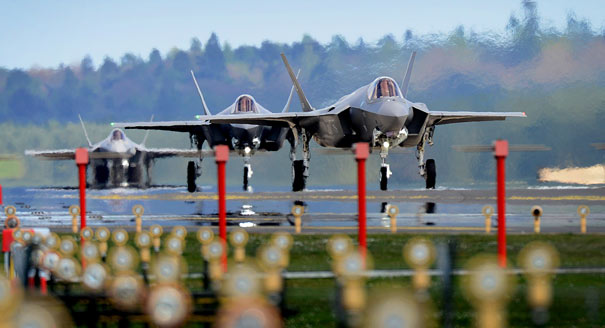
  • With this understanding, this report will focus on one of these disagreements. Turkey is planning to acquire an advanced Russian strategic defensive weapon system, known as the S-400 Triumf. There is however rising concern in the US about this purchase by a NATO ally. Indeed the fear is that, even if not networked, potential backdoors in the S-400 system could study critical operational data and electromagnetic signatures of the high-end aircraft, and transmit them to the Russian military intelligence.

  • The prospect of sanctions has therefore been raised in addition to Congressional initiatives to prevent deliveries of the F-35 Lightning II to Turkey due to the risks of operating the S-400 and the F-35 together. Yet Ankara’s resolve regarding its potential acquisition of the S-400 seems unaffected despite the rising political and military costs.

  • Both Ankara and Washington are so far acting in a way that is oblivious to the real consequences of such a scenario of divergence.

  • The case that we make in this detailed report is that a failure to eventually reach an understanding on the now interlinked S-400 & F-35 issue can potentially affect Turkey’s capability to act as an interoperable and capable NATO ally. In other words, this disagreement raises the prospect of a severe damage to the NATO Alliance, and by extension, to transatlantic security.

  • One mooted option has been for Turkey’s F-35s to be delivered through several degradations ensuring that the aircraft is handed over without connection to the ALIS cloud-based network. However, such a degradation will cut Turkey’s F-35s’ from rest of the global F-35 fleet around the world. Maintenance, life cycle, and operation costs will inevitably increase, and the Turkish military-industrial com-plex will have much less access to the engineering and supply chain.

  • Washington’s intent to link the supply of the F-35s to Turkey to political conditions, like the release of the jailed pastor Brunson is incongruous. The US would naturally work diplomatically to get the release of the jailed pastor as its citizen. But seeking to leverage the potential delivery of the F-35s for this purpose is greatly misplaced. The threat is incommensurate with its long-term implications. It underestimates the negative impact, not only for the Turkey-US relationship but also more generally for transatlantic security, of Turkey not being able to get the delivery of this fifth-generation multirole aircraft. The linkage with Turkey’s acquisition of the S-400 from Russia, however, is more relevant.

  • In our view, Ankara would need to adopt a political and diplomatic strategy that takes fully into account of this inevitable conclusion that the acquisition of the S-400s will have ramifications for the supply and operationalization of the F-35s. Either the US will need to be convinced that the delivery of the F-35s to a country that operates the Russia-made S-400s is not a real threat to the integrity of network-centric NATO platforms, or that the threat of cyber hacking –or digital espionage– emanating from the S-400s can categorically be eliminated, or Turkey would need to forego the acquisition – or at the very least the operationalization– of the S-400s. At present, there seem to be no real third options for Turkish policy-makers to sidestep these binary and mutually exclusive options.
Read Full Text

This analysis was originally published by the Centre for Economics and Foreign Policy Studies (EDAM).

About the Authors

Can Kasapoğlu

Sinan Ülgen

Senior Fellow, Carnegie Europe

Sinan Ülgen is a senior fellow at Carnegie Europe in Brussels, where his research focuses on Turkish foreign policy, transatlantic relations, international trade, economic security, and digital policy.

Authors

Can Kasapoğlu
Sinan Ülgen
Senior Fellow, Carnegie Europe
Sinan Ülgen
SecurityPolitical ReformForeign PolicyEuropeNorth AmericaTürkiyeMiddle EastIran

Carnegie does not take institutional positions on public policy issues; the views represented herein are those of the author(s) and do not necessarily reflect the views of Carnegie, its staff, or its trustees.

More Work from Carnegie Endowment for International Peace

  • Rutte and Trump are two white men in suits. They look off to the left of the camera and stand in front of a row of other men in suits.
    Commentary
    Emissary
    Europe Cannot Sit Out the Iran War

    The Greenland crisis taught Europe to push back against Washington. In Iran, it must learn how to engage without falling in line.

      Sophia Besch

  • Delegates watch as U.S. President Donald Trump speaks onstage at the World Economic Forum (WEF) on January 21, 2026 in Davos, Switzerland.
    Article
    Unstrategic Ambiguity: Trump’s Erratic Approach Leaves Europe Guessing

    The behaviors, public statements, and policies of Donald Trump’s administration have perverted America’s strategic posture toward Europe.

      Dan Baer, Erik Brown

  • Commentary
    Strategic Europe
    On NATO, Trump Should Embrace France Instead of Bashing It

    Donald Trump’s repudiation of NATO goes against the Make America Great Again vision of a U.S.-centered foreign policy. If the goal is to preserve the alliance by boosting Europe’s commitments, leaning into France’s vision is the most America First way forward.

      • Rym Momtaz

      Rym Momtaz

  • Ukraine's President Volodymyr Zelensky (R) and Poland's Prime Minister Donald Tusk attend a press conference at the Mariinskyi Palace in Kyiv on February 5, 2026, amid the Russian invasion of Ukraine.
    Article
    Kindred Nations, Uneasy Neighbors: Polish-Ukrainian Relations in the Crucible of Russia’s War

    The full-scale invasion cemented Ukraine’s determination to sever its ties with Russia; reimagining the Poland-Ukraine partnership can accelerate Kyiv’s westward alignment and improve the security of both countries.

      Eric Green

  • Commentary
    Southeast Asia’s Agency Amid the New Oil Crisis

    There is no better time for the countries of Southeast Asia to reconsider their energy security than during this latest crisis.

      Gita Wirjawan

Get more news and analysis from
Carnegie Endowment for International Peace
Carnegie global logo, stacked
1779 Massachusetts Avenue NWWashington, DC, 20036-2103Phone: 202 483 7600Fax: 202 483 1840
  • Research
  • Emissary
  • About
  • Experts
  • Donate
  • Programs
  • Events
  • Blogs
  • Podcasts
  • Contact
  • Annual Reports
  • Careers
  • Privacy
  • For Media
  • Government Resources
Get more news and analysis from
Carnegie Endowment for International Peace
© 2026 Carnegie Endowment for International Peace. All rights reserved.