

Commentary
Saied’s main accomplishment has been to destroy a decade’s worth of democratic progress.
Sarah Yerkes
{
  "authors": [
    "Arkady Dubnov"
  ],
  "type": "commentary",
  "centerAffiliationAll": "",
  "centers": [
    "Carnegie Endowment for International Peace",
    "Carnegie Russia Eurasia Center"
  ],
  "collections": [],
  "englishNewsletterAll": "",
  "nonEnglishNewsletterAll": "",
  "primaryCenter": "Carnegie Russia Eurasia Center",
  "programAffiliation": "",
  "programs": [],
  "projects": [],
  "regions": [],
  "topics": [
    "Economy"
  ]
}
Source: Getty
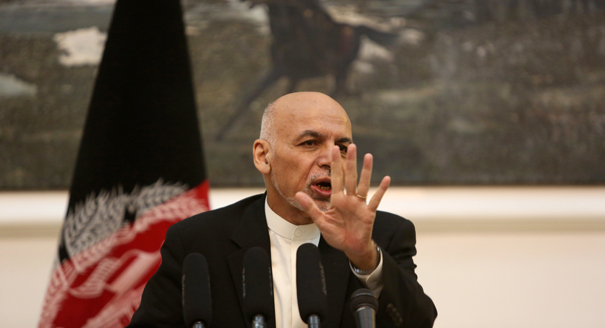
Russia wants to be a player in Afghanistan, and that means dealing with the Taliban. But the postponement of a planned international conference in Moscow, involving a once-reviled group, shows that Russia’s influence is still limited.
Four individuals, referred to as the Taliban field commanders by the Russian news agencies, were scheduled to arrive in Moscow in early September. Muhammad Abbas Stanikzai, the head of the Taliban’s Qatar office, was to lead the delegation to a multilateral peace conference on Afghanistan in Moscow. The forum would feature representatives from Russia, India, Iran, China, Pakistan, and Central Asian countries. The United States was also invited.
But the sensational news announced by the Russian Foreign Ministry in mid-August did not come to anything. The conference was called off at the request of Afghan President Ashraf Ghani. He personally called Russian Foreign Minister Sergey Lavrov, asking to put off the conference for a later date because the Afghan delegation could not make it to Moscow. Ghani said that the Afghan side needed “to forge a consolidated position” following the resignation of the president’s national security adviser, Hanif Atmar.
That was not the only reason. The government in Kabul wants to negotiate directly with the Taliban and not in a forum sponsored by Russia. Moreover, Kabul’s patron, the United States, made it clear that it believes that the new Moscow conference would be pointless, after an earlier meeting in April 2017 did not produce much of substance. That is why the United States refused to participate.
Despite all this, Russian diplomats considered the Taliban’s agreement to come to Moscow to be a success. Unofficial information from inside the Foreign Ministry indicates the great importance it attached to the Taliban leaders’ first official visit to Moscow. To guarantee their presence, the Russian government was willing to remove it from the list of organizations that are prohibited in Russia.
So, what made Lavrov suddenly agree to the Afghan president’s request and postpone the conference?
Apparently, Lavrov could not just say no to the Afghan president when he got a personal phone call from him. Besides, Russian officials evidently knew that Ashraf Ghani was prepared to contact President Putin with the same request and wanted to avoid this.
A few days later, Kabul reaped the first benefits of its successful foreign policy maneuver, explaining to both domestic and foreign audiences that no Afghan peacemaking mission is possible without its patronage. But that is exactly what the Taliban can’t accept. It says that it won’t negotiate with the Afghan authorities that don’t really control the situation in the country.
The Taliban graphically demonstrates the truth of its claims by regularly attacking government forces in Kunduz, Takhar, Faryab, Ghazni, and Paktia provinces. Recently it captured the Ghazni province capital, situated on the road from Kabul to the west of the country. Government forces couldn’t dislodge the opposition fighters from this strategic location for many days, even with U.S. air support. Practically all the territory of Afghanistan, except for its large cities, is now controlled by the Taliban.
So it comes as no surprise that the Taliban refuses to see official Kabul as its counterpart and accords that privilege only to the United States. The Taliban leaders are certain that as soon as the Ashraf Ghani government loses the support of the United States and NATO, they will reclaim power in Kabul, just as they did before 2001.
The Taliban’s demand that all the foreign troops leave Afghanistan is even less realistic. Even Moscow doesn’t demand that much, knowing how much chaos could ensue if and when the government forces, the Taliban, and the increasingly influential ISIS were left to their own devices.
Could Kabul and the Taliban share power? An anonymous source in Moscow believes that the Taliban could participate in the political life of those provinces and enclaves that it effectively controls if the Afghan authorities were persuaded to officially recognize its status.
The cancellation of the Moscow conference has not helped the two sides to respect each other any more. According to Afghan sources, the Taliban first bristled at the change of plans. After all, Moscow agreed to Kabul’s request without discussing it with the Taliban. Some in the organization’s Doha office even suggested that they wouldn’t go to Moscow if a new date were arranged. But after a while, Taliban officials calmed down a bit and decided not to burn all their bridges. They understand that the Taliban’s participation in a conference in Moscow could help with the organization’s international recognition, something they strongly crave.
Russia has pledged to host the conference by the end of the year, and it’s quite possible that Moscow and Doha will be able to conduct informal bilateral consultations even before the new date for the forum is chosen.
What could be agreed in Moscow? To begin with, Moscow can promise to remove the Taliban from its list of proscribed terrorist organizations. In exchange, the Taliban could guarantee that its military operations won’t threaten the security of Central Asian countries, and that it will renounce terrorism. If that happens, later on Moscow could promise certain political and even economic support for the Taliban.
In addition, the Taliban should be even more focused and motivated to combat so-called Islamic State in Afghanistan. All this would be welcome for all the international players associated with Afghanistan, including the United States—even if prospects for peace in a country with a forty-year-long history of guerilla warfare look as dismal as ever.
Arkady Dubnov
Carnegie does not take institutional positions on public policy issues; the views represented herein are those of the author(s) and do not necessarily reflect the views of Carnegie, its staff, or its trustees.
Saied’s main accomplishment has been to destroy a decade’s worth of democratic progress.

Sarah Yerkes
The targeting of Damietta Port appears to be more than a mere security message.

Amr Hamzawy
Is the Gulf moving beyond the dollar? This article examines how China is expanding the renminbi's role across Gulf markets, what that means for regional finance, and why the future of global currencies is more complex than the de-dollarization debate suggests.
Andrew Bonney
As India undergoes a demographic transition, its cities will be its economic powerhouse—but only if it accurately captures city growth and empowers cities to support their citizens.
Apoorva Jadhav
Direct democracy is the political wildcard in the state’s midterm election.


Mark Baldassare, Ian Klaus