

Paper
James M. Acton, Ankit Panda
{
  "authors": [
    "James M. Acton"
  ],
  "type": "legacyinthemedia",
  "centerAffiliationAll": "dc",
  "centers": [
    "Carnegie Endowment for International Peace"
  ],
  "collections": [
    "Entanglement"
  ],
  "englishNewsletterAll": "ctw",
  "nonEnglishNewsletterAll": "",
  "primaryCenter": "Carnegie Endowment for International Peace",
  "programAffiliation": "NPP",
  "programs": [
    "Nuclear Policy"
  ],
  "projects": [],
  "regions": [],
  "topics": [
    "Security",
    "Military",
    "Nuclear Policy",
    "Arms Control"
  ]
}
Source: Getty
The increasingly blurred line between nuclear and conventional weapons heightens the danger of nuclear war.
Source: BBC News
The threat of nuclear war fills people with fear. Yet the increasingly blurred line between nuclear and conventional weapons is heightening the danger.
Nuclear and non-nuclear weapons have never been entirely separate from each other. The B-29 bomber, for example, was designed and built to deliver conventional bombs. But on 6 August 1945 one of these aircraft, Enola Gay, dropped a nuclear weapon on the Japanese city of Hiroshima. Seventy-four years later, nine countries now possess thousands of nuclear weapons, which are becoming increasingly entangled with non-nuclear weapons.
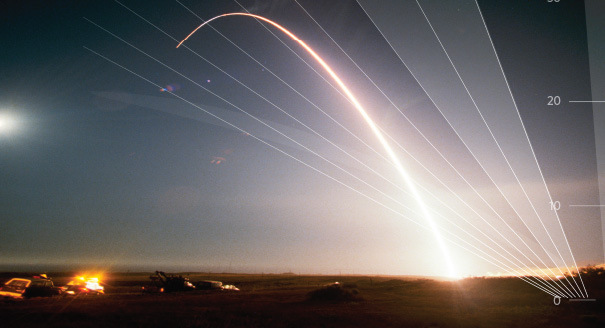
The global stockpile of nuclear weapons is down from an all-time high of about 64,000 in 1986 - but some contemporary weapons are about 300 times more powerful than the bomb dropped on Hiroshima. Apart from the UK, all nuclear-armed states possess dual-use weapons that can be used to deliver nuclear or conventional warheads. These include missiles of ever-longer ranges.Russia, for example, has recently deployed a new ground-launched cruise missile, the 9M729. The US believes this missile is dual-use and has been tested to distances "well over" 500km (310 miles).
The missile is at the heart of US claims Russia breached the terms of a treaty banning the use of medium- and intermediate-range missiles. The US has announced its withdrawal from the pact, raising concerns about a new arms race.
China, meanwhile, has recently been showing off its newest missile, the DF-26. Capable of travelling more than 2,500km (1,553 miles), it appears to be the world's longest range dual-use missile capable of a precision strike.
There are a number of scenarios in which such missiles could inadvertently increase the chance of a nuclear war. The most obvious is that in a conflict, they might be launched with conventional warheads but mistaken for nuclear weapons. This ambiguity could prompt the adversary to launch an immediate nuclear response. It is difficult to know whether it would choose this course of action - or wait until the weapons had detonated and it became clear how they were armed.
In practice, the greatest danger with dual-use missiles may lie elsewhere: misidentification before they have even been launched. Imagine that China dispersed lorry-mounted DF-26 missiles loaded with nuclear warheads around its territory. The U.S., wrongly believing them to be conventionally armed, might decide to try to destroy them. By attacking them, it could inadvertently provoke China into launching those nuclear weapons it still had before they could be destroyed.
Dual-use missiles are not the only way in which nuclear and non-nuclear weapons are increasingly entangled. For example, all nuclear forces need a communication system - which could include satellites. But, increasingly, these nuclear command-and-control systems are also being used to support non-nuclear operations.
The U.S., for example, operates satellites to provide warning of attacks with nuclear-armed or conventionally armed ballistic missiles. In a conflict between Nato and Russia, these could be used to detect short-range conventional ballistic missiles launched by Russia - as the first step towards shooting them down. If this strategy was successful, Russia could decide to attack the US early-warning satellites in response. In fact, the US intelligence community has warned that Russia is developing ground-based laser weapons for that exact purpose.
But blinding U.S. early-warning satellites would not simply undermine its ability to spot conventionally armed missiles. It would also compromise the ability of the US to detect nuclear-armed ballistic missiles and could raise fears that Russia was planning a nuclear attack on the US. Indeed, the latest US Nuclear Posture Review - the key official statement of US nuclear policy - explicitly threatens to consider the use of nuclear weapons against any state that attacks its nuclear command-and-control systems. This threat applies whether or not that state has used nuclear weapons first.
The governments of nuclear-armed states are presumably aware of the growing entanglement between nuclear and non-nuclear weapons. They are also aware of at least some of the associated dangers. However, working to reduce these risks does not seem to be a priority. The focus remains on enhancing their military capabilities, to deter one another.
One option could be for countries to try to agree a ban on weapons that could threaten nuclear command-and-control satellites. But for the moment, governments of nuclear-armed states are reluctant to sit around the same table. As a result, the prospects of such cooperation appear to be bleak.

Jessica T. Mathews Chair, Co-director, Nuclear Policy Program
Acton holds the Jessica T. Mathews Chair and is co-director of the Nuclear Policy Program at the Carnegie Endowment for International Peace.
Recent Work

James M. Acton, Ankit Panda
James M. Acton
Carnegie does not take institutional positions on public policy issues; the views represented herein are those of the author(s) and do not necessarily reflect the views of Carnegie, its staff, or its trustees.

Japan’s long-term security policy is driven by concerns about China, and there is little appetite for (or interest in) pursuing a confrontation with Moscow.

James D.J. Brown

Russia is testing the waters of NATO’s mutual defense clause. What do strikes in Romanian territorial waters mean for the alliance’s posture toward Moscow?

Dimitar Bechev

China has showcased its engineering prowess with small modular reactor demonstration projects. But turning these technological achievements into commercial success will be a greater challenge.

Tong Zhao
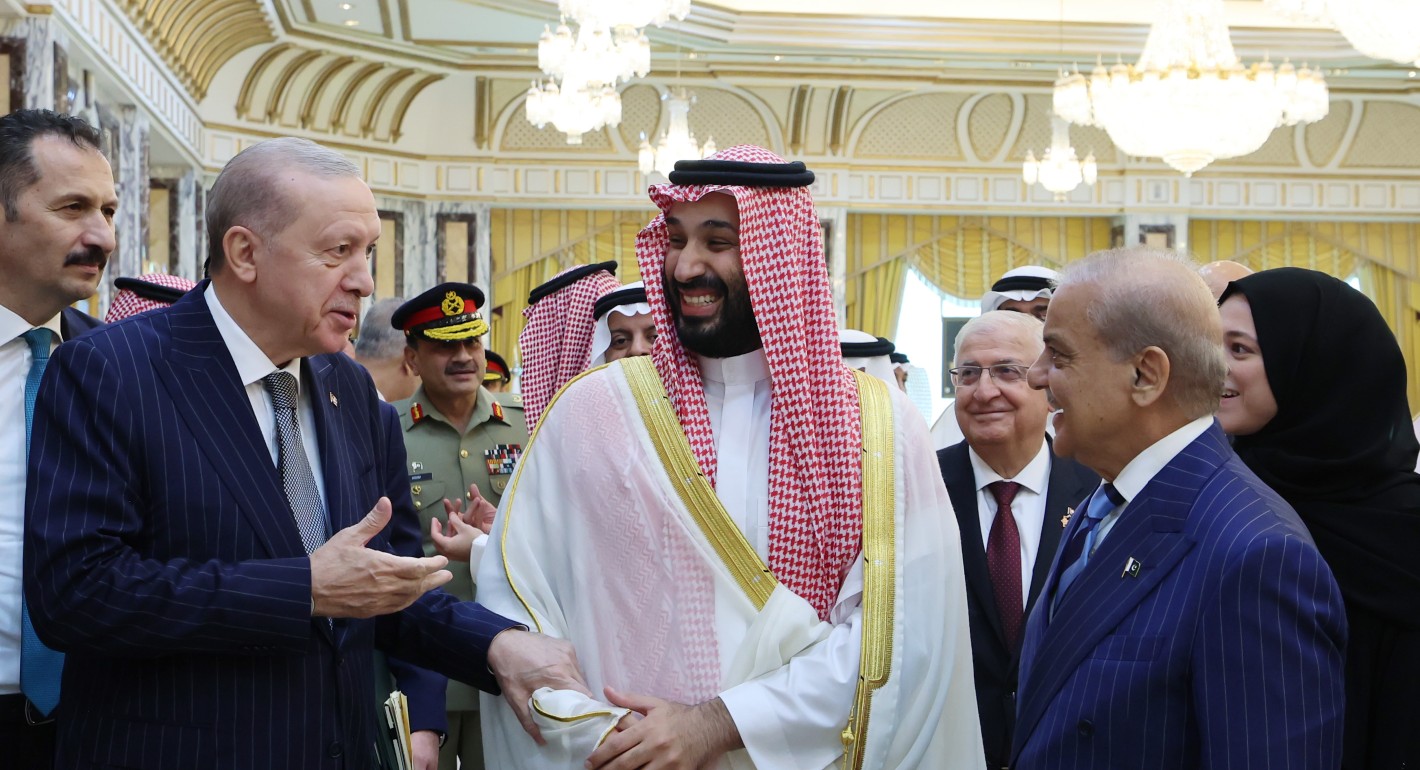
Why Pakistan, Saudi Arabia, and Turkey are joining forces on regional security.


Alper Coşkun, Amr Hamzawy

The truth of the strategic situation is that Europe and Russia are extremely unlikely to be able to “turn the page” on their confrontation within the next two decades.

Arkady Moshes