Thomas de Waal
{
"authors": [
"Thomas de Waal"
],
"type": "other",
"centerAffiliationAll": "dc",
"centers": [
"Carnegie Endowment for International Peace",
"Carnegie Europe"
],
"collections": [
"Europe’s Eastern Neighborhood"
],
"englishNewsletterAll": "ctw",
"nonEnglishNewsletterAll": "",
"primaryCenter": "Carnegie Europe",
"programAffiliation": "EP",
"programs": [
"Europe"
],
"projects": [],
"regions": [
"Russia",
"Eastern Europe",
"Caucasus",
"Georgia",
"Iran"
],
"topics": [
"Security"
]
}Source: Getty
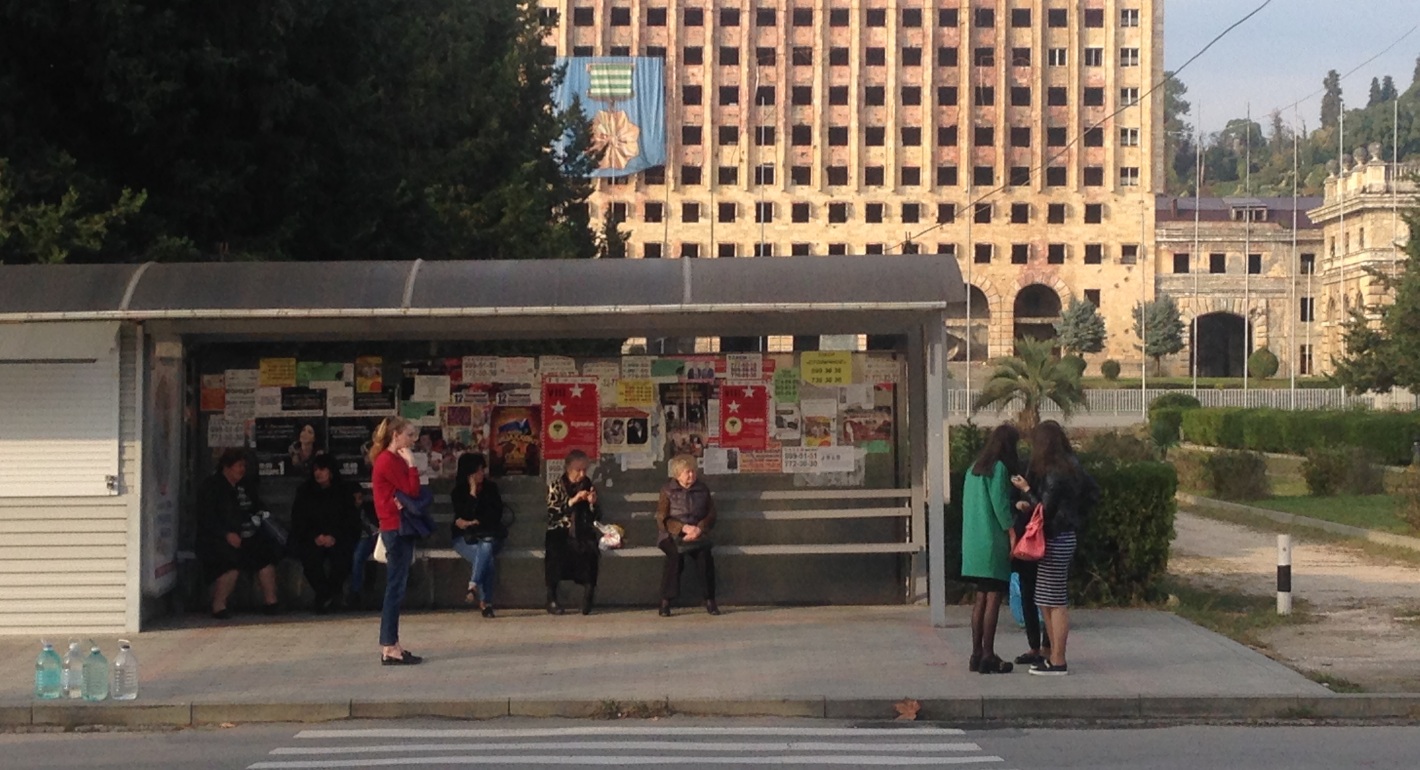
Abkhazia Today
Abkhazia has grown more internationally isolated and dependent on Russia over the last decade, and the big political issues about its future remain unresolved.
Source: CENTRE FOR EUROPEAN POLICY STUDIES
Abkhazia today is in the peculiar state of having both entrenched its de facto separation from Georgia but also finding itself in almost complete international isolation. Recognition as an independent state in 2008 by Russia, (followed by Nauru, Nicaragua, Syria and Venezuela, four other countries with no close connections to the region), coincided with the closure of UNOMIG, the United Nations mission in the region, a reduced presence of international NGOs and humanitarian organizations there and a policy of unequivocal support for Georgia by its Western friends. Since then Abkhazia has become more secure and better off but also even more dependent on Russia, financially, militarily and politically. Yet the patron-client relationship is often strained. The two sides argue over several issues and Russian direct assistance has fallen in the last few years.Read Full Text
This publication was prepared within the framework of the CEPS-led 3DCFTAs project, enabled by financial support from Sweden. To download the publication, please consult the following link.
About the Author
Senior Fellow, Carnegie Europe
De Waal is a senior fellow at Carnegie Europe, specializing in Eastern Europe and the Caucasus.
- Europolis, Where Europe EndsCommentary
- Taking the Pulse: Is It Time for Europe to Reengage With Belarus?Commentary
Thomas de Waal, ed.
Recent Work
More Work from Carnegie Endowment for International Peace
- The Other Global Crisis Stemming From the Strait of Hormuz’s BlockageCommentary
Even if the Iran war stops, restarting production and transport for fertilizers and their components could take weeks—at a crucial moment for planting.
Noah Gordon, Lucy Corthell
- Shockwaves Across the GulfCommentary
The countries in the region are managing the fallout from Iranian strikes in a paradoxical way.
Angie Omar
- Taking the Pulse: Is France’s New Nuclear Doctrine Ambitious Enough?Commentary
French President Emmanuel Macron has unveiled his country’s new nuclear doctrine. Are the changes he has made enough to reassure France’s European partners in the current geopolitical context?
Rym Momtaz, ed.
- The Iran War’s Dangerous Fallout for EuropeCommentary
The drone strike on the British air base in Akrotiri brings Europe’s proximity to the conflict in Iran into sharp relief. In the fog of war, old tensions in the Eastern Mediterranean risk being reignited, and regional stakeholders must avoid escalation.
Marc Pierini
- The U.S. Risks Much, but Gains Little, with IranCommentary
In an interview, Hassan Mneimneh discusses the ongoing conflict and the myriad miscalculations characterizing it.
Michael Young