

Research
- +16
Stewart Patrick, Erica Hogan, Oliver Stuenkel, …
{
  "authors": [
    "Trinh Nguyen"
  ],
  "type": "legacyinthemedia",
  "centerAffiliationAll": "dc",
  "centers": [
    "Carnegie Endowment for International Peace"
  ],
  "collections": [],
  "englishNewsletterAll": "asia",
  "nonEnglishNewsletterAll": "",
  "primaryCenter": "Carnegie Endowment for International Peace",
  "programAffiliation": "AP",
  "programs": [
    "Asia"
  ],
  "projects": [],
  "regions": [
    "East Asia",
    "China",
    "Southeast Asia"
  ],
  "topics": [
    "Political Reform",
    "Economy"
  ]
}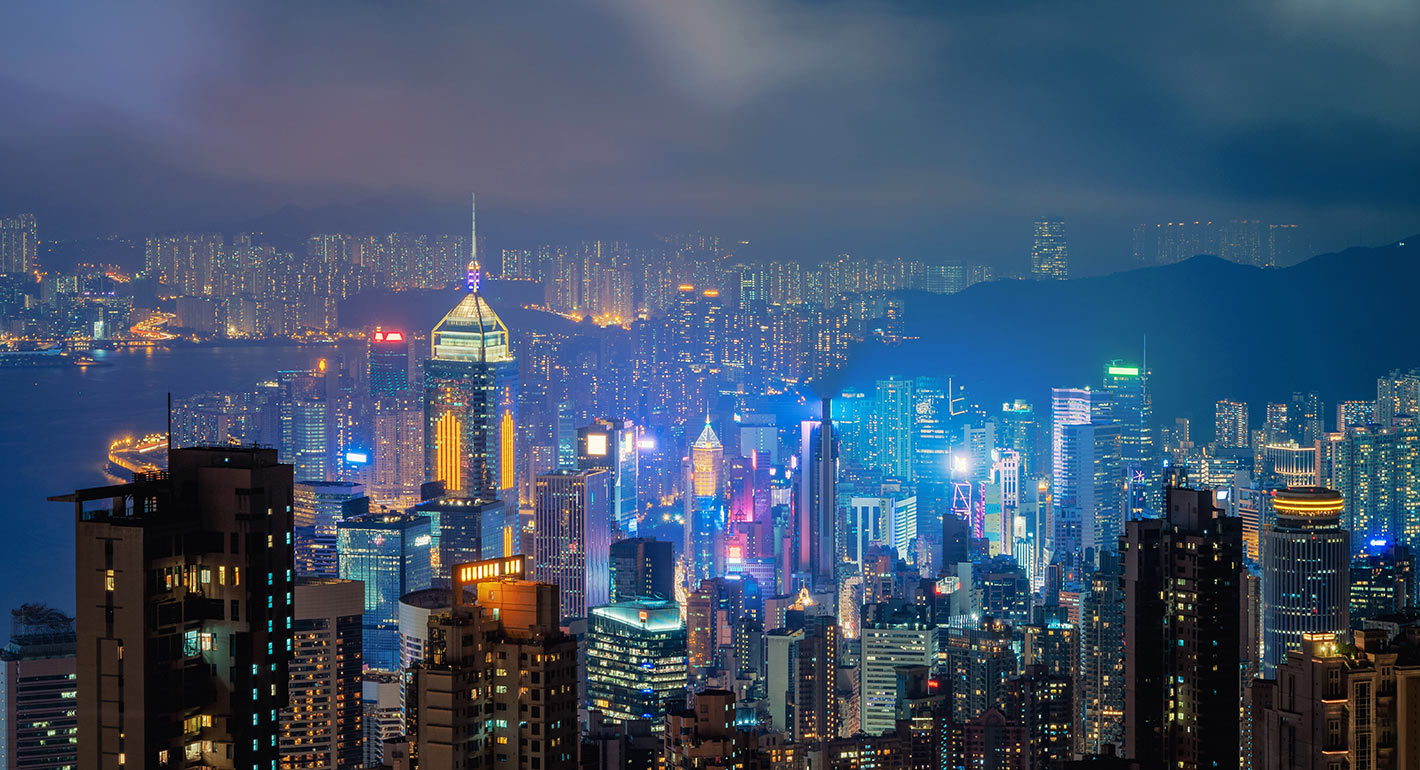
Source: Getty
While investment in Hong Kong may not change rapidly, continued uncertainty will erode the foundations that have made Hong Kong special in the minds of global businesses.
Source: Hill
For decades, Hong Kong has thrived with its unique status, facilitating investment and trade between Asia and the West. Its airport, seaport, and railways link goods, services, and travelers to the region for trade and commerce, with rising connectivity with mainland China. While Chinese cities are investing heavily in hard infrastructure to rival Hong Kong, what is truly irreplaceable about Hong Kong is its special status, or “one country two systems,” that puts it in a unique position compared to the tightly controlled Chinese economic and financial system that includes import duties, value added taxes, capital controls, and restrained labor mobility.
Behind the capital market power of Hong Kong is its unique “soft infrastructure” that China has relied on to deal with the economic shortcomings of the mainland, especially access to international capital markets. Hong Kong is an important springboard for foreign direct investment, as 64 percent of inward foreign direct investment to the mainland comes from Hong Kong and 65 percent of outward foreign direct investment was also channeled through Hong Kong between 2010 and 2018. Hong Kong has long been the largest offshore center for China and holds a special access to Chinese equity and fixed income markets through stock and bond connections. The city took 73 percent of initial public offerings from mainland companies overseas from 2010 to 2018.
It is not just capital but also labor that can move freely in Hong Kong. Both Hong Kong residents and foreign residents enjoy relatively unrestricted travel due to fewer visa restrictions. The Hong Kong government markets itself to the international business community as the primary location for doing business in Asia and with mainland China. With the Hong Kong Policy Act of 1992, the United States has treated Hong Kong as a special autonomous region and exempts it from many tariffs imposed on China.
Thanks to this, whether it is tourism, finance, or trade, Hong Kong is punching above its weight as regional and global players take advantage of this special status. Hong Kong International Airport, for example, boasts to be the largest air cargo hub, while the deepwater seaport ranks seventh busiest in the world. Hong Kong, with a population of 8 million, welcomed an impressive 65 million tourists last year.
The reexporting of goods is also huge, amounting to one and a half times the gross domestic product. Beyond trade and tourism, Hong Kong is seen as a parking place for regional wealth, given its strong property rights, rule of law, and open capital account. Real estate transaction value in Hong Kong last year was 23 percent of gross domestic product due to strong demand and perception of excellent storage of wealth.
While rapid integration with mainland China has served businesses, Hong Kong residents face increased competition from mainlanders for public goods, and believe upward mobility may be limited by more competition for assets and employment opportunities with China. The prolonged protests that shutdown the prized hard infrastructure of Hong Kong, especially its airport, and the clear ineffectiveness of policymakers in deescalating the tension indicates to investors that Hong Kong may not be the special and trusted place they initially thought it was.
Hong Kong now finds itself at risk as investors are looking to diversify. This current unrest limits investor security in bringing business to Hong Kong, but also increases scrutiny of Hong Kong businesses seeking to expand in other markets. Australia has already begun to treat investment from Hong Kong with the same scrutiny as the rest of China. In the United States, Congress is considering the Hong Kong Human Rights and Democracy Act that would leave the city vulnerable to American sanctions.
While Hong Kong is unlikely to face American sanctions, and the Chinese government still sees value in its ability to access global capital markets, investors are likely to hold off on additional investments in the city due to rising doubt surrounding its future. In a recent survey, 88 percent of businesses without offices in Hong Kong say that the political standoff would affect their future investment decisions, and 75 percent of those with offices there say that it would impact future investment decisions.
The bottom line is that while investment in Hong Kong may not change rapidly, continued uncertainty will erode the foundations that have made Hong Kong special in the minds of global businesses. Other cities like Singapore are viable alternatives to Hong Kong for businesses seeking a foothold in Asia. But it is not just Singapore. Malaysia and Thailand have already seen an influx of investment into luxury real estate at the expense of Hong Kong. Tourism in Thailand also experienced a surge over the summer as mainland Chinese tourists stayed away from Hong Kong.
The policy paralysis to resolve the difficult equation of Hong Kong being special while rapidly integrating with China, not just in economics but also in soft infrastructure, is increasingly jeopardizing investor faith in the sustainability to remain autonomous as it assimilates with China. Investors are asking when it will ultimately be subsumed into the mainland and lose its special status for businesses wishing to engage with the Chinese economy. The longer this goes on, the more fear from investors will drive them to hedge by engaging with competitors of Hong Kong.
Former Nonresident Scholar, Asia Program
Trinh Nguyen was a nonresident scholar in the Asia Program at the Carnegie Endowment for International Peace.
Recent Work

Stewart Patrick, Erica Hogan, Oliver Stuenkel, …
Trinh Nguyen
Carnegie does not take institutional positions on public policy issues; the views represented herein are those of the author(s) and do not necessarily reflect the views of Carnegie, its staff, or its trustees.

The European far right might fail to steer EU policy in the direction Russia wants, but they will create enough chaos inside Europe to benefit the Kremlin.

Dimitar Bechev

The nuclear relationship between China and the United States is increasingly shaped by widening perception gaps rather than deliberate strategic design.

Tong Zhao

A summer of escalation in the Black Sea has hurt Ukraine economically and is exacerbating world food security. A truce is needed—as is a broader reframing of Europe’s Ukraine strategy.

Thomas de Waal
Why governance of rapidly evolving technology will be distributed and complex.

Stewart Patrick, Scott Singer
It should address the shortcomings of previous crisis communication efforts and adapt to the demands of frontier AI.

Lucy Luo