

Commentary
Michael Young
{
  "authors": [
    "Michael Young"
  ],
  "type": "legacyinthemedia",
  "centerAffiliationAll": "dc",
  "centers": [
    "Carnegie Endowment for International Peace",
    "Malcolm H. Kerr Carnegie Middle East Center"
  ],
  "collections": [
    "Arab Spring 2.0",
    "Decoding Lebanon"
  ],
  "englishNewsletterAll": "menaTransitions",
  "nonEnglishNewsletterAll": "",
  "primaryCenter": "Malcolm H. Kerr Carnegie Middle East Center",
  "programAffiliation": "MEP",
  "programs": [
    "Middle East"
  ],
  "projects": [],
  "regions": [
    "Levant",
    "Lebanon",
    "Middle East"
  ],
  "topics": [
    "Political Reform"
  ]
}
Source: Getty
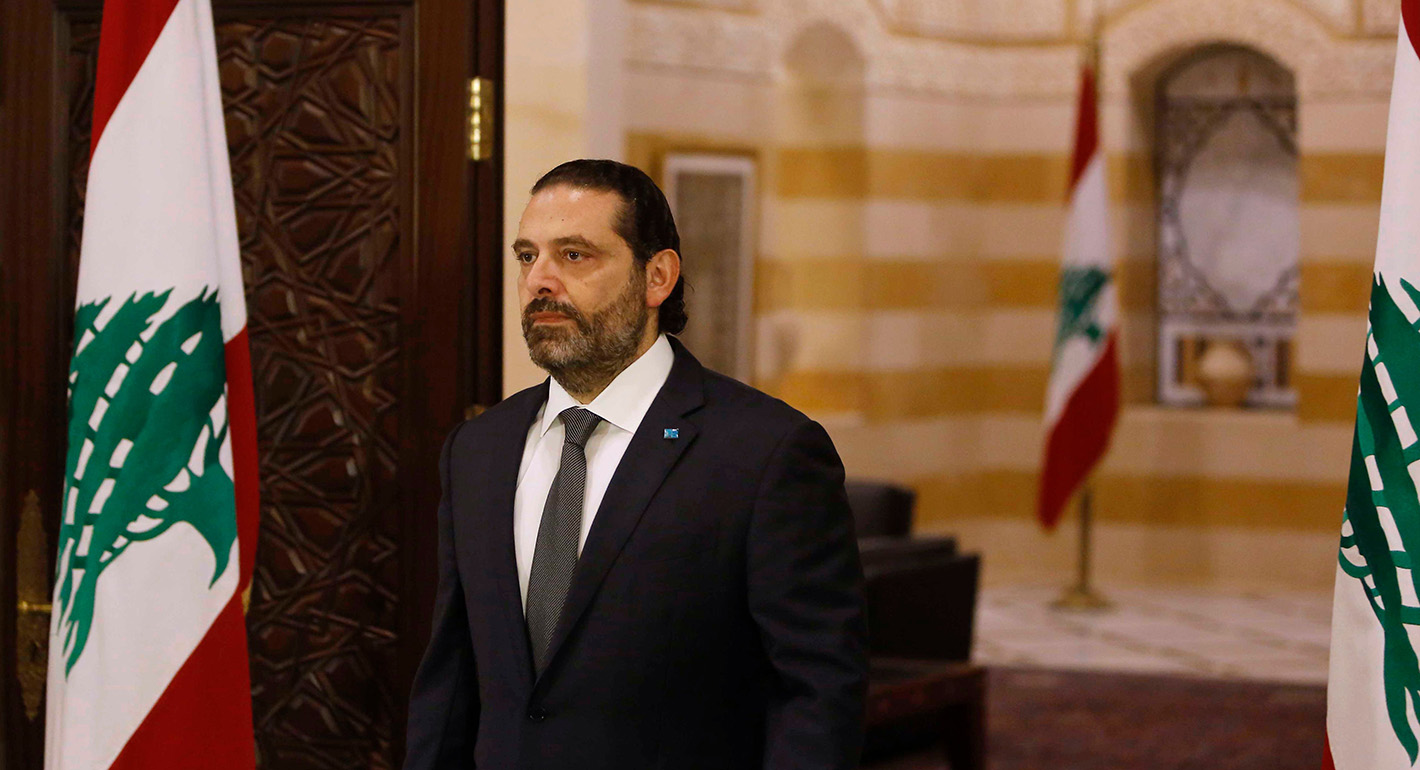
Even if a government of technocrats takes over – as per popular demand – it would have to work against the vested interests of the political class.
Source: The National
For almost two weeks, in a near universal rejection of the political class and its mismanagement of the country, well over a million Lebanese have been in the streets. They have demanded the government’s resignation, its replacement by apolitical technocrats, an end to austerity as Lebanon faces a major economic crisis and accountability for the profound corruption of the politicians.
On Tuesday their demands bore fruit, when Prime Minister Saad Hariri tendered his resignation – as well as that of the government to President Michel Aoun. Mr Hariri had presented a vague reform package last week that was rejected by the protesters, even if it did show that under pressure the government could find nearly $4 billion it had not thought to tap earlier. Mr Aoun had followed this up with a lethargic address that suggested an old and tired man who was not in charge.
Ironically, the person who most hardened the government’s backbone was the Hezbollah secretary general, Hassan Nasrallah. He had twice made a speech rejecting the departure of the government and expressed purported sympathy for the protesters while refusing to budge on any of their demands. Several days ago, party thugs descended on a downtown protest to hurl rocks and sticks at the demonstrators, injuring several people.
What has stung Hezbollah and its allies in the Amal Movement is that the nationwide protests have spread to Shiite areas, where the parties’ hegemony was thought to be complete. Despite warning against a fall of the government, Nasrallah failed to neutralise the dissatisfaction within his own community, where people have also been suffering from dismal economic conditions.

Editor, Diwan, Senior Editor, Malcolm H. Kerr Carnegie Middle East Center
Michael Young is the editor of Diwan and a senior editor at the Malcolm H. Kerr Carnegie Middle East Center.
Recent Work
Michael Young
Michael Young
Carnegie does not take institutional positions on public policy issues; the views represented herein are those of the author(s) and do not necessarily reflect the views of Carnegie, its staff, or its trustees.

The Horn of Africa countries are among those facing a new security calculus.


Andrew Leber, Lesley Anne Warner

The European far right might fail to steer EU policy in the direction Russia wants, but they will create enough chaos inside Europe to benefit the Kremlin.

Dimitar Bechev

As the U.S. stumbles in its war with Iran, we are likely to see an acceleration of its disengagement from the region.
Michael Young

If the Russian-speaking community in Latvia cannot articulate their interests without being seen as disloyal, they could end up embracing a pro-Kremlin agenda.

Sergejs Potapkins
The Zaidi government’s objective to collect weapons is constrained by regional conflict, but it can take certain measures at home.
Ali Al-Mawlawi