

Article
Dalia Ghanem
{
  "authors": [
    "Dalia Ghanem"
  ],
  "type": "other",
  "centerAffiliationAll": "",
  "centers": [
    "Carnegie Endowment for International Peace",
    "Malcolm H. Kerr Carnegie Middle East Center"
  ],
  "collections": [],
  "englishNewsletterAll": "",
  "nonEnglishNewsletterAll": "",
  "primaryCenter": "Malcolm H. Kerr Carnegie Middle East Center",
  "programAffiliation": "",
  "programs": [],
  "projects": [
    "X-Border Local Research Network"
  ],
  "regions": [
    "Maghreb",
    "North Africa",
    "Algeria"
  ],
  "topics": [
    "Political Reform"
  ]
}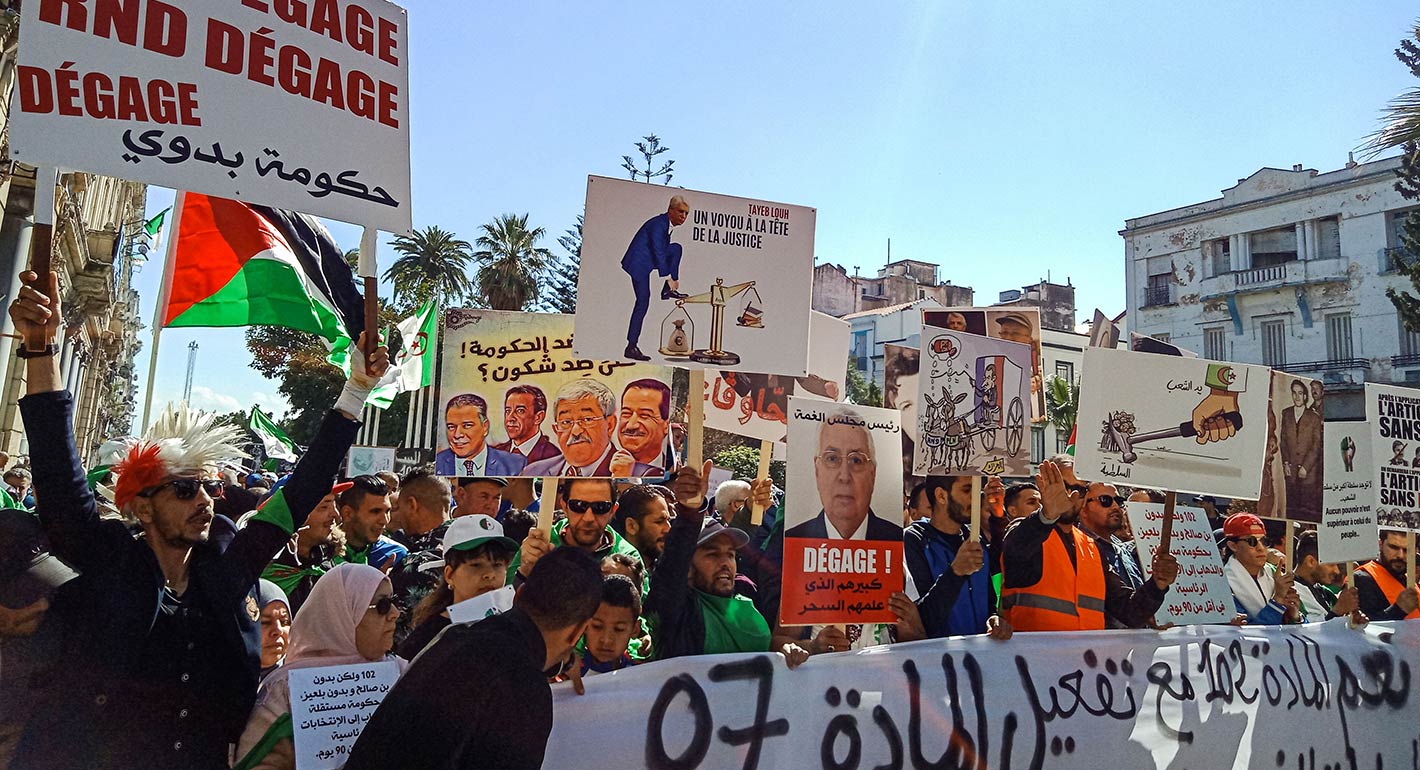
Source: Getty
While the border regions may be far from the center of activities in Algeria, political or economic, their populations’ concerns of are at the heart of what Algerians are protesting against.
Source: Peripheral Vision
In February 2019, millions of Algerians began taking to the streets to protest against the decision of the ailing 82-year-old then-president Abdelaziz Bouteflika to run for a fifth term after two decades in office. While Bouteflika agreed to step down, since then people from all over the country have continued to demonstrate peacefully to ask for an overhaul of the political system.1While many causes justified the protests against Bouteflika and the system, those from Algeria’s geographical periphery would have been particularly affected by a continuation of the status quo. Regional inequalities are great and populations from the interior and border areas have been suffering because of them.
Communities living in marginalized areas, such as those near the border with Tunisia, are watching the situation closely. In the last decade, the Algerian authorities have made significant progress in advancing social and human development. Yet despite the National Policy For Spatial Planning And Sustainable Development (2000–2015), geographical imbalances in development remain a significant challenge.
A majority of Algeria’s wilayas, or provinces—namely 36 out of 48—are situated in the north, between the coast and the high plateau. Over 70 per cent of the population lives in the north, while the remaining twelve wilayas located in the south, which together make up 89 percent of the country’s area, are populated by less than 13 percent of the population.
This uneven geographical distribution is due mainly to the concentration of economic activities in urban areas. In 2015, no less than some 719,000 companies, out of 1.6 million in Algeria, were situated in the coastal cities.[2] In other words, 46 per cent of companies in Algeria are clustered in an area that does not exceed four percent of the national territory.
In some border regions, the lack of economic opportunities, and high unemployment, means that local communities are left with no alternative but to engage in cross-border smuggling. The eastern towns of M’Daourouche and Al-Ouenza are a case in point. Despite impressive Roman ruins in M’Daourouche that could act as the cornerstone of a local tourism industry and iron ore which feeds the large steel plant of ArcelorMittal Annaba, the communities do not benefit from the economic potential provided by either of these sites.
That is why many people engage in smuggling with Tunisia. Most are youths in search of a means of securing their livelihood, though even working people, including civil servants, engage in smuggling to supplement their low salaries. Other border regions such as Tébessa, Bil al-Ater, Sefsaf, and Oum Ali are also well-known as smuggling regions.
While the border regions may be far from the center of activities in Algeria, political or economic, their populations’ concerns of are at the heart of what Algerians are protesting against. By stepping down, Bouteflika may have given his critics a temporary victory, but there remains much to be done to bring greater development to Algeria’s marginalized regions.

Under the X-Border project, CMEC resident scholar Dalia Ghanem conducted fieldwork along the Algeria-Tunisia border. She traveled about 600 km from Algiers to reach the eastern towns of El-Ouenza and M’Daourouche and conducted ethnographic interviews with local inhabitants, officials as well as smugglers, where she witnessed firsthand the rising geographical disparities that are affecting these border areas.
1 See: Dalia Ghanem, ‘A Protest Made in Algeria’, Carnegie Middle East Center: Beirut, April 2019; and Dalia Ghanem, ‘”Bouteflika out”: Why Algerians are demanding change’, Carnegie Middle East Center: Beirut, March 2019. Essay can be accessed via www.carnegie-mec.org
This article was originally published in Peripheral Vision.
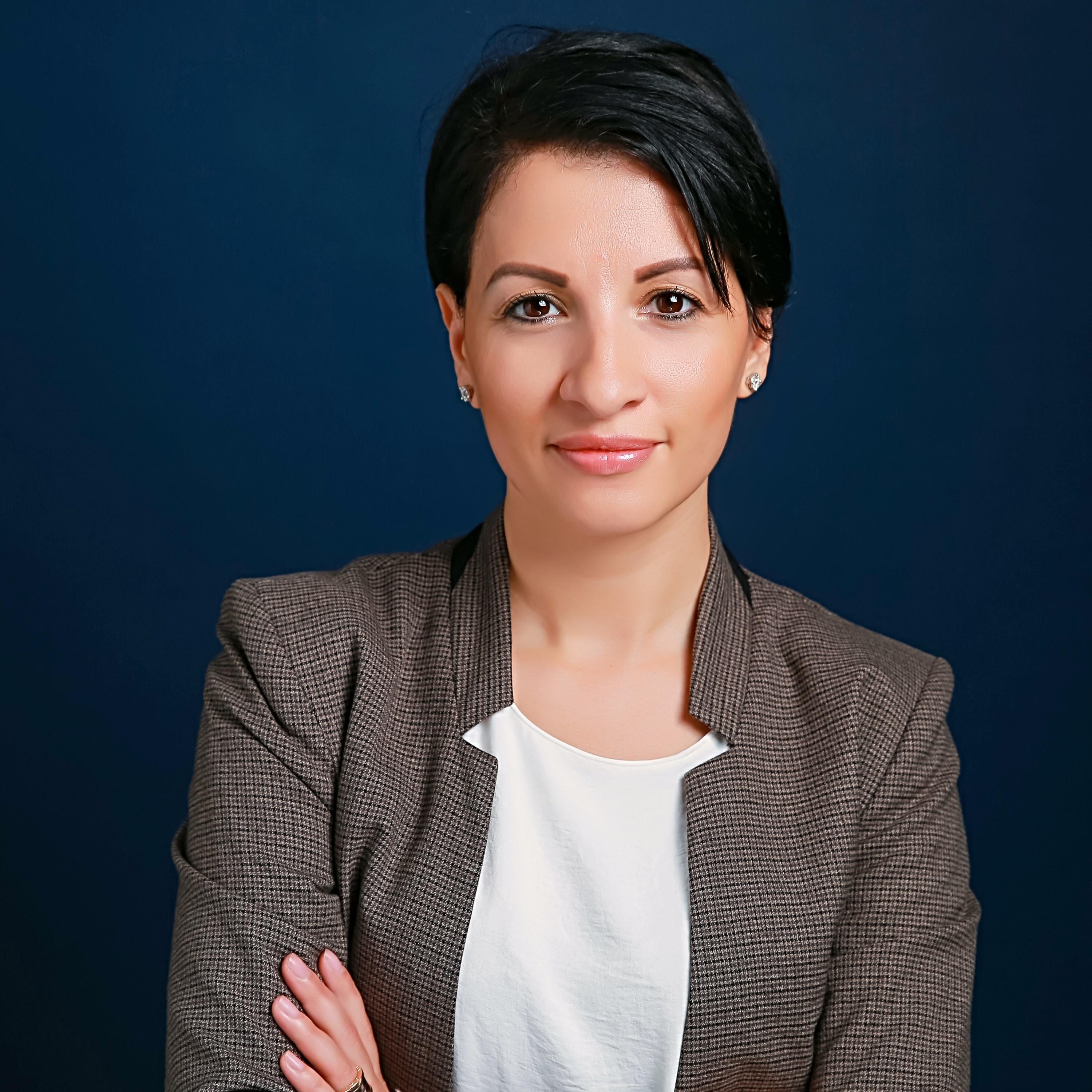
Former Senior Resident Scholar, Malcolm H. Kerr Carnegie Middle East Center
Dalia Ghanem was a senior resident scholar at the Malcolm H. Kerr Carnegie Middle East Center in Beirut, where her research focuses on Algeria’s political, economic, social, and security developments. Her research also examines political violence, radicalization, civil-military relationships, transborder dynamics, and gender.
Recent Work
Dalia Ghanem


Frances Z. Brown, Judy Dempsey, Dalia Ghanem, …
Carnegie does not take institutional positions on public policy issues; the views represented herein are those of the author(s) and do not necessarily reflect the views of Carnegie, its staff, or its trustees.

Before the next wave of EU enlargement takes place, the union needs to grapple with thorny questions of how power is distributed among its members.


Emil Sondaj Hansen, Ditte Brasso Sørensen

The European far right might fail to steer EU policy in the direction Russia wants, but they will create enough chaos inside Europe to benefit the Kremlin.

Dimitar Bechev
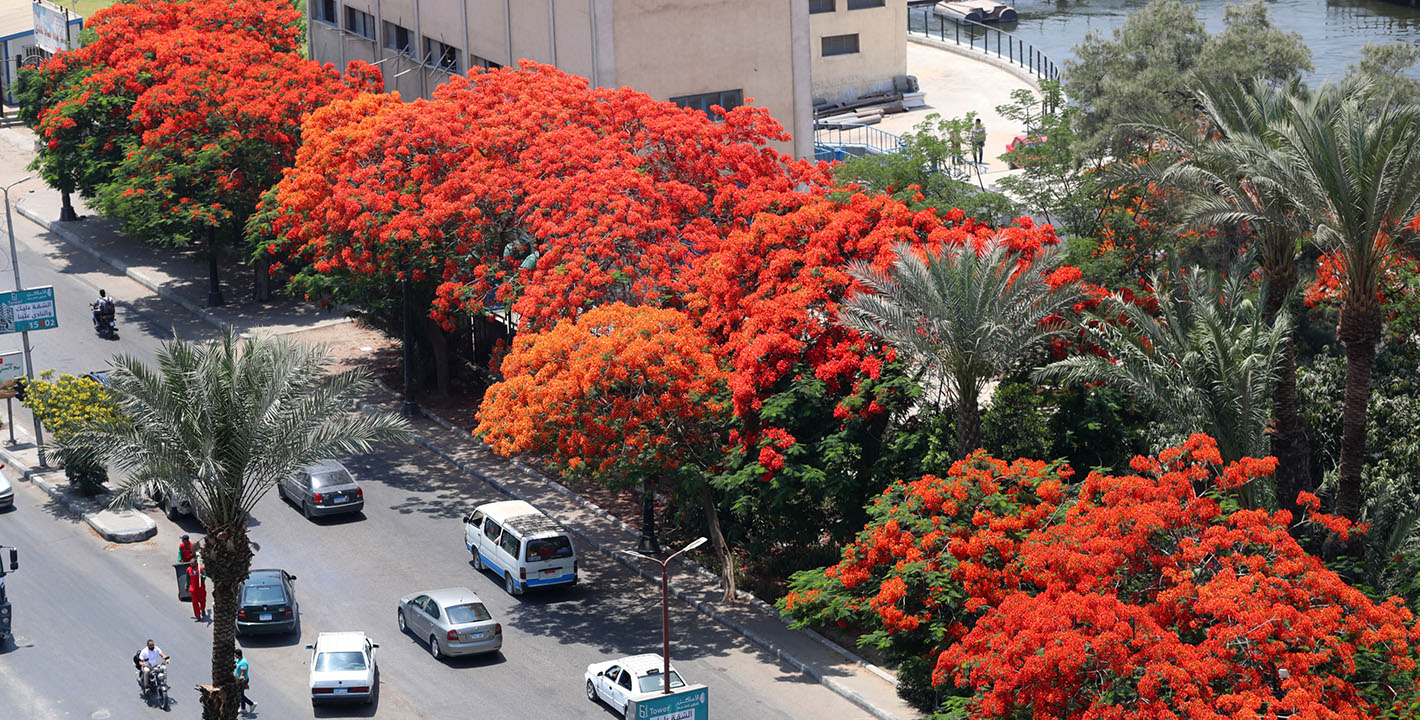
In Egypt’s dense cities, the disappearance of foliage has health implications and punishes daily commuters.

Angie Omar

If the Russian-speaking community in Latvia cannot articulate their interests without being seen as disloyal, they could end up embracing a pro-Kremlin agenda.

Sergejs Potapkins

Russia’s ruling party would have benefited from Putin appearing as its distant patron, but as an active frontman imposing his views on the public, he has done nothing but harm both the party’s election campaign and the ruling system overall.

Andrey Pertsev