

Article
Zaha Hassan
{
  "authors": [
    "Zaha Hassan"
  ],
  "type": "legacyinthemedia",
  "centerAffiliationAll": "dc",
  "centers": [
    "Carnegie Endowment for International Peace",
    "Malcolm H. Kerr Carnegie Middle East Center"
  ],
  "collections": [],
  "englishNewsletterAll": "menaTransitions",
  "nonEnglishNewsletterAll": "",
  "primaryCenter": "Carnegie Endowment for International Peace",
  "programAffiliation": "MEP",
  "programs": [
    "Middle East"
  ],
  "projects": [],
  "regions": [
    "North America",
    "United States",
    "Middle East",
    "Palestine",
    "Levant"
  ],
  "topics": [
    "Political Reform",
    "Democracy",
    "Security",
    "Foreign Policy"
  ]
}
Source: Getty
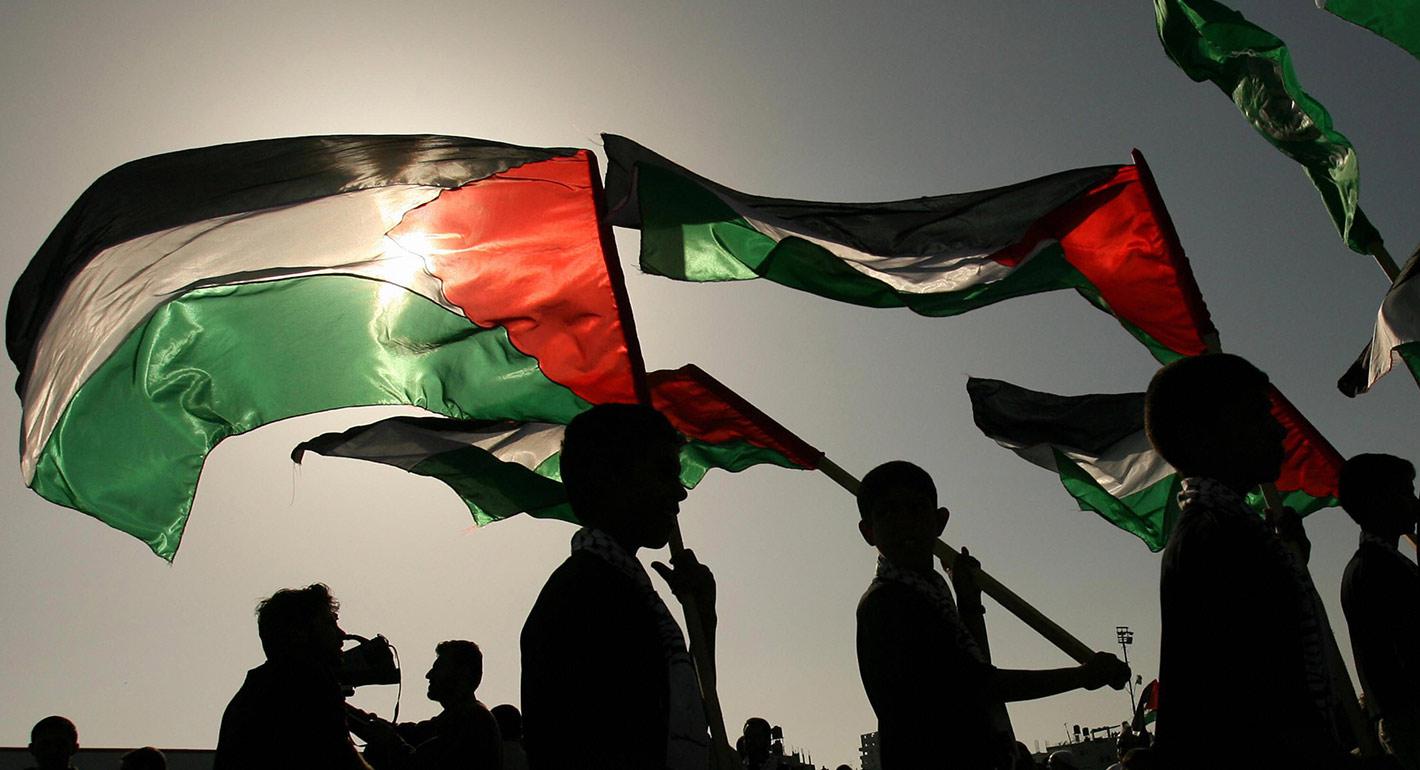
Will the next decade in the struggle for Palestinian national aspirations be one distinguished by the triumph of international law?
Source: Haaretz
Just before the start of the decade that is now ending, in 2009, Benjamin Netanyahu reemerged from a political black hole to become prime minister of Israel again, and the Palestine Liberation Organization (PLO) launched a strategy to internationalize a solution to the conflict.
Today, Netanyahu remains prime minister, though he is hanging on to power by a thread, and the PLO just played their only card to leverage Israel back to negotiations—the International Criminal Court (ICC) has opened a war crimes complaint involving Israeli officials.
The outcome of the ICC case could have serious ramifications for Netanyahu and his political rival for the premiership Benny Gantz, both of whom were central figures in the 2014 bombing of Gaza that is among the issues before the ICC.
Will the next decade in the struggle for Palestinian national aspirations be one distinguished by the triumph of international law and those institutions established after World War II to peacefully resolve international disputes, or will go-it-alone nationalism and the logic of power prevail? The outcome of various legal initiatives advanced by Palestinians will be critical in determining which way the world pivots.
Without a doubt, the presidency of Donald Trump fast-tracked Palestinians and Israelis to this moment. Within the U.S. administration, the Bible, as interpreted by Trump officials, has supplanted international law in resolving the conflict. U.N. Security Council resolutions are viewed as “tired rhetoric,” and decades-old State Department legal memoranda finding that Israel’s colonization of occupied Palestinian land is illegal have become inconvenient and anachronistic.
Secretary of State Mike Pompeo, like the president, has taken to conducting foreign policy by tweets, stating that “Israeli people” have "fundamental rights” to “this land, to this space”—apparently referring to the occupied West Bank.
The United States’ move away from international law, however, began well before the current administration was handed the nuclear codes. Actions (and omissions) by the administration of President Barack Obama emboldened Israel to expand the Jewish colonization of Palestinian land and to disregard even the pretense of equality for Palestinian citizens of Israel.
Obama refused to use the considerable leverage he wielded to stop or stem the tide of illegal Israeli settlements. Instead, he awarded Israel the largest military aid package in U.S. history and pushed Arab states to modify the 2002 Arab Peace Initiative to normalize the idea that Palestinian land with high concentrations of settlement-colonies would be part of Israel’s sovereign territory in any peace deal.
Most problematic of all, he outlined new peace parameters that demanded Palestinians concede that Israel is a “Jewish state and the homeland for the Jewish people” despite the fact that Israel has never declared its borders. In effect, what the Obama administration referred to as something “everyone knows” required that Palestinians negate their indigeneity in historic Palestine, acquiesce to Israel’s unequal treatment of Palestinian citizens, and acknowledge the validity of Israeli claims to Palestinian territory occupied by Israel since 1967.
If Obama’s policy was defined by carrots to Israel—to the tune of $38 billion—to induce it to sign a peace agreement with Palestinians, Trump's is defined by sticks primed to kill Palestinian national aspirations and claims. These include ending all economic assistance to Palestinians, moving the US embassy to Jerusalem, delegitimizing the work of the U.N. agency responsible for providing relief to Palestinian refugees, and re-criminalizing the status and operations of the PLO in the United States.
In the face of these challenges, the Palestinian strategy has been to resort to international law to support Palestinian national aspirations and pursue accountability for victims of Israeli war crimes. Some rights organizations and U.N. bodies are now going further. Human Rights Watch, in particular, is calling on Israel to grant Palestinians equality in the face of 52 years of military rule.
The U.N. committee responsible for states’ compliance with the Convention on the Elimination of All Forms of Racial Discrimination wrote in its concluding observations following its review of Israel this year that it was “appalled” by the “hermetic character” of the country’s segregation policies. It called on Israel to eradicate policies or practices which “severely and disproportionately affect the Palestinian population in Israel proper and in the Occupied Palestinian Territory.” This same anti-racism body also accepted to hear an inter-state complaint submitted by the State of Palestine against Israel involving Israel’s apartheid-like policies and its settlement enterprise.
The European Court of Justice has taken a step toward delegitimizing Israel’s de facto annexation of the West Bank by ruling in November that settlement products must be labeled as such. That decision will bolster Irish parliamentarians seeking to ban settlement products altogether. And the soon-to-be published U.N. database of companies facilitating Israel’s settlement enterprise will be an important development toward ending corporate complicity in violations of Palestinians' rights.
On the specific question of Israel’s sovereignty over Jerusalem, the judicial arm of the U.N., the International Court of Justice, will hear a case brought by Palestine against the United States for violation of its obligations under the Vienna Convention on Diplomatic Relations by relocating its embassy in Israel from Tel Aviv to Jerusalem. How the case is decided will determine whether other countries decide to relocate their embassies to Israel.
And now, with the formal opening of the war crimes case at the ICC after a five-year delay, judges will finally hear allegations against Israeli officials related to the 2014 bombing and invasion of Gaza, the unlawful killings of unarmed civilians during the ongoing Gaza border protests, and Israel’s colonization of the occupied West Bank.
First, however, the judges must decide what the precise legal borders of Palestine are. Israel has not acceded to the treaty establishing ICC jurisdiction; therefore, the ICC must establish that the alleged war crimes occurred on Palestinian territory. The answer to the territorial question—one previously left to bilateral negotiations—lies at the heart of Palestinian claims for sovereignty.
Will Palestinians see the benefits of their legal efforts in the next year? 2020, like perfect vision, could make it all crystal clear.

Senior Fellow, Middle East Program
Zaha Hassan is a human rights lawyer and a senior fellow at the Carnegie Endowment for International Peace.
Recent Work
Zaha Hassan
Carnegie does not take institutional positions on public policy issues; the views represented herein are those of the author(s) and do not necessarily reflect the views of Carnegie, its staff, or its trustees.

The conflict is exposing the deep energy vulnerabilities of Korea’s chip industry.


Darcie Draudt-Véjares, Tim Sahay
The decision of Lebanon’s parliament may look exceptional, but in reality it is not.

Issam Kayssi
The countries in the region are managing the fallout from Iranian strikes in a paradoxical way.

Angie Omar
French President Emmanuel Macron has unveiled his country’s new nuclear doctrine. Are the changes he has made enough to reassure France’s European partners in the current geopolitical context?

Rym Momtaz, ed.
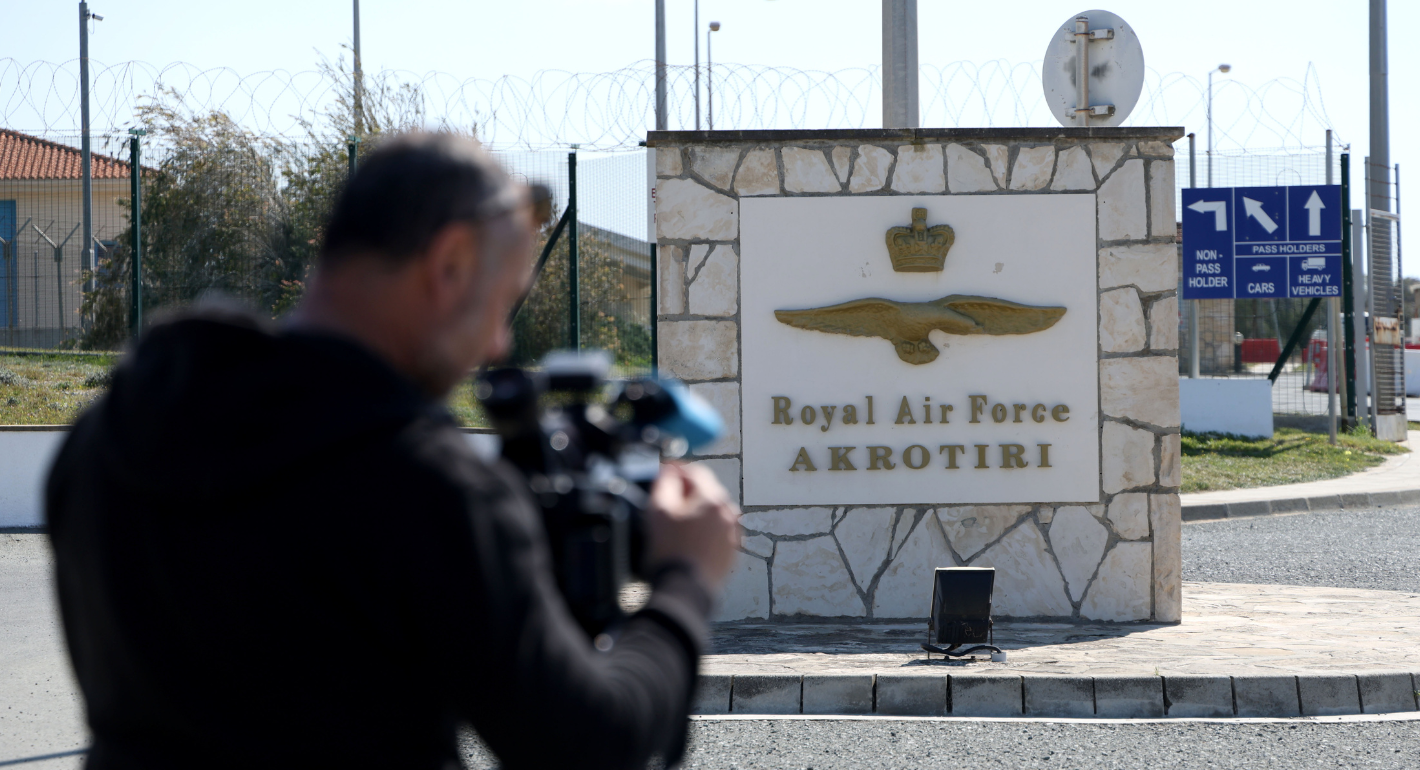
The drone strike on the British air base in Akrotiri brings Europe’s proximity to the conflict in Iran into sharp relief. In the fog of war, old tensions in the Eastern Mediterranean risk being reignited, and regional stakeholders must avoid escalation.

Marc Pierini