Ulrich Kühn
{
"authors": [
"Ulrich Kühn"
],
"type": "other",
"centerAffiliationAll": "dc",
"centers": [
"Carnegie Endowment for International Peace"
],
"collections": [],
"englishNewsletterAll": "ctw",
"nonEnglishNewsletterAll": "",
"primaryCenter": "Carnegie Endowment for International Peace",
"programAffiliation": "NPP",
"programs": [
"Nuclear Policy"
],
"projects": [],
"regions": [],
"topics": [
"Nuclear Policy"
]
}Source: Getty
Nuclear Risk in the Euro-Atlantic
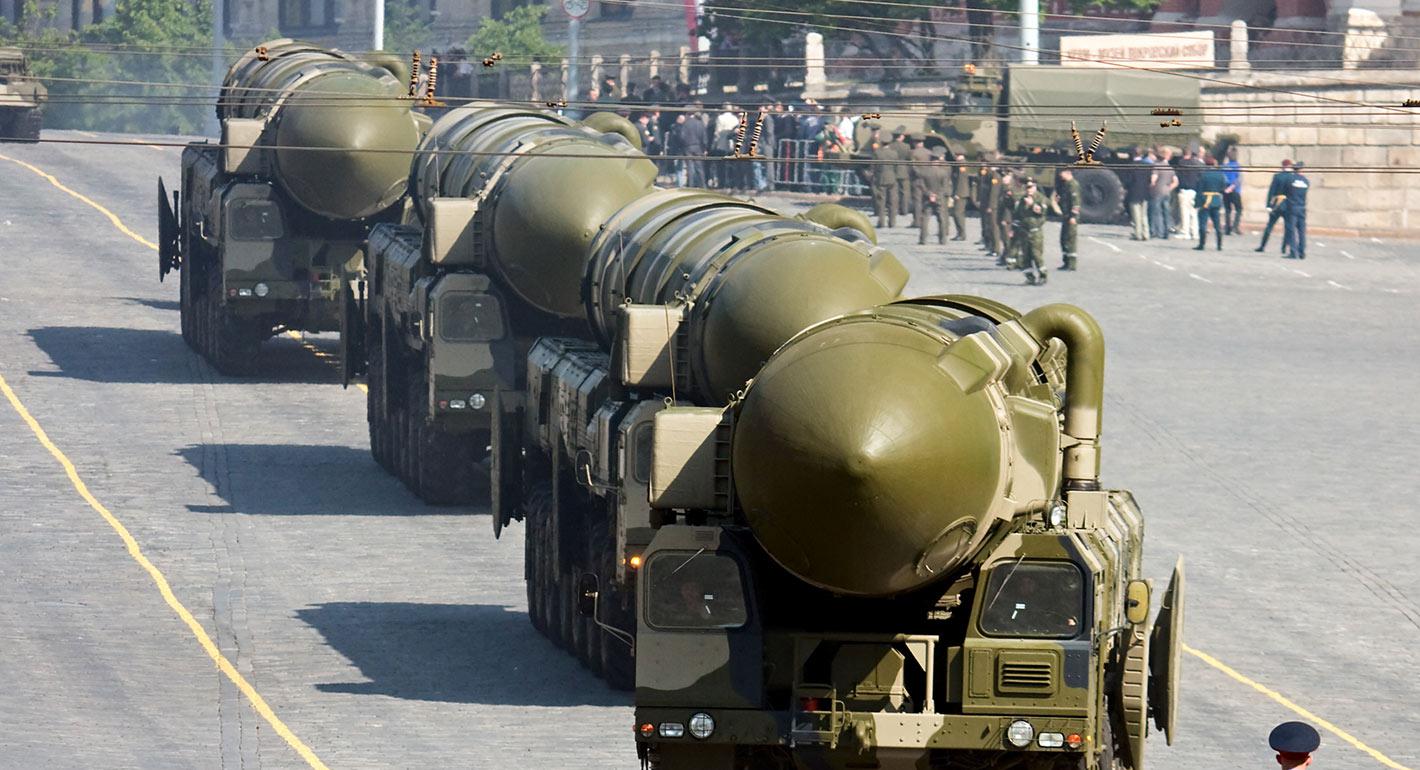
Risks of nuclear weapon use in the Euro-Atlantic region have grown, but policymakers have not yet correctly assessed which risks they should be most concerned about.
Source: United Nations Institute for Disarmament Research
The risk of nuclear weapon use—be it deliberately in an escalating crisis or war, in accordance with one’s own nuclear doctrine or due to inadvertent events—has grown in the Euro-Atlantic region, mainly as a function of the recurring competition between the Russian Federation and the United States. As this chapter argues, decision makers are correct to see a riskier environment. Yet in considering the risk of nuclear weapon use, analysts and policymakers alike are assessing threats by often focusing on highimpact/low-probability scenarios, driven by misreading of one another’s plans and intentions. As a result, they are assessing the risks wrongly, and respond to the wrong things. This chapter first addresses actors, interests, and political change at three levels of analysis. It then establishes a menu for manipulating and perceiving risk, focusing on asymmetric capabilities, (unofficial) doctrines, and poor risk analysis. It concludes with a set of recommendations on how to mitigate the most pressing risks of nuclear use in the Euro-Atlantic.
The original article was published as a chapter in "Nuclear Risk Reduction: Closing Pathways to Use," edited by Wilfred Wan and published by UNIDIR.
About the Author
Nonresident Scholar, Nuclear Policy Program
Ulrich Kühn is a nonresident scholar at the Carnegie Endowment for International Peace, and the head of the arms control and emerging technologies program at the Institute for Peace Research and Security Policy at the University of Hamburg.
- Why Arms Control Is (Almost) DeadCommentary
- Preventing Escalation in the Baltics: A NATO PlaybookReport
Ulrich Kühn
Recent Work
Carnegie does not take institutional positions on public policy issues; the views represented herein are those of the author(s) and do not necessarily reflect the views of Carnegie, its staff, or its trustees.
More Work from Carnegie Endowment for International Peace
- Time for Nuclear Recycling? Prospects and Implications During a Global Nuclear Energy RenewalPaper
Nuclear recycling has emerged as a salient, cross-cutting issue, one that is heavily dependent on broader choices among reactor designs, fuel availability, economic resources, technological options, and political choices. States and nuclear industries seeking to advance recycling must devote sustained consideration now to the interplay of all these factors.
Etienne Pochon
- Europe Should Not Let Nuclear Nonproliferation DieCommentary
Amid uncertainty caused by the Iran war, the global drive for nonproliferation has stalled. With Europe diplomatically marginalized and countries reassessing their nuclear options, efforts to curb the spread of nuclear weapons risk becoming irrelevant.
Jane Darby Menton
- Corrupted by Absolute PowerCommentary
In an interview, Marc Lynch discusses his new book decrying the post-1990 U.S.-dominated order in the Middle East.
Michael Young
- Two Wars Later, Iran’s Nuclear Question Is Still on the TableCommentary
Tehran may conclude that its ability to disrupt the global economy via the Strait of Hormuz provides enough deterrence to begin quietly rebuilding its nuclear program.
Jane Darby Menton, Mohammad Ayatollahi Tabaar
- Chernobyl Is Still a Current Event, Forty Years LaterCommentary
The 1986 incident showed that a nuclear accident anytime is a nuclear accident for all time.
Corey Hinderstein