

Commentary
A much-discussed disagreement over internet restrictions in Russia was never an existential threat for Putin: It was about elite groups protecting their interests.
Alexandra Prokopenko
{
  "authors": [
    "K.P. Krishnan",
    "Anirudh Burman",
    "Suyash Rai"
  ],
  "type": "legacyinthemedia",
  "centerAffiliationAll": "",
  "centers": [
    "Carnegie Endowment for International Peace",
    "Carnegie India"
  ],
  "collections": [],
  "englishNewsletterAll": "",
  "nonEnglishNewsletterAll": "",
  "primaryCenter": "Carnegie India",
  "programAffiliation": "",
  "programs": [],
  "projects": [
    "Political Economy"
  ],
  "regions": [
    "South Asia",
    "India"
  ],
  "topics": [
    "Economy"
  ]
}
Source: Getty
India’s migrant workers have fallen through the cracks of its social security net, and government response has shown a significant gap between high-minded intentions reflected in existing laws and their implementation.
Source: Indian Express
The fallout of the lockdown in order to reduce the spread of COVID-19 highlights the urgent need to rationalise the legislative framework for labour in India. Migrant labour has been among the worst affected due to the lockdown. Their efforts to leave the cities before the lockdown, and the extraordinary efforts some put in to get back home, suggest that they have very low resilience to stay in cities without employment. They fall through the cracks of India’s social security net, and the government response has shown a significant gap between high-minded intentions reflected in existing laws and their implementation.
A key piece of legislation governing inter-state migrants in India is the Inter-State Migrant Workmen (Regulation of Employment and Conditions of Service) Act, 1979. The Act was enacted to prevent the exploitation of inter-state migrant workmen by contractors, and to ensure fair and decent conditions of employment. The law requires all establishments hiring inter-state migrants to be registered, and contractors who recruit such workmen be licensed. Contractors are obligated to provide details of all workmen to the relevant authority. Migrant workmen are entitled to wages similar to other workmen, displacement allowance, journey allowance, and payment of wages during the period of journey. Contractors are also required to ensure regular payment, non-discrimination, provisioning of suitable accommodation, free medical facilities and protective clothing for the workmen.
In the immediate aftermath of the lockdown, state governments were taken unawares by inter-state migrants who were desperate to return home. Many had lost jobs, would not be able to afford rent and were afraid of falling seriously ill away from their families. The full and proper implementation of this law would have meant that state governments had complete details of inter-state migrant workmen coming through contractors within their states. While this would still leave out migrants who move across states on their own, a large segment would be automatically registered due to the requirements of the Act. States would consequently have been better prepared to take steps to protect such workmen during this lockdown. However, almost no state seems to have implemented this law in letter and spirit.
The primary reason for this seems to be the onerous compliance requirements set out in the law. It not only requires equal pay for inter-state workmen, but also requires other social protection that would make their employment significantly more expensive than intra-state workmen. This includes the payments of different allowances, and requirements that contractors provide accommodation and healthcare for such workmen. Compliance with these requirements is not only onerous, it makes the cost of hiring inter-state workmen higher than hiring similar labour from within the state.
Since the Act is barely implemented, it exists as another law that potentially provides rent-seeking opportunities to enterprising government inspectors while failing in its main objective. Another consequence of weak implementation is the absence of government preparedness and the consequent failure in preventing genuine hardships for vulnerable groups.
Not only does this raise questions about the utility of such well-meaning but impractical laws, it also highlights the lack of state capacity to enforce such provisions. To implement this law alone, government inspectors would not only have to maintain records of inter-state workmen, but also verify whether all the other requirements regarding wages, allowances, accommodation and health care are complied with.
The issues with the law and its non-enforcement are symptomatic of the socialist era, when the mere enactment of a law with aspirational requirements backed by legal coercion was considered adequate for creating good outcomes. This law, and many other labour-welfare legislation never considered issues like compliance costs, government capacity for enforcement, and importantly, counter-productive consequences. For example, the onerous requirements set out in this law incentivise contractors and employers to under-report inter-state workmen rather than to register them.
The consequences of the lockdown are already proving to be disastrous for migrant labour. One of the lessons from this episode is to not let aspirational requirements become a hindrance to the effective protection of the very groups these requirements are designed for. This will require a principled distinction between formalisation and ostensible social-welfare. While the former seeks to make people or activities visible or “legible”, the latter goes a step further. Social-welfare protections are predicated upon formalisation, but non-compliance with onerous social welfare requirements can instead inhibit formalisation. This is not merely because of high compliance costs, but also because the state can barely keep up with the task of ensuring compliance with such requirements, made worse given the disincentives to comply.
This has created a two-tier system – formal and informal. Those in the formal tier — fewer than 10 percent of the workforce — enjoy considerable protections, while those in the informal tier get almost no protections. Since welfare schemes are also predicated on the visibility of those getting the benefits, informal workers, especially in urban areas, fall through cracks in the system. The lack of any welfare net for informal workers in urban areas reflects the consequences of formalisation on paper — while farmers get cash transfers, and labourers in rural areas have MGNREGA, there are hardly any schemes for informal workers in urban areas.
Laws such as the Inter-State Migrant Workmen Act, 1979 must therefore be rationalised to remove requirements that disincentivise formalisation. We must be pragmatic and ensure that employers and contractors have incentives to come forward and register labourers without being worried about punitive action or impractical social safety requirements.
This article was originally published by the Indian Express.
K.P. Krishnan
K.P. Krishnan is the secretary of the Ministry of Skill Development and Entrepreneurship of the Government of India.

Former Associate Research Director and Fellow, Carnegie India
Anirudh Burman was an associate research director and fellow at Carnegie India. He works on key issues relating to public institutions, public administration, the administrative and regulatory state, and state capacity.

Former Fellow, Carnegie India
Suyash Rai was a fellow at Carnegie India. His research focuses on the political economy of economic reforms, and the performance of public institutions in India.
Carnegie does not take institutional positions on public policy issues; the views represented herein are those of the author(s) and do not necessarily reflect the views of Carnegie, its staff, or its trustees.

A much-discussed disagreement over internet restrictions in Russia was never an existential threat for Putin: It was about elite groups protecting their interests.

Alexandra Prokopenko

This piece argues that India’s central challenge is not managing a single flashpoint but resolving the underlying tension between expansion and institutional coherency of the BRICS grouping.

Vrinda Sahai
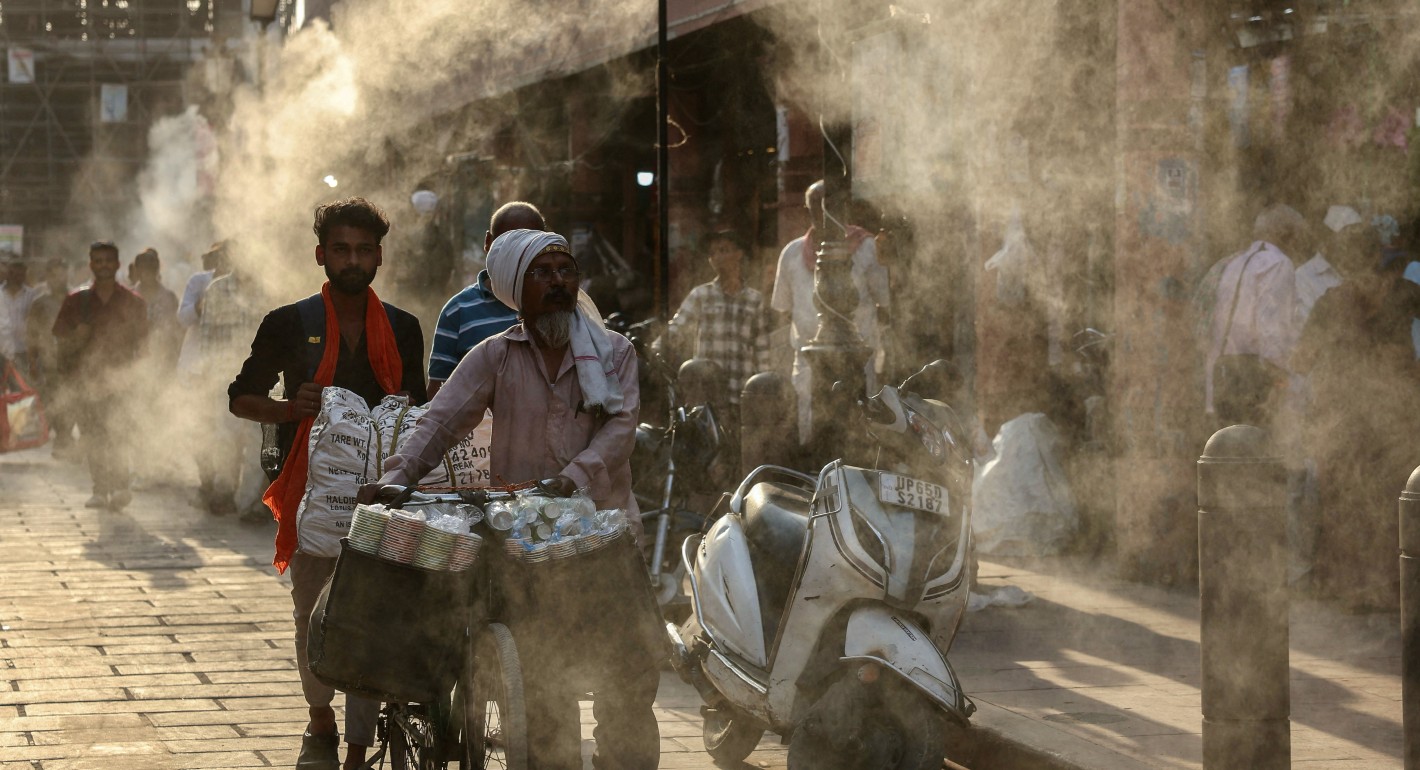
As “unprecedented” temperatures become routine, the country is failing its energy transition stress test.

Kayly Ober

The ASML MoU with Tata Electronics is an indicator of how far the Indian semiconductor ecosystem has come. This ecosystem has been years in the making and represents real commercial logic.

Konark Bhandari
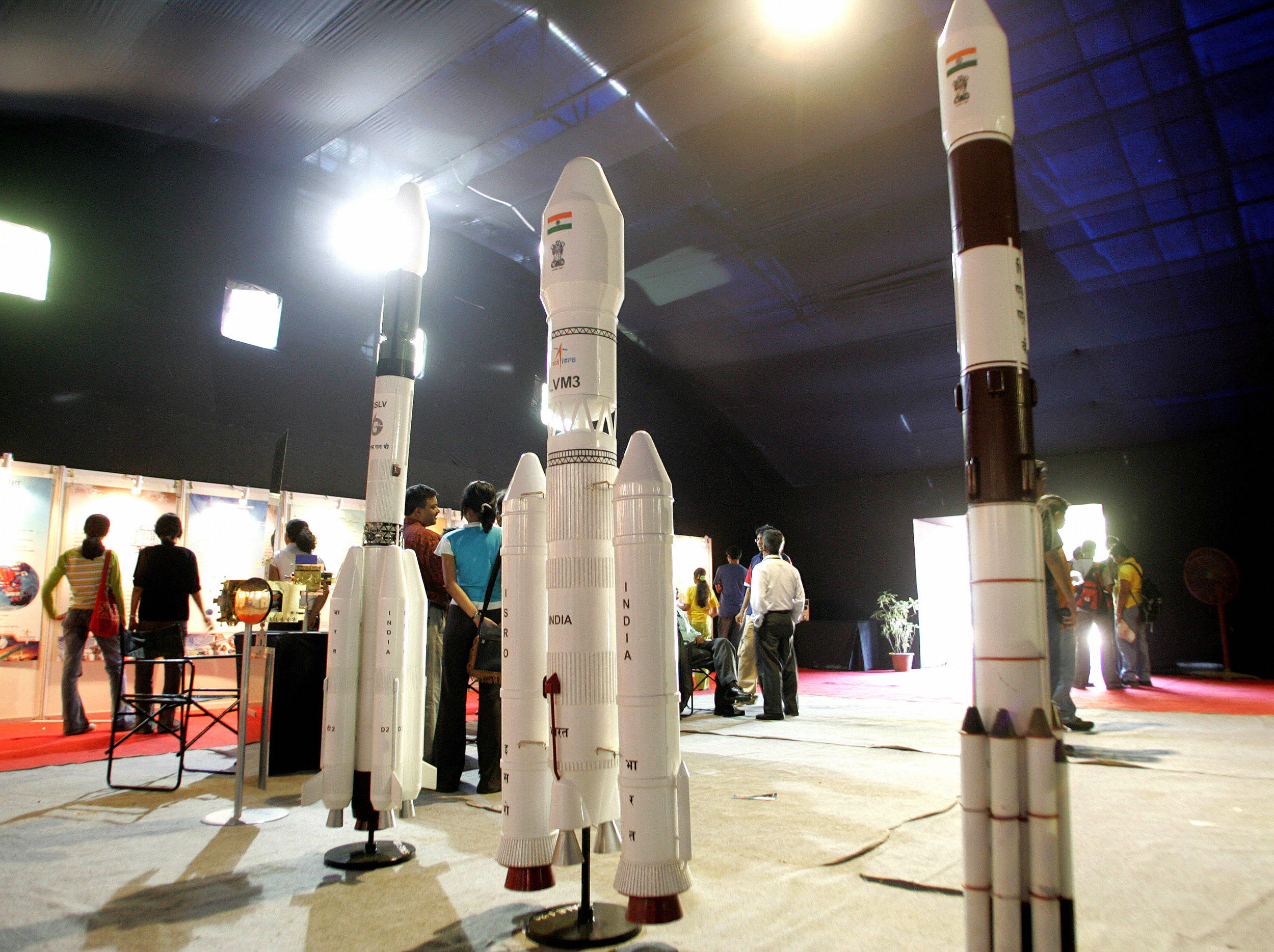
This paper examines the relationship between India’s evolving space policy and the corresponding growth in private space ventures. It analyzes both the enabling factors created by recent regulatory changes and the persistent challenges facing entrepreneurs in this capital-intensive, highly regulated industry.
Harshan Vazhakunnam