

Article
Erik Brattberg, David Whineray
{
  "authors": [
    "David Whineray"
  ],
  "type": "legacyinthemedia",
  "centerAffiliationAll": "",
  "centers": [
    "Carnegie Endowment for International Peace"
  ],
  "collections": [],
  "englishNewsletterAll": "",
  "nonEnglishNewsletterAll": "",
  "primaryCenter": "Carnegie Endowment for International Peace",
  "programAffiliation": "",
  "programs": [],
  "projects": [],
  "regions": [
    "North America",
    "United States",
    "Western Europe"
  ],
  "topics": [
    "Foreign Policy"
  ]
}
Source: Getty
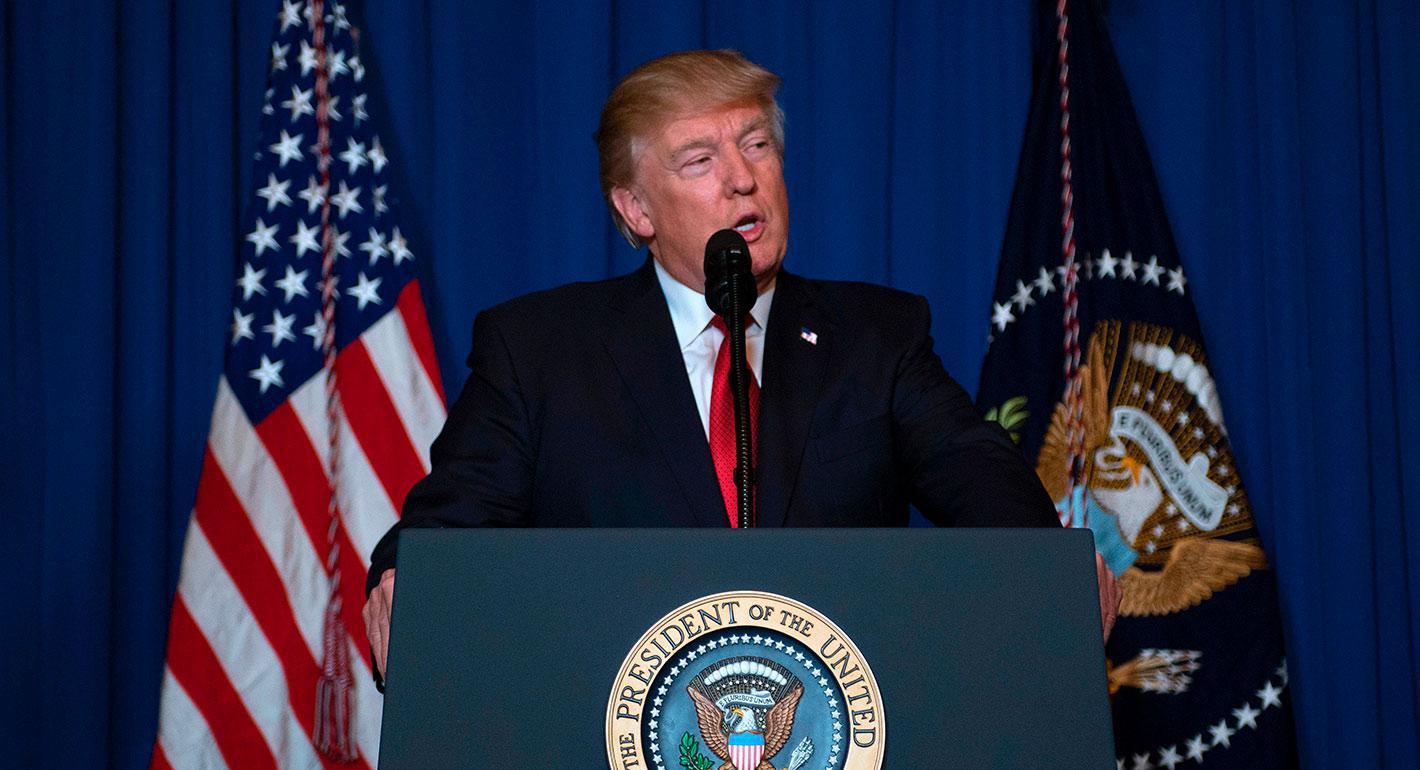
Tensions between the United States and the EU risk continuing and even growing, whoever wins the White House in six months.
Source: Independent
Six months today, Americans will wake up to a re-elected Donald Trump or a President-elect Joe Biden. Few will follow the upcoming 26-week campaign as closely as Europeans. Many Europeans say that, like Bobby Ewing’s shooting, they hope to wake up on November 5 and discover the last four years were a bad dream with things set to return to ‘normal’ under a President Biden. This is wishful thinking. Tensions between the US and the EU risk continuing – even growing – whoever wins the White House in six months.
European diplomats privately admit transatlantic relations are at their lowest point since the end of the Cold War, including during the 2003 Iraq War. Previous US-EU disagreements have been over policies. Today, the very concept and value of transatlantic unity is questioned.
President Trump is the first modern US president to undermine European integration, to view the EU as a threat, and to inject conditionality into NATO. As one European ambassador in Washington privately puts it, Trump has shown “blatant disregard for the shared values that have underpinned transatlantic alliance for decades".
Europeans worry things will get worse if Trump is re-elected. As another envoy says, our "fear is we have not hit rock bottom yet”. Europe’s biggest concerns are more trade tariffs, US withdrawal from NATO (or conditions on Article 5), and further US isolationism, advantaging China and Russia. As a third ambassador says, a Trump loss in November would be met by ”huge relief” in Europe: They assume that in that situation, EU-US tensions would fade.
But would they? Europeans would certainly welcome a Biden administration’s support for NATO and the EU, concern about climate change and Russia, and greater commitment to transatlantic cooperation. But Trump’s style and unpopularity in Europe obscures an uncomfortable reality for Europeans that many EU-US tensions are also the product of a longer-term, more structural divergence of US and European interests than of America’s 45th President. Five issues risk pushing the US and EU apart over the next four years, whoever is in the White House.
First, low levels of European defense spending would annoy Biden just as they have Trump, Obama and Bush. Indeed, tensions could grow if a future administration cut US defense spending and demanded Europeans filled the gap. EU-US trade tensions won’t simply vanish under a new administration, either.
Second, China. While both Republican and Democratic attitudes to Beijing have hardened, many EU member states will remain reluctant to choose between their growing trade and investment equities with China and their security and values equities with the US, aggravating Washington.
Third, US interest in Europe – the product of the dominance of the Cold War in US foreign policy – will continue to decline. As others have argued, the new Cold War is with China. Whoever is president, the focus of US foreign policy over the next four years will be the Pacific, not the Atlantic.
Fourth, any president’s ambition to reassert US global leadership will be impacted by political polarization and a public weary of international engagements at home, as well as the rise of competing powers overseas.
Finally, Europeans have become accustomed to disagreeing with the US over the last three years in a way that would have been unthinkable under previous administrations. This genie won’t just go back in the bottle. Even if a President Biden did everything the EU wanted, Europeans now know a future president could revert back to a Trumpian approach and so will hedge accordingly.
A strong transatlantic relationship serves US and EU interests. As the Rules-Based International Order fades and the world enters a new era of Great Power rivalry, a unified West is important in addressing a rising China and revanchist Russia. So what could the EU and US do?
Economically, a new EU-US trade deal would help Washington pull Europe away from China and enable the EU and US to set new global standards and new international "rules of the road" together. Politically, the US could commit to joint, transatlantic approaches on Iran, Covid-19, Russia and Syria — and the EU could work more closely with Washington on China. Militarily, the US could commit to NATO, Europeans could spend more, and both could evolve NATO into a transatlantic political — not just military — forum.
Europeans should snap out of their simplistic ‘Trump, bad; Biden, good’ mindset. Equally, a Biden administration shouldn’t just expect Europeans to automatically return to the fold. Both need to see, and address, the larger geopolitical dynamics at play in US-EU relations. If they don’t, the Atlantic risks getting wider, not smaller, whoever sits in the Oval Office next year.
Former Nonresident Fellow, Europe Program
David Whineray was a nonresident fellow in the Europe Program at the Carnegie Endowment for International Peace in Washington, DC.
Recent Work

Erik Brattberg, David Whineray
David Whineray
Carnegie does not take institutional positions on public policy issues; the views represented herein are those of the author(s) and do not necessarily reflect the views of Carnegie, its staff, or its trustees.

Despite public disputes over trade and immigration, the strategic partnership’s foundations remain sturdy.

Sameer Lalwani
It signals a new era of tech diffusion and warfare.

Steve Feldstein

With its public finances in shambles, the far right polling at 35 percent ahead of the 2027 presidential election, and a growing protest movement, is France’s crisis a threat to the EU’s geopolitical awakening?

Rym Momtaz, ed.

Ahead of a tough winter for Ukraine, Donald Trump’s swing back toward Russia bodes ill. But instead of panicking, Kyiv’s European allies are focusing on action.
Rym Momtaz

Without a ceasefire with Ukraine on attacking each other’s energy infrastructure—to which the Kremlin is unlikely to agree—the diesel agreement between Putin and Trump is largely for show, rather than representing a genuine increase in the volumes of Russian diesel on the global market.

Sergey Vakulenko