• Research
  • Emissary
  • About
  • Experts
Carnegie Global logoCarnegie lettermark logo
DemocracyIran
  • Donate
{
  "authors": [
    "Richard Sokolsky",
    "Steven Simon"
  ],
  "type": "other",
  "centerAffiliationAll": "",
  "centers": [
    "Carnegie Endowment for International Peace"
  ],
  "collections": [],
  "englishNewsletterAll": "",
  "nonEnglishNewsletterAll": "",
  "primaryCenter": "Carnegie Endowment for International Peace",
  "programAffiliation": "",
  "programs": [],
  "projects": [],
  "regions": [],
  "topics": [
    "Security",
    "Military",
    "Foreign Policy"
  ]
}
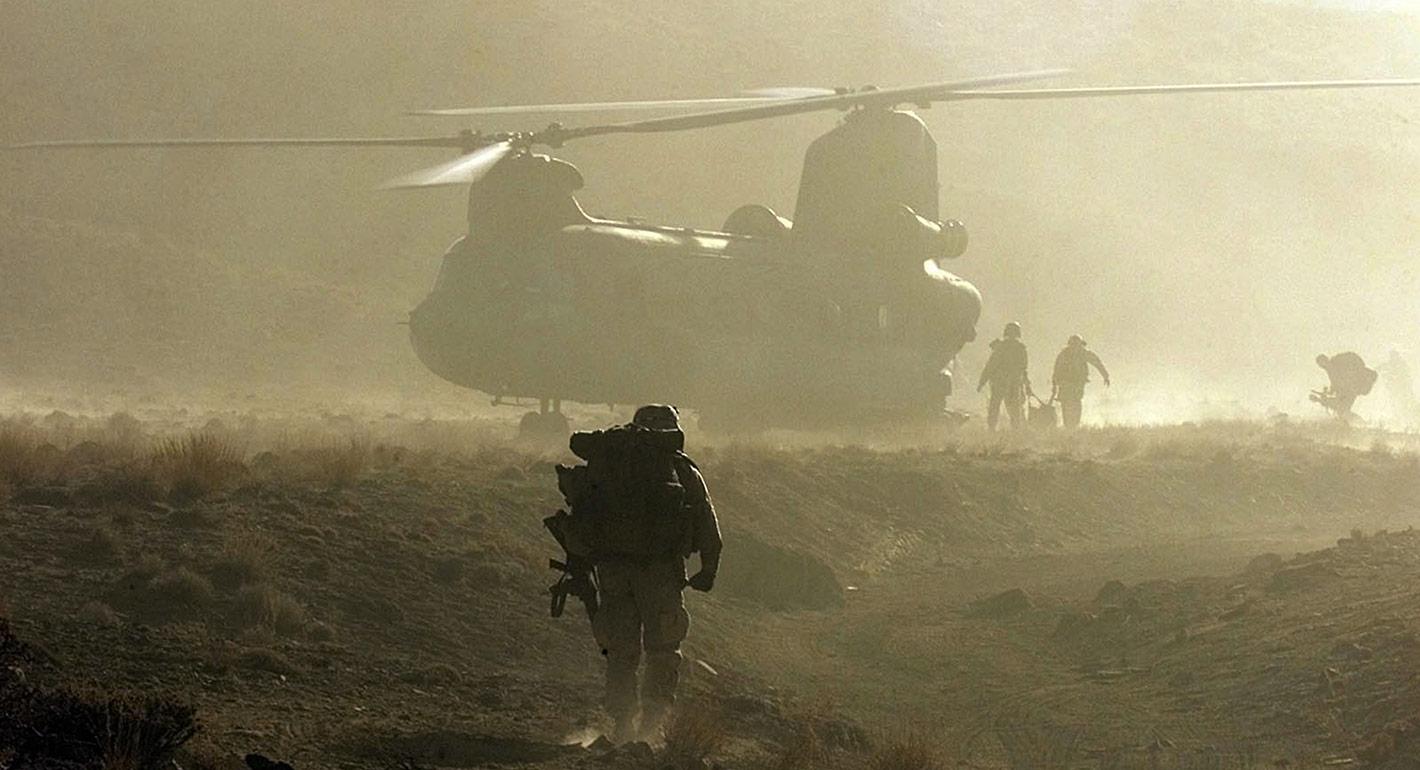
Source: Getty

Other

19 Years Later: How to Wind Down the War on Terror

As the legacy of September 11, 2001, fades, it is time to reassess the war on terror.

Link Copied
By Richard Sokolsky and Steven Simon
Published on Jun 10, 2020

Source: Quincy Institute for Responsible Statecraft

Executive Summary

As the legacy of September 11, 2001, fades, it is time to reassess the war on terror. The United States has negotiated an Afghan withdrawal agreement with the Taliban, significantly drawn down its military presence in Iraq, and maintains only a small troop contingent in Syria. The grim innovations associated with the war on terror—indefinite detention, black sites, extraordinary renditions, torture, military trials, targeted killings—have for the most part been abandoned, although a small group of prisoners remains at Guantanamo and drones are still deployed to kill terrorism suspects. At the same time, U.S. counterterrorism (CT) operations have increased in Africa.

During this period, homeland security efforts were ramped up quickly but have remained the junior partner in the war on terror. Yet it was no doubt due to the maturation of these efforts that, since September 11, jihadists have successfully infiltrated the United States only once to carry out deadly attacks, when a Saudi aviation student deployed by the Saudi Air Force to a US naval air station in Florida murdered three U.S. sailors in December 2019. According to the FBI, the student had been in contact with al-Qaeda. The greater danger now is posed by self-radicalized individuals at home, the majority of whom are linked to white supremacist movements.

As the external terrorist threat has declined, with U.S. defenses strengthening and insurgents turning their guns on local adversaries, the U.S. has an opportunity to realign its war on terror with the realities of a new strategic dispensation. The policy departures recommended in this paper are intended to thread the needle by reducing the scope and intensity of U.S. CT operations and increasing congressional oversight while retaining an effective capacity for self-defense. Our policy proposals include the following:

  • Repeal and Replace the AUMF. The authorization for the use of military force, first signed into law a week after the September 11 attacks and followed in 2002 by a second measure authorizing the use of force against Iraq, is now interpreted as providing widespread authority for the president to wage war. Congress should repeal the 2002 authorization, replace the 2001 authorization with a more narrowly tailored law, and pass a reformed War Powers Act that would preserve the nation’s ability to respond rapidly in a crisis while ensuring congressional and therefore public oversight.
  • Reduce Forward Deployed U.S. CT Forces. The focus on counterterrorism in our overall military presence in the Middle East, Africa, and South Asia should be reduced and reconstituted offshore, or in friendly countries where it is less likely to become a target of itself. Controlling territory and garrisoning U.S. forces have serious countervailing effects that are often overlooked: the inherent potential for escalation, the contribution of U.S. occupation forces to instability, the exacerbation of civil conflicts where they are deployed, and potential harm to non-combatants. There are also opportunity costs as other, more immediate threats to U.S. interests are neglected, and the reputational risks incurred when civilians are inadvertently injured or killed. These downsides tend to offset the advantages of holding ground.
  • Reduce Targeted Killing. Targeted killing should be confined to preempting imminent threats to U.S. persons when no other resolution is feasible. As a means of disabling terrorist organizations, targeted killings have an uneven record and should be reserved only for contingencies when a jihadist group emerges with the determination and capacity to strike the United States, U.S. civilian installations abroad, or U.S. citizens overseas where such operations are feasible.
  • Scale Back Partnership Capacity Building. Some of the arrangements the U.S. has made to build the CT capacities of partner countries are valuable, but many are unsuccessful and liable to link the U.S. with corrupt or repressive governments and draw in U.S. forces as combatants rather than as advisers, which engenders an inherent risk of escalation in civil wars of peripheral interest to the United States. Capacity building efforts should continue, but only under close oversight and with full awareness of the risk of mission creep and complicity in human rights violations by partner governments. They should be terminated where they have failed to achieve stated objectives.

Read Full text

This paper was originally published by the Quincy Institute for Responsible Statecraft.

About the Authors

Richard Sokolsky

Nonresident Senior Fellow, Russia and Eurasia Program

Richard Sokolsky is a nonresident senior fellow in Carnegie’s Russia and Eurasia Program. His work focuses on U.S. policy toward Russia in the wake of the Ukraine crisis.

Steven Simon

Steven Simon is visiting professor of history at Amherst College. He served on the NSC and in the State Department in five administrations and is co-author of "The Age of Sacred Terror."

Authors

Richard Sokolsky
Nonresident Senior Fellow, Russia and Eurasia Program
Richard Sokolsky
Steven Simon

Steven Simon is visiting professor of history at Amherst College. He served on the NSC and in the State Department in five administrations and is co-author of "The Age of Sacred Terror."

SecurityMilitaryForeign Policy

Carnegie does not take institutional positions on public policy issues; the views represented herein are those of the author(s) and do not necessarily reflect the views of Carnegie, its staff, or its trustees.

More Work from Carnegie Endowment for International Peace

  • Man standing next to a pile of burned cars
    Commentary
    Emissary
    The Myriad Problems With the Iran Ceasefire

    Four Middle East experts analyze the region’s reactions and next steps.

      • Andrew Leber
      • Eric Lob
      • +1

      Amr Hamzawy, Andrew Leber, Eric Lob, …

  •  A machine gun of a Houthi soldier mounted on a police vehicle next to a billboard depicting the U.S. president Donald Trump and Mohammed Bin Salman, the Crown Prince and Prime Minister of Saudi Arabia, during a protest staged to show support to Iran against the U.S.-Israel war on March 27, 2026 in Sana'a, Yemen.
    Collection
    The Iran War’s Global Reach

    As the war between the United States, Israel, and Iran continues, Carnegie scholars contribute cutting-edge analysis on the events of the war and their wide-reaching implications. From the impact on Iran and its immediate neighbors to the responses from Gulf states to fuel and fertilizer shortages caused by the effective shutdown of the Strait of Hormuz, the war is reshaping Middle East alliances and creating shockwaves around the world. Carnegie experts analyze it all.

  •  A machine gun of a Houthi soldier mounted on a police vehicle next to a billboard depicting the U.S. president Donald Trump and Mohammed Bin Salman, the Crown Prince and Prime Minister of Saudi Arabia, during a protest staged to show support to Iran against the U.S.-Israel war on March 27, 2026 in Sana'a, Yemen.
    Article
    Amid Iran War, Gulf Countries Slow the Pace of Reforms

    The return of war as the organizing factor in Middle Eastern politics has predictable consequences: governments are prioritizing regime stability and becoming averse to political and social reform.

      • Sarah Yerkes

      Sarah Yerkes, Amr Hamzawy

  • Commentary
    Carnegie Politika
    Power, Pathways, and Policy: Grounding Central Asia’s Digital Ambitions

    Central Asia’s digital ambitions are achievable, but only if policy is aligned with the region’s physical constraints.

      Aruzhan Meirkhanova

  • Commentary
    Strategic Europe
    Taking the Pulse: Can NATO Survive the Iran War?

    Donald Trump has repeatedly bashed NATO and European allies, threatening to annex Canada and Greenland and deploring their lack of enthusiasm for his war of choice in Iran. Is this latest round of abuse the final straw?

      • Rym Momtaz

      Rym Momtaz, ed.

Get more news and analysis from
Carnegie Endowment for International Peace
Carnegie global logo, stacked
1779 Massachusetts Avenue NWWashington, DC, 20036-2103Phone: 202 483 7600Fax: 202 483 1840
  • Research
  • Emissary
  • About
  • Experts
  • Donate
  • Programs
  • Events
  • Blogs
  • Podcasts
  • Contact
  • Annual Reports
  • Careers
  • Privacy
  • For Media
  • Government Resources
Get more news and analysis from
Carnegie Endowment for International Peace
© 2026 Carnegie Endowment for International Peace. All rights reserved.