

Article
Abigail Bellows
{
  "authors": [
    "Abigail Bellows"
  ],
  "type": "legacyinthemedia",
  "centerAffiliationAll": "dc",
  "centers": [
    "Carnegie Endowment for International Peace"
  ],
  "collections": [],
  "englishNewsletterAll": "democracy",
  "nonEnglishNewsletterAll": "",
  "primaryCenter": "Carnegie Endowment for International Peace",
  "programAffiliation": "DCG",
  "programs": [
    "Democracy, Conflict, and Governance"
  ],
  "projects": [],
  "regions": [
    "North America",
    "United States"
  ],
  "topics": [
    "Foreign Policy"
  ]
}
Source: Getty
Congress could take historic action on anti-corruption. Will it seize the opportunity?
Source: American Interest
For governments around the world, these are uncertain times. Blatantly corrupt regimes are threatened by citizen-led movements that have taken to the streets protesting against their depredations. Starting with the Arab Spring a decade ago, mass protests have risen by 11.5 percent every year. These protests are having an effect: A whopping ten percent of countries have seen corruption-fueled political transitions between 2013 and 2018. This is a source of hope for those committed to rule of law, fair competition, and effective governance.
This article was originally published by the American Interest.
Former Nonresident Scholar , Democracy, Conflict, and Governance Program
Abigail Bellows was a nonresident scholar in the Democracy, Conflict, and Governance Program at the Carnegie Endowment for International Peace
Recent Work
Abigail Bellows
Abigail Bellows
Carnegie does not take institutional positions on public policy issues; the views represented herein are those of the author(s) and do not necessarily reflect the views of Carnegie, its staff, or its trustees.
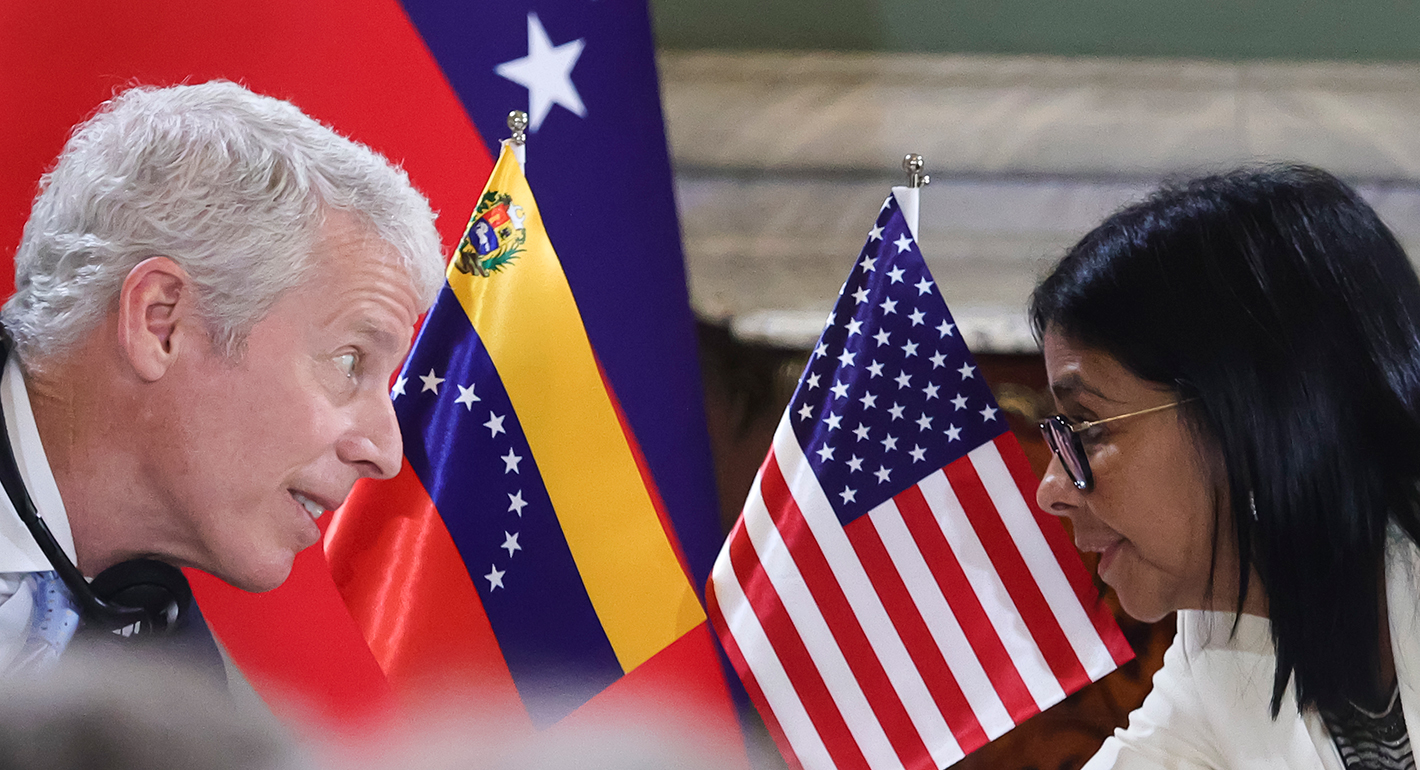
Washington needs to recognize that influence in the Western Hemisphere comes from presence, delivery, and reliability. It also must recognize that while the United States remains the key external actor, it no longer operates in a permissive environment and cannot presume deference from regional players who have other options, namely China.
Juan S. Gonzalez

Minsk clearly expected the dialogue with Washington to yield more results, in particular the lifting of EU sanctions and permission to export potash.

Artyom Shraibman

A summer of escalation in the Black Sea has hurt Ukraine economically and is exacerbating world food security. A truce is needed—as is a broader reframing of Europe’s Ukraine strategy.

Thomas de Waal

As the U.S. stumbles in its war with Iran, we are likely to see an acceleration of its disengagement from the region.

Michael Young

Why governance of rapidly evolving technology will be distributed and complex.


Stewart Patrick, Scott Singer