

Paper
Christopher S. Chivvis, Rohan Mukherjee, Milan Vaishnav
{
  "authors": [
    "Milan Vaishnav"
  ],
  "type": "legacyinthemedia",
  "centerAffiliationAll": "dc",
  "centers": [
    "Carnegie Endowment for International Peace"
  ],
  "collections": [],
  "englishNewsletterAll": "ctw",
  "nonEnglishNewsletterAll": "",
  "primaryCenter": "Carnegie Endowment for International Peace",
  "programAffiliation": "SAP",
  "programs": [
    "South Asia"
  ],
  "projects": [],
  "regions": [
    "South Asia",
    "India"
  ],
  "topics": [
    "Political Reform",
    "Security"
  ]
}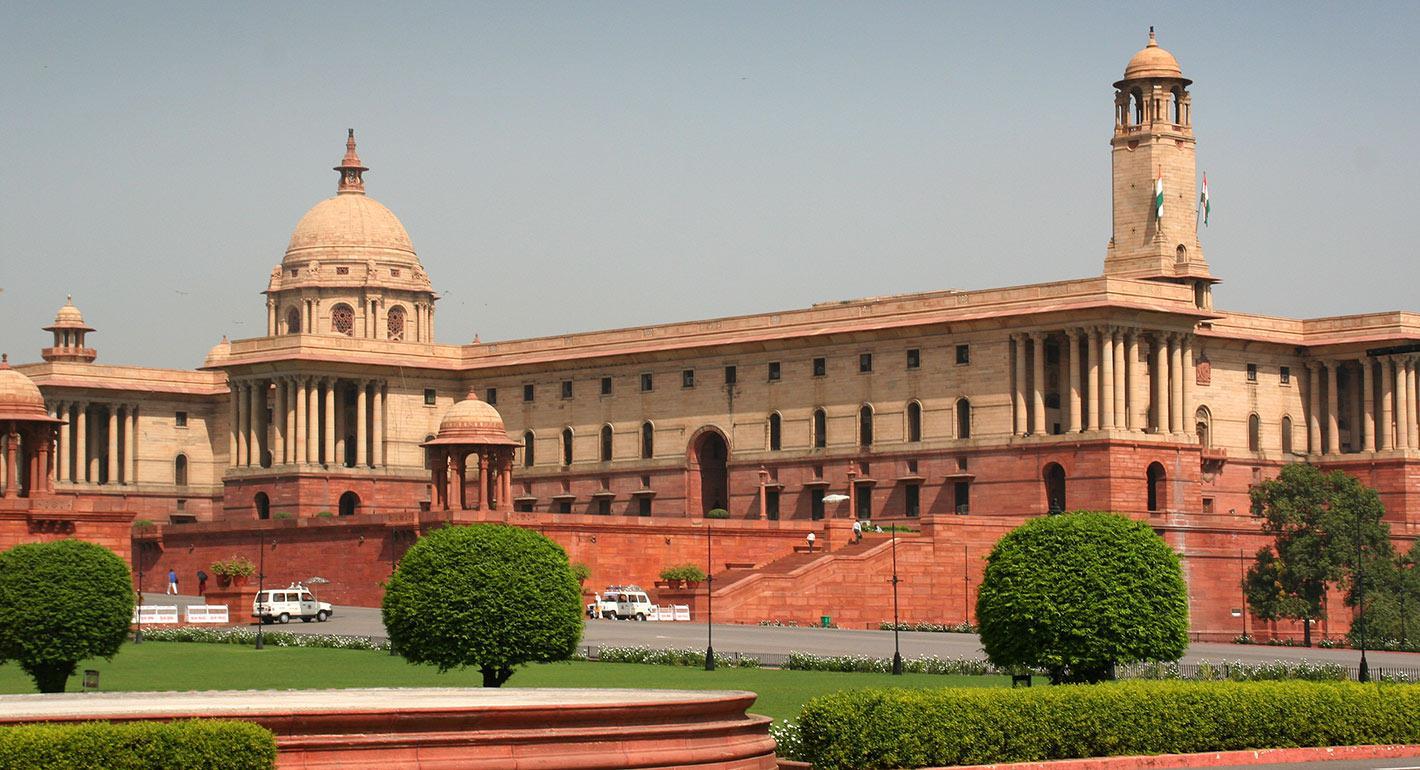
Source: Getty
The latest crisis between China and India has set off an unseemly round of finger-pointing between the Bharatiya Janata Party and its principal national rival, the Congress, with both sides accusing the other of cozying up to the communist regime.
Source: Hindustan Times
As India’s border stand-off with China continues, the latter’s aggressive manoeuvres raise difficult questions about India’s diplomatic options, foreign partnerships, and future defence requirements. But the latest crisis has also set off an unseemly round of finger-pointing between the Bharatiya Janata Party (BJP) and its principal national rival, the Congress, with both sides accusing the other of cosying up to the communist regime.
In response to Opposition barbs that the Narendra Modi government’s China policy has been tantamount to “appeasement”, the BJP unearthed evidence that Beijing had previously funnelled money into the Rajiv Gandhi Foundation, a Congress-affiliated brain trust. Caught on the back foot, the Congress took the airwaves to argue that several politically-connected Chinese firms — from Huawei to Xiaomi — have donated millions of rupees to the Prime Minister’s Citizen Assistance and Relief in Emergency Situations Fund (PM-CARES).
This article was originally published in the Hindustan Times.

Director and Senior Fellow, South Asia Program
Milan Vaishnav is a senior fellow and director of the South Asia Program and the host of the Grand Tamasha podcast at the Carnegie Endowment for International Peace. His primary research focus is the political economy of India, and he examines issues such as corruption and governance, state capacity, federalism, and electoral behavior. He also conducts research on the Indian diaspora.
Recent Work
Christopher S. Chivvis, Rohan Mukherjee, Milan Vaishnav

Sophia Besch, Eric Ciaramella, Steve Feldstein, …
Carnegie does not take institutional positions on public policy issues; the views represented herein are those of the author(s) and do not necessarily reflect the views of Carnegie, its staff, or its trustees.

Before the next wave of EU enlargement takes place, the union needs to grapple with thorny questions of how power is distributed among its members.


Emil Sondaj Hansen, Ditte Brasso Sørensen

The Horn of Africa countries are among those facing a new security calculus.


Andrew Leber, Lesley Anne Warner

The European far right might fail to steer EU policy in the direction Russia wants, but they will create enough chaos inside Europe to benefit the Kremlin.

Dimitar Bechev

The new U.S.–Denmark–Greenland agreement will help Washington exert political, economic, and financial dominance under the guise of security. Yet, it acknowledged Copenhagen’s and Nuuk’s sovereignty on the island.

Marc Pierini

A summer of escalation in the Black Sea has hurt Ukraine economically and is exacerbating world food security. A truce is needed—as is a broader reframing of Europe’s Ukraine strategy.

Thomas de Waal