

Commentary
Alexander Baunov
{
  "authors": [
    "Alexander Baunov"
  ],
  "type": "commentary",
  "centerAffiliationAll": "",
  "centers": [
    "Carnegie Endowment for International Peace",
    "Carnegie Russia Eurasia Center"
  ],
  "collections": [],
  "englishNewsletterAll": "",
  "nonEnglishNewsletterAll": "",
  "primaryCenter": "Carnegie Endowment for International Peace",
  "programAffiliation": "",
  "programs": [],
  "projects": [],
  "regions": [
    "North America",
    "United States",
    "Russia"
  ],
  "topics": [
    "Economy"
  ]
}
Source: Getty
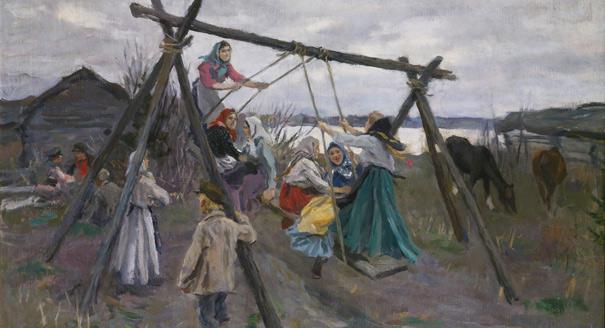
The deliberate stoking of tensions to enable a show of strength followed by an equally deliberate retreat could become an everyday tool used in foreign policy: a regular swing of the pendulum between escalation and de-escalation.
Amid the dangerous escalation in tensions at the Russia-Ukraine border this month, analysts struggled to find a rational explanation for why it was happening—and why now.
The speed with which worst-case scenarios have once again receded from view proves that fear itself could be the motivation, with the rapid reduction of the threat the real goal. Having established their determination and intransigence, the two sides—especially Russia—then demonstrated generosity and flexibility to their opponents, thereby artificially bringing about a de-escalation and constructive atmosphere.
This tactic of an instant, intentional escalation will remain in the arsenal, and we can expect its use in any situation when de-escalation and constructive behavior fail to achieve the Kremlin’s goals. Escalation followed by de-escalation could be repeated again and again: it won’t always be explicable, will rarely be predictable, and won’t necessarily be linear or proportionate to its causes.
This time around, Moscow’s de-escalation tactic has impacted on a diverse range of issues in its relationship with the West. First, and despite expectations, Russian President Vladimir Putin’s state of the nation address last week focused on social support and infrastructure rather than military, ideological, or geopolitical issues. Even Putin’s critics breathed a sigh of relief.
Then, Defense Minister Sergei Shoigu called an end to Russian military drills and ordered troops to be pulled back from Russia’s border with Ukraine, where they had been massing for several weeks. Talk of an impending major war between the Russian and Ukrainian armies suddenly went quiet. Putin and his Ukrainian counterpart Volodymyr Zelensky even proposed meeting each other—though, admittedly, each formulated his proposal in a way that the other party is unlikely to accept. Zelensky invited Putin to the war-torn Donbas region to discuss the fate of the self-declared Donetsk and Luhansk people’s republics (Russia insists that such talks must be held with the republics’ leaders), and Putin invited Zelensky to Moscow to discuss bilateral relations (while Zelensky wants to talk to Putin specifically about Donbas). After this exchange of unrealistic invitations, the two sides began the search for a more neutral place, with Zelensky proposing the Vatican.
In the meantime, the imprisoned opposition leader Alexei Navalny was moved to a hospital after several weeks on hunger strike: first to a prison ward, then to a regular hospital in the city of Vladimir. He has ended his hunger strike. Nothing—except, perhaps, a new war in eastern Ukraine—could poison Russia’s relations with the West even further than the death of Navalny in a Russian prison. The Kremlin decided not to risk it.
Rallies held in support of Navalny across Russia on the day of Putin’s state of the nation address were not met with harsh crackdowns and mass arrests, especially in Moscow, where most foreign correspondents are based, even though the Kremlin does not like it when events—like the state of the nation address—are deliberately blighted by such rallies. It was a different story in St. Petersburg, where many protesters were detained, but overall, the response to the rallies was less heavy-handed than during the winter protests following Navalny’s return to Russia from Germany, where he had been recuperating following his poisoning with a deadly nerve agent last summer.
Putin’s much-anticipated meeting with Belarusian President Alexander Lukashenko the day after the address did not yield any sensational announcement, despite a sudden surge of rumors ahead of the summit that, following a joint Belarusian KGB and Russian FSB operation to expose a plot against Lukashenko, the two countries were effectively preparing to merge into one. Not only was no hostile takeover announced, nor was anything more realistic, such as the potential geopolitical bugbears of Minsk recognizing Crimea as part of Russia, or the opening of a Russian military base in Belarus. Lukashenko has moved closer to Moscow, but no new irreversible decisions have been taken.
Moscow’s efforts toward de-escalation did not go unnoticed in the West. The U.S. ambassador John Sullivan—whom the Kremlin had advised to return home after recalling its own ambassador—agreed to leave Moscow, which is also a gesture of de-escalation (it had previously been reported that he was refusing to leave). If Sullivan had indeed stayed against the Kremlin’s wishes, it would have been nothing more than a demonstration of U.S. pride: he would not have been able to do his job properly anyway, since he would simply not have been admitted anywhere. So it seems that the United States chose practical considerations over symbolism. It also refrained from excluding Russia from the SWIFT international financial system, and from slapping new restrictions on secondary trading of Russia’s bonds—something that had been discussed no less than the prospect of a new war in eastern Ukraine.
It appears that the two sides have decided to bide their time until the presidential summit proposed by U.S. President Joe Biden. Putin clearly wants to make use of the chance offered by Biden: he remains sure of his diplomatic charisma and his ability to find mutual ground.
In addition, the Kremlin is confident that the United States and the West in general have no other option but to engage in dialogue with Russia. Moscow has put forward arms control, the pandemic, and climate change as possible areas of cooperation, and refusal to cooperate on these issues would undermine the idea of a U.S. foreign policy built on principles and global responsibility. At the same time, the Kremlin will no doubt attempt to talk about an exchange of interests.
There is no guarantee, however, that the meeting will be a success. A swift retreat from the escalation over red lines and sensitive issues doesn’t mean that those issues have suddenly been resolved or that the lines have disappeared. The problems that gave rise to the recent escalation have gone nowhere, and it’s by no means certain that a new U.S.-Russian summit will solve them. Logic suggests that there will be no breakthrough, and that the two sides will merely turn the summit into a test of strength.
In that case, all the current gestures of peace could easily be undone in a fresh attempt to make the other side change its behavior. The fragility of the current de-escalation is illustrated by the additional steps taken to crack down on Navalny’s Anti-Corruption Foundation, and by the ongoing diplomatic war: in the latest salvo, Putin signed a decree that will ban the embassies of countries classed as “unfriendly” from hiring Russian nationals.
The deliberate stoking of tensions to enable a show of strength followed by an equally deliberate retreat could become an everyday tool used in foreign policy: a regular swing of the pendulum between escalation and de-escalation.

Senior Fellow, Editor-in-Chief, Carnegie Russia Eurasia Center
Baunov is a senior fellow and editor-in-chief at the Carnegie Russia Eurasia Center.
Recent Work
Alexander Baunov
Alexander Baunov
Carnegie does not take institutional positions on public policy issues; the views represented herein are those of the author(s) and do not necessarily reflect the views of Carnegie, its staff, or its trustees.

As the Iran war shocks oil prices, countries that have invested in renewables, EVs, and battery development since the 2022 Russian invasion of Ukraine are seeing the value of their investments.

Noah Gordon
Neither the Abraham Accords nor the presence of large U.S. bases are enough to protect Arab Gulf states.

Marwan Muasher
Not only does the fighting jeopardize regional security, it undermines Russian attempts to promote alternatives to the Western-dominated world order.

Ruslan Suleymanov
The U.S.-sponsored TRIPP deal is driving the Armenia-Azerbaijan peace process forward. But foreign and domestic hurdles remain before connectivity and economic interdependence can open up the South Caucasus.


Thomas de Waal, Areg Kochinyan, Zaur Shiriyev
Assessing U.S. compliance with the international laws of war is essential at a time when these frameworks are already fraying.

Federica D’Alessandra