

Commentary
Surya Valliappan Krishna, Ashima Singh
{
  "authors": [
    "Surya Valliappan Krishna"
  ],
  "type": "commentary",
  "centerAffiliationAll": "",
  "centers": [
    "Carnegie Endowment for International Peace",
    "Carnegie India"
  ],
  "collections": [],
  "englishNewsletterAll": "",
  "nonEnglishNewsletterAll": "",
  "primaryCenter": "Carnegie India",
  "programAffiliation": "",
  "programs": [],
  "projects": [
    "Security Studies"
  ],
  "regions": [
    "South Asia",
    "Pakistan",
    "India"
  ],
  "topics": [
    "Foreign Policy",
    "Security"
  ]
}
Source: Getty
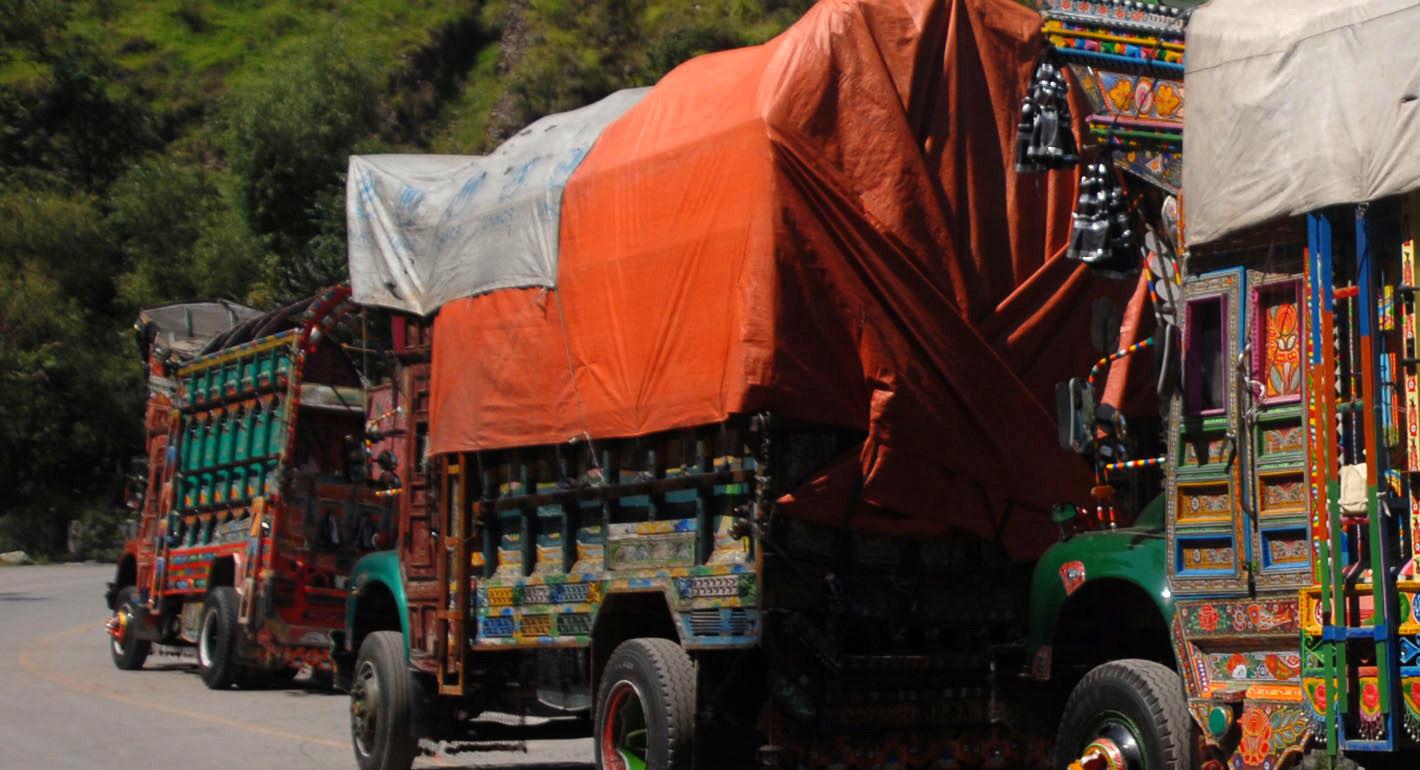
Cross-Line of Control (LoC) trade, which is generally seen only as a confidence-building measure, has benefits for the micro-economy in border areas, which are often overlooked.
India and Pakistan commenced cross-Line of Control (LoC) trade on October 21, 2008 as a part of confidence-building measures (CBMs). This economic interaction was expected to build partnerships and people-to-people relations across a highly contested and often volatile border.
Over the last fourteen years, cross-LoC trade has witnessed a start-stop tendency. Trade suspension has had three main reasons—the worsening of political relations between the two sides, heightened cross-border kinetic activity, and rise of security concerns (such as smuggling of arms, ammunition, fake currency, and narcotics trafficking). However, beyond being a CBM, cross-LoC trade has benefits for the micro-economy in border areas, which are often overlooked. This piece argues for a relook at and resumption of trade with necessary structural changes from the perspective of border economy.
A standard operating procedure document issued in 2008 for cross-LoC trade forms the framework for trade and includes a list of permitted items, timings, permits, and code of conduct for movement. The most important aspect of the trade was that it involved a barter system. Traders on both sides of the border did not transact in currency but in kind. For instance, if an Indian trader sent, say, Good A worth Rs. 1,00,000 across, then a trader from Pakistan sent Good B worth the same amount across. There were no trade duties charged on either side of the border. The permitted items include agricultural produce, handloom, and handicraft products. Traders from the Indian side exported onions, coconuts, spices and imported dry fruits, fruits, and carpets. The barter system exists because it was designed and executed as a CBM as opposed to a measure for economic benefit.
The exchange is enabled by two trade facilitation centers that have been set up between a) Salamabad (administered by India) and Muzaffarabad (administered by Pakistan), and b) Chakan Da Bagh (administered by India) and Rawalakot (administered by Pakistan). On the Indian side, the exercise is monitored by a trade facilitation officer (appointed by the central government) and a custodian of cross-LoC trade (appointed by the state government). While initially, in October 2008, trade was permitted twice a week with only twenty-five trucks per day from both sides, following ministry-level talks in July 2011, this rose to four days a week with a hundred trucks per day being allowed from both sides.
In April 2019, the Indian National Investigation Agency (NIA) recommended that trade be suspended on the grounds of misuse by some traders with links to militant groups based in Pakistan, illegal flow of weapons, narcotics, fake currency, and routing of third-party/other-country goods due to lower import duty. Officials also cite under-invoicing of goods (to reach permitted value) while selling them at market rates once they cross the border. The Indian Ministry of Home Affairs said that trade was “being suspended pending the putting into place of a stricter regulatory regime.” Three years on, this regulatory regime is yet to see implementation.
In the past, trade has been impacted due to ceasefire violations. For example, in March 2019, trade was suspended because of mortar shelling and small arms fire by the Pakistani army on Chakan Da Bagh Trade Facilitation Center—the fire and shells hit a few sheds and an X-ray machine. And, at various instances in 2012, trade had been suspended due to ceasefire incidents, escalation by the Pakistani army, and clashes between the two forces.
There have been many trade suspensions over the last decade. However, during some incredibly challenging times, such as the Pulwama terror attack in 2019, cross-LoC trade has been resilient. However, if it is looked at just as a CBM, its structural problems—which include the lack of banking facilities and absence of cross-border communication channels—are unlikely to be solved, because trade would remain only a symbolic gesture and not one with economic potential.
One of the rationales for cross-LoC trade was to build economic stakes for peace on both sides. While the trade is undoubtedly an important CBM, the case for its swift resumption is based on the economic benefits it offers border regions. By some estimates, in the ten-year period between 2008 and 2018, 23,632 Indian trucks crossed the LoC with goods worth Rs. 9,467 crores and 12,362 Pakistani trucks crossed with goods worth Rs. 8,259 crores. This created 1,70,000 day jobs of freight revenue of approximately Rs. 66.4 crores for transporters. The micro-economy resulting from this trade exercise gave employment, directly or indirectly, to over 20,000 people—truck drivers, laborers, restaurant owners, gas station employees, repairmen, and so on. The trade turned Uri and Chakan Da Bagh into business hubs while engaging local youth as managers and wage-earners. The trade routes also facilitated cheaper access to some goods and staples that would have otherwise come from other parts of India at higher prices.
Trade suspensions not only affect and disrupt orders already placed, stocks purchased, and payment cycles but also many families whose livelihoods are solely dependent on this trade. They also had an immediate effect on the prices of certain commodities in Jammu and Kashmir—for example, when trade was suspended in 2019, the prices of some imported fruits increased by 200 percent.
If cross-LoC trade is to resume, it needs to have updated operating procedures, invoicing and taxation norms, stricter trader registration, better infrastructure at trade facilitation centers (like full-body truck scanners), channels for cross-border talks, mechanisms for dispute settlement, and verification and much-needed digitization. The problem is not one that can be resolved by one side alone (for instance, the demand for a banking system has been consistently denied by the Pakistani side). Taking the trade’s contribution to the local micro-economy into consideration, there is a need to ensure a swift implementation of the “new regulatory regime.” Further, if resumed, cross-LoC trade could be a catalyst for the region’s overall development, given the government’s objective and push for the same in border areas.
While cross-LoC trade was a miniscule part of the Indian economy, it was a big part of the local frontier economy. In addition to business, trust and people-to-people cooperation were investments in a volatile region. Some have argued that successful cross-LoC trade could give rise to a model relevant to other borders—Tamil Nadu–Northern Sri Lanka or Rajasthan–Sindh, for example.
A major aspect of the challenge is the vicious cycle of trust and trade—while the resumption of trade is contingent on sound bilateral relations, trade is one of the most important measures for the upkeep of the relationship between the two countries. While prioritizing the structural changes the trade system needs (like digitization and invoicing norms), more attention needs to be brought to the contribution of cross-LoC trade to the local microeconomy.
In the immediate, the state and the business community in the region should also consider repurposing some of the border infrastructure, manpower, and production capacity to meet local demand and supply needs so that they don’t remain unutilized or underutilized in the absence of cross-LoC trade.

Former Deputy Director, Projects and Operations
Surya Valliappan Krishna was the deputy director of projects and operations at Carnegie India.
Recent Work
Surya Valliappan Krishna, Ashima Singh

Surya Valliappan Krishna, Saheb Singh Chadha
Carnegie does not take institutional positions on public policy issues; the views represented herein are those of the author(s) and do not necessarily reflect the views of Carnegie, its staff, or its trustees.

While the EU and European governments are embracing the much-lauded middle-power moment, this entails three difficult conundrums.

Richard Youngs

Europe is facing rising populism internally as well as external pressures from Russia, China, Turkey, and the United States.

Dimitar Bechev

Much has been said of the changes Brussels is trying to make to the EU enlargement process. Here’s why gradual integration might—or might not—be the answer.
Dimitar Bechev
Economic recovery has brought Sri Lanka a modicum of stability, but domestic strains and great-power rivalry could test how long it lasts.

Avinash Paliwal

Despite a new textbook, an influx of Russian teachers and managers, and an end to the teaching of Ukrainian, the Kremlin is unlikely to have “reprogrammed” locals.

Konstantin Skorkin