

Commentary
Peter Kellner
{
  "authors": [
    "Peter Kellner"
  ],
  "type": "commentary",
  "centerAffiliationAll": "dc",
  "centers": [
    "Carnegie Endowment for International Peace",
    "Carnegie Europe"
  ],
  "collections": [
    "Brexit and UK Politics"
  ],
  "englishNewsletterAll": "ctw",
  "nonEnglishNewsletterAll": "",
  "primaryCenter": "Carnegie Europe",
  "programAffiliation": "EP",
  "programs": [
    "Europe"
  ],
  "projects": [],
  "regions": [
    "Europe",
    "United Kingdom",
    "Iran"
  ],
  "topics": [
    "Climate Change"
  ]
}
Source: Getty
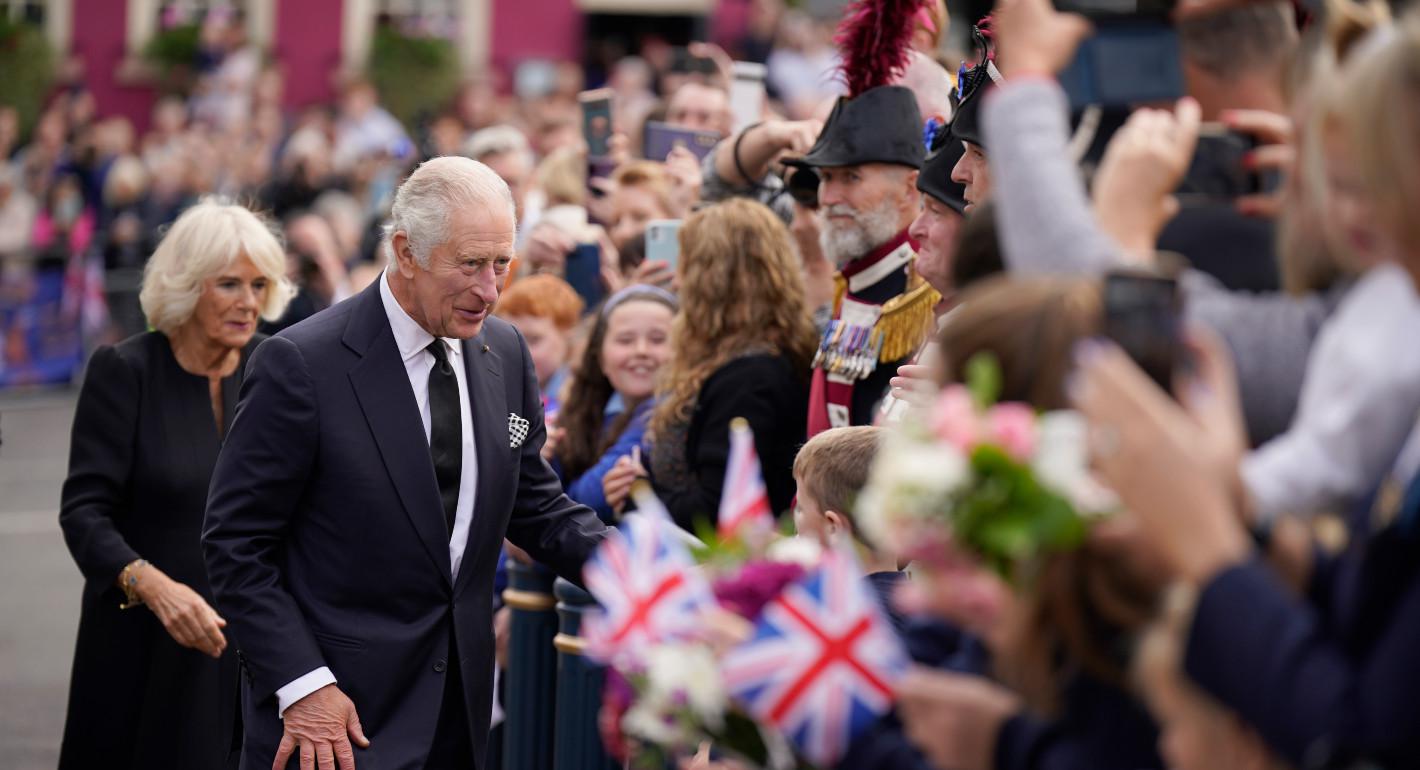
The UK’s constitution won’t change, but he could subtly influence policy in one specific area.
Nobody can be certain how the reign of King Charles III will play out, but we can be sure of one thing that won’t happen. Despite being far more controversial than his mother, Elizabeth II, and far less popular than his oldest son, Prince William, Charles won’t be deposed—either to hand his crown to his son or, even more dramatically, to make way for his kingdom to become a republic. Unlike most of Europe’s monarchs in recent decades, Charles will keep his job for life.
How can we be so sure? The reason is simple and reflects an important truth about the United Kingdom: apart from two spasms in the seventeenth century, its story is one of persistent pragmatism and gradual change.
National constitutions tend to come in two varieties: those that bend and those that shatter. Some shatter as a result of revolution, civil war, coup d’état, or military catastrophe. These upheavals have afflicted the great majority of European countries in the past century, and their constitutions have been torn up and rewritten as a result—sometimes more than once.
In contrast, the UK has endured no such catharsis for more than three centuries. We beheaded one king in 1649 at the end of a brutal civil war and banished another to exile in 1688, following a bloodless Glorious Revolution. But since then, our constitution has been bent continuously but never shattered. Step by step, power has shifted from the monarch to Parliament—too slowly for many, but fast enough to ward off turning the UK into a republic. Even today, the tyranny Britain suffered during our brief experiment of living without a monarch, between 1649 and 1660, is seen as a stain on our history.
So the circumstances in which we might get rid of our monarchy have not arisen and, for all our current problems, show no signs whatsoever of erupting any time soon. To say that is not to claim any democratic virtue in selecting a head of state through the hereditary principle. However, only a minority of Britons believe our constitutional monarchy does any great harm. In fact, most of us think that in various soft-power ways it does good. We have a classic example of an arrangement that works in practice, even as we struggle to explain how it can possibly work in theory.
There is another reason why our constitution bends but doesn’t shatter. It is commonly said that the UK lacks a written constitution. This is half true. Yes, we lack a single document bearing that name, but the elements of a constitution—the rules that govern the ways in which we operate as a society—do exist in written form. They comprise countless laws passed and amended through the centuries. Some last longer than others: from time to time, judges still draw on the words of the Magna Carta from 800 years ago to decide their rulings.
The point here is that the UK’s constitution resembles the pages of a loose-leaf binder more than those of a leather-bound book. Fairly frequently, old pages are removed and new ones inserted. Thus, gradually and usually in small ways, the constitution evolves. Because it can be bent relatively easily, it hasn’t yet needed to shatter. Insofar as the future can be predicted at all, the constitution will not shatter while Charles is king.
Pragmatism apart, what will his reign be like? Here the crystal ball turns cloudy, but it is bound to be different from his mother’s in two major ways.
First, Britain in 2022 is vastly different than it was in 1952 when Elizabeth became queen. The empire has gone. Despite having nuclear weapons, the UK is no longer a global military power. In the aftermath of World War II, the UK was easily Europe’s largest economy. It now lags behind Germany and struggles to keep up with France and Italy. Even so, we are far richer than we were and socially much more liberal. Britain’s population is more varied by ethnicity, religion, and family roots than it was seventy years ago. And the concept of the UK itself is open to question today in a way it wasn’t then, with the possibility that either Scotland or Northern Ireland (or both) might vote to leave the UK while Charles is on the throne.
Just as the UK now is different from the UK in 1952, so Charles today is different from Elizabeth then. This brings us to the second major contrast in the accession. She was 25 years old, with no known views on any public policy; he is 73, with half a century of involvement in various controversies. We know what he thinks about a range of issues, of which climate change is perhaps the most significant.
Charles has been passionate about the environment for decades—long before we all learned to be concerned about global warming. His own carbon footprint is inevitably large, but he has set a good example where he can. He has installed solar panels and heat pumps on his estates, bought electrical vehicles, and powered his Aston Martin mainly from bioethanol derived from “surplus English white wine and fermented whey from the cheese process.”
Charles has already said he will abide by the constitutional principle to avoid controversy as king. Every speech he makes will be cleared by his government. However, his people—and his government ministers—know the strength of his views on a subject that has the power to shape the destiny of life on our planet in this century and beyond. That fact gives him the potential for real influence, even if he never says anything in public about it ever again. (Though he will surely make his views known privately to the prime minister in at least some of the weekly meetings.) From time to time—as now, with the soaring price of gas—ministers might want to relax policies designed to reduce carbon emissions. But they may hold back, for fear of being seen to contradict King Charles’s known and deeply held views: views that, deep down, most of them know are right.
We—to be more accurate, our grandchildren—should not be surprised if, decades from now, Charles’s lasting reputation flows not from anything he says or does as king but simply from our knowledge of his passionate commitment to a greener planet and the impact that passion could have on the policies of the UK and, possibly, other countries. In its way, this approach would continue the pragmatism that past monarchs have demonstrated—and show that pragmatism can be the ally of principle, and not its rival.
Former Nonresident Scholar, Carnegie Europe
Kellner was a nonresident scholar at Carnegie Europe, where his research focused on Brexit, populism, and electoral democracy.
Recent Work
Peter Kellner
Peter Kellner
Carnegie does not take institutional positions on public policy issues; the views represented herein are those of the author(s) and do not necessarily reflect the views of Carnegie, its staff, or its trustees.

The EU can impose sanctions but struggles to enforce them without the United States. With Washington increasingly disinterested in backing European interests, the bloc must now fend for itself.


Nicu Popescu, Tiago Antunes

Russia is testing the waters of NATO’s mutual defense clause. What do strikes in Romanian territorial waters mean for the alliance’s posture toward Moscow?

Dimitar Bechev

The truth of the strategic situation is that Europe and Russia are extremely unlikely to be able to “turn the page” on their confrontation within the next two decades.

Arkady Moshes
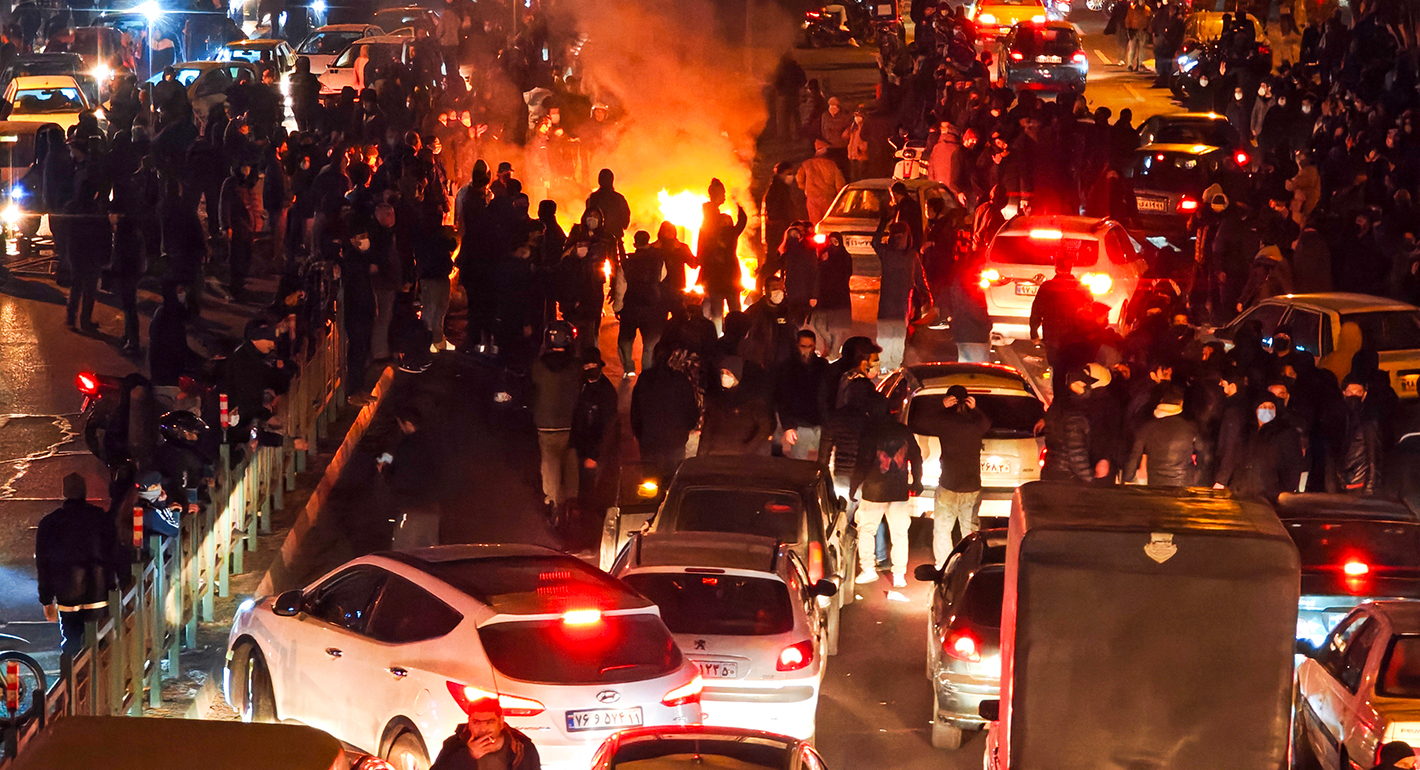
Protests in Iran follow a similar pattern: Economic grievances turn into political protests that spread nationwide. But increased state repression has begun to shift the arrangement.

Eric Lob

It signals a new era of tech diffusion and warfare.

Steve Feldstein