

Commentary
Despite public disputes over trade and immigration, the strategic partnership’s foundations remain sturdy.
Sameer Lalwani
{
  "authors": [
    "Sarah Yerkes",
    "Mohammad Al-Mailam"
  ],
  "type": "commentary",
  "centerAffiliationAll": "dc",
  "centers": [
    "Carnegie Endowment for International Peace"
  ],
  "collections": [],
  "englishNewsletterAll": "menaTransitions",
  "nonEnglishNewsletterAll": "",
  "primaryCenter": "Carnegie Endowment for International Peace",
  "programAffiliation": "MEP",
  "programs": [
    "Middle East"
  ],
  "projects": [
    "Tunisia Monitor"
  ],
  "regions": [
    "North Africa",
    "Tunisia"
  ],
  "topics": [
    "Democracy",
    "Security",
    "Military"
  ]
}
Source: Getty
It severely weakens political parties and opens the door for the president to prevent anyone who has criticized him from seeking office.
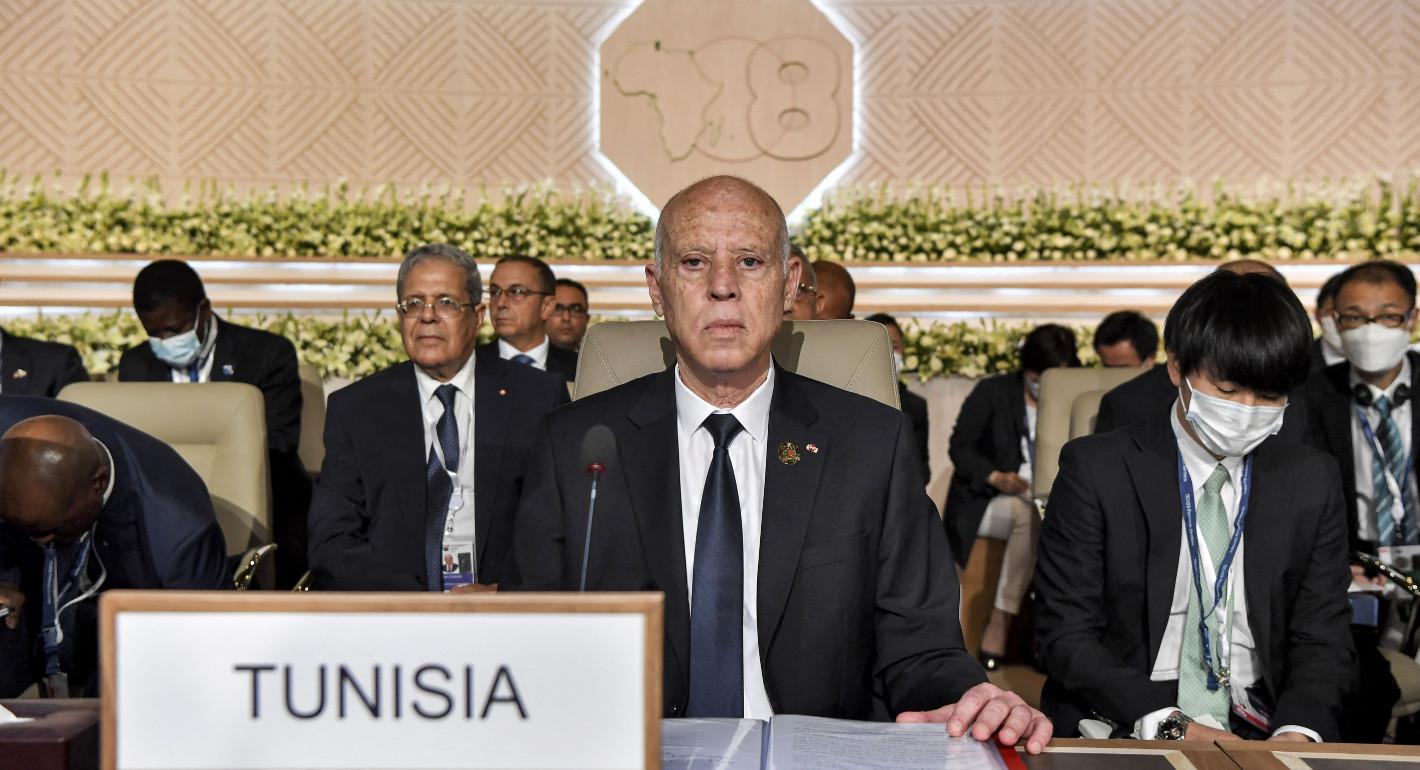
Tunisian President Kais Saied released a new electoral law on September 15. The new rules govern the December legislative elections and provide him with wide-ranging powers before, during, and after the vote. The elections will replace the democratically elected Parliament, which Saied dismissed following his July 2021 self-coup. The law only applies to the Assembly of the Representatives of the People, with provisions to cover the newly created secondary legislative chamber, the National Council of Regions and Districts, to be published at a later date.
The law is yet another blow to Tunisia’s democratic progress. It severely weakens political parties, one of Saied’s main targets during his time in office, and removes quotas for women candidates and candidates under 35 that helped Tunisia make gains toward gender and age parity in its legislature. While there was some fear that Saied would use the law to fully outlaw parties or his political opponents, he instead took a more indirect path—ending the party-based electoral system and shifting Tunisia to a form of politics centered around individuals.
| Role of Political Parties | ||
| 2014 Electoral Law (Basic Law No. 16 of 2014) | 2022 Electoral Law (Decree No. 55 of 2022) | Consequences |
| Political parties and blocs can submit a candidate list. | Applications for candidacy are submitted individually. | Political parties and blocs are severely weakened. |
| In the event of death or incapacitation, political parties can replace a candidate. | In the event of death or incapacitation, a new election must be held within forty-five days with re-opened candidacies. | |
| If a candidate resigns from their party, they are stripped of their committee assignments. | Candidates can keep their committee assignments after resigning from their party. | Parties no longer control committee appointments. |
| Propotional party representation system (D'Hondt method). | One candidate wins a single seat in each constituency. | Ends the party-based electoral system. This obstructs the formation of opposition or coalition governments composed of power-sharing parties. |
| Voters can vote for a single political party list or a bloc containing multiple candidates. | Voters can only vote for a single candidate in their constituencies. | Politics will be more personalized, with individuals having to campaign instead of parties. |
The provisions make it much harder for individuals to run for office, applying overly burdensome requirements. For example, to be eligible to run, candidates must submit both their campaign plan as well as 400 signatures of registered voters who cannot endorse any other candidate. It also eliminates public financing of political campaigns, favoring wealthier candidates who do not need to rely on that funding to run for office.
| Candidacy | ||
| 2014 Electoral Law (Basic Law No. 16 of 2014) | 2022 Electoral Law (Decree No. 55 of 2022) | Consequences |
| Any Tunisian above age 23 who has been a national for at least ten years can run. | Candidates must be Tunisian citizens, above age 23, born to a Tunisian national parent, and have no history of legal violations. | Naturalized Tunisians without a Tunisian parent are restricted from running for office, as is anyone who had ever been charged with a crime or legal violation. |
| Candidates running in domestic constituencies cannot be dual nationals. | Further restricts who can run for office, limiting the pool of eligible candidates. | |
| Imams, members of government, leaders of sports associations, and heads of government offices cannot run for office within a year of serving in that role. | ||
| Political parties or blocs can apply on behalf of all their candidates by submitting their names, IDs, and declarations of income tax to the ISIE. No signatures are needed. | Candidates must aquire 400 signatures of registered voters in their constituency who cannot endorse any other candidate. Half must be from women, and 25 percent from people under 35. Candidates also need to submit their campaign plans in advance. | Adds an undue burden on individual candidates when running for office. Many constituencies are quite small, and finding 400 voters who are not endorsing any other candidate could be very burdensome. The requirement to submit a campaign plan in advance may also leave room for foul play, if the government tries to sabotage or reveal campaign information to loyalists. |
| Established gender parity and youth quota in candidates lists. In all districts with an even number of seats, each bloc or party must run an equal number of female and male candidates. In districts with four or more seats, each bloc or party must have at least one candidate aged 35 or under. If a bloc or party does not meet the youth quota, it loses half of the public funding alloted for their campaigns. | Canceled clauses on gender parity and youth quota in blocs’ (now obsolete) candidate lists. | In line with the general abolition of candidates lists. Also aids in weakening party and bloc power, and eliminates supports for underrepresented groups’ inclusion in the electoral process. |
| Legislators cannot hold other positions inside and outside government while serving in Parliament. | There is no prohibition against legislators holding other positions. | Opens the door for legislators to serve in mutliple roles, diluting their focus on legislating. |
The law also significantly restricts who can run for office, preventing naturalized Tunisian citizens without a Tunisian parent from declaring their candidacy. And it prevents imams, members of government, leaders of sports associations, and heads of government offices from running for office within a year of serving in those roles. It also prevents dual citizens from running for domestic constituencies, though they may still run in one of Tunisia’s overseas constituencies (such as those in Europe or North America).
| Voting Rights | ||
| 2014 Electoral Law (Basic Law No. 16 of 2014) | 2022 Electoral Law (Decree No. 55 of 2022) | Consequences |
| Those detained for mental incapacitation cannot vote. | Anyone detained, regardless of reason, is prevented from voting. | Vague language that leaves open the possibility of disenfranchising voters for undisclosed reasons. |
| Campaign Financing and Electoral Crimes | ||
| 2014 Electoral Law (Basic Law No. 16 of 2014) | 2022 Electoral Law (Decree No. 55 of 2022) | Consequences |
| Each bloc receives some public financing for its campaigns and is allowed to fundraise privately. Half of the public funds are provided before the launch of the campaigns, while the other half is deposited a week after the election results are announced. Candidates or blocs who fail to win at least 3 percent of the vote in their constituency must return the full amount. | Campaigns receive no public financing. | Favors wealthier candidates who do not need to rely on public financing. |
| Candidates cannot acccept foreign donations. Those caught and convicted of doing so are banned from running in the next legislative or presidential elections. | Candidates cannot accept foreign or anonymous donations. If found guilty of doing so, they cannot run in any of the next elections. | Bans anonymous donations. Extends the suspension of candidacy to elections on all levels. Allows the president to disqualify opponents. |
| There are ceilings for both private and public fundraising as well as on campaign spending. Those ceilings may vary, depending on the size of the district, the number of voters, and the cost of living in the constituency. | There is no ceiling on campaign fundraising, only on spending. There are no set criteria for determining the spending ceiling. | Favors wealthier candidates. Allows for electoral foul play by empowering the government to inconsistently limit or expand spending to benefit loyalists or hurt opposition candidates. |
| Prison sentence for electoral crimes is six months to three years with a fine of 1,000-3,000 TND. | Prison sentence for electoral crimes is two to five years with a fine of 2,000-5,000 TND. | Increases the punishment for those who commit electoral crimes. Saied has accused nearly all of his competitors in the 2019 presidential campaign of electoral crimes. |
| Intentionally exploiting another candidate’s honor or familial or geographic affiliation to gain votes is now considered an electoral crime. Candidates convicted of doing so may have all their votes voided. | Allows Saeid to void opposition candidates’ votes and potential victories in elections. | |
| The government can strip legislators from their office and candidacy for life if found guilty of receiving illicit donations. Those found guilty of providing illicit donations can be prevented from voting for ten years. | Saied has accused several of his political opponents of receiving illicit donations. This opens the door for him to bar them for life from participating in Tunisian politics. | |
| Other | ||
| 2014 Electoral Law (Basic Law No. 16 of 2014) | 2022 Electoral Law (Decree No. 55 of 2022) | Consequences |
| A legislator can be impeached if ten constituents decide to withdraw their confidence. This can only happen once per term, and candidates cannot be impeached before the first legislative session or in the last six months of their term. | Opens the door to corruption. Prevents legislators from taking action at risk of impeachment if only ten citizens dislike their decision. | |
| The number of seats in Parliament is 217, with eighteen elected from overseas constituencies. | The number of seats in Parliament is 161, with ten elected in overseas constituencies. | Reduced number of seats in Parliament and reduced proportion of seats elected by overseas constituencies. |
Perhaps most troubling, it prevents anyone who has ever been charged with a legal violation from running. This comes as Saied’s government has initiated harsh crackdowns on his political opponents, accusing many of them of electoral crimes. With Saied’s recent, widely condemned decree that criminalizes the publication of fake news or rumors, it opens the door for Saied to prevent anyone who has criticized him from seeking office.
The law also gives the government the power to strip legislators from their offices and from candidacy for life if they are found guilty of receiving illicit donations. Saied has accused several of his political opponents of receiving such donations. This opens the door for him to bar them for life from participating in Tunisian politics.
Several of the main political parties have announced that they will boycott the December elections, viewing the entire process as illegitimate. The result of Saied’s changes will likely be a disempowered, atomized, and less representative legislature that is intentionally ill-equipped to organize robust opposition to Tunisia's authoritarian drift.

Acting Co-Director and Senior Fellow, Middle East Program
Sarah Yerkes is acting co-director and a senior fellow in the Middle East Program at the Carnegie Endowment for International Peace. Her research focuses on democracy and governance, U.S. foreign policy towards the Middle East and North Africa, and political and economic reform in Tunisia.
Mohammad Al-Mailam
Former James C. Gaither Junior Fellow, Middle East Program
Mohammad Al-Mailam was a James C. Gaither Junior Fellow in the Carnegie Middle East Program.
Carnegie does not take institutional positions on public policy issues; the views represented herein are those of the author(s) and do not necessarily reflect the views of Carnegie, its staff, or its trustees.

Despite public disputes over trade and immigration, the strategic partnership’s foundations remain sturdy.

Sameer Lalwani

It signals a new era of tech diffusion and warfare.

Steve Feldstein

With its public finances in shambles, the far right polling at 35 percent ahead of the 2027 presidential election, and a growing protest movement, is France’s crisis a threat to the EU’s geopolitical awakening?

Rym Momtaz, ed.

Russia’s AI-driven propaganda campaigns operate in a fragmented, chaotic, and often illogical manner. That’s not necessarily a problem for the Kremlin, though: It’s much easier to mimic genuine public debate that way.

Ilya Klishin

Ahead of a tough winter for Ukraine, Donald Trump’s swing back toward Russia bodes ill. But instead of panicking, Kyiv’s European allies are focusing on action.
Rym Momtaz