

Commentary
Why governance of rapidly evolving technology will be distributed and complex.
Stewart Patrick, Scott Singer
{
  "authors": [
    "Christopher S. Chivvis",
    "Christopher Shell"
  ],
  "type": "commentary",
  "centerAffiliationAll": "dc",
  "centers": [
    "Carnegie Endowment for International Peace"
  ],
  "collections": [],
  "englishNewsletterAll": "americanStatecraft",
  "nonEnglishNewsletterAll": "",
  "primaryCenter": "Carnegie Endowment for International Peace",
  "programAffiliation": "ASP",
  "programs": [
    "American Statecraft"
  ],
  "projects": [],
  "regions": [
    "North America",
    "United States",
    "East Asia",
    "Taiwan",
    "Eastern Europe",
    "Ukraine"
  ],
  "topics": [
    "Security",
    "Military",
    "Foreign Policy"
  ]
}
Source: Getty
It should not be misinterpreted as a lack of patriotism or skepticism about the armed forces.
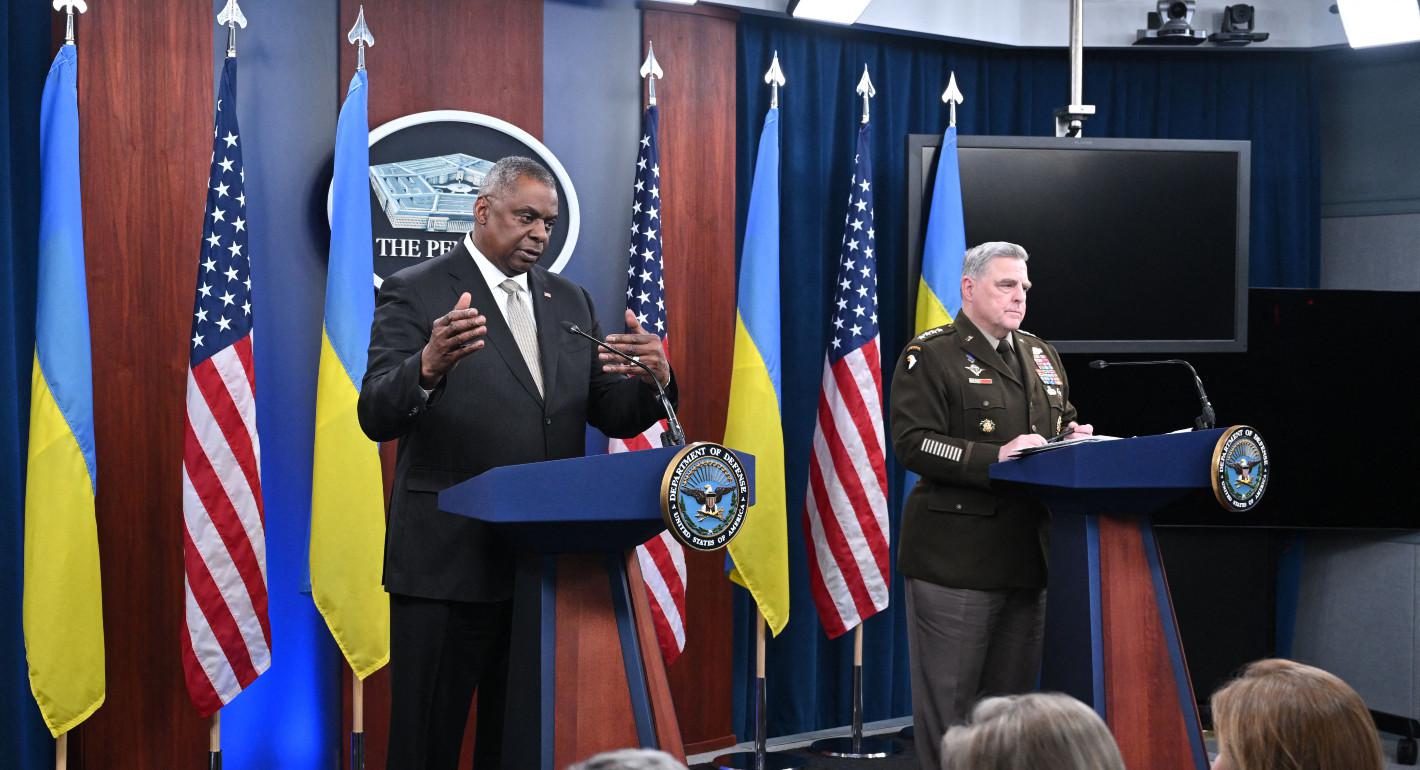
African Americans are much less in favor of sending U.S. forces to defend Ukraine and Taiwan than the general U.S. population, according to findings from a new poll from the American Statecraft Program at the Carnegie Endowment.
Only 21 percent of Black Americans supported sending military forces to Ukraine, according to the data collected online in early September. In contrast, in a separate poll in August, 38 percent of all Americans supported sending U.S. troops to defend Ukraine.

The Carnegie poll also showed that fewer Black Americans would support sending U.S. troops to Taiwan in the event of a Chinese attack, as compared with the general American public. The response mirrored support for sending troops to Ukraine: only 20 percent of respondents were in favor—roughly half the level of the general population.

African American hesitation about engaging in armed conflict should not be misinterpreted as a lack of patriotism or even skepticism about America’s armed forces. In fact, a vast majority of African Americans polled expressed either “very favorable” or “somewhat favorable” views of the U.S. military. This divergence between Black Americans’ support for the military and lack of support for direct military intervention probably reflects their unique experiences with the military and their historical role in the United States’ twentieth- and twenty first–century wars.

Black American reticence for engagement in armed conflict is not a new phenomenon. The U.S. military has helped Black Americans act on their patriotism and offered an avenue for upward mobility and other benefits, such as education and housing opportunities, that would have been more difficult to obtain in civilian society.
However, as the work of scholars such as Christopher Parker and Chad Williams demonstrates, despite hopes of achieving racial equality through military service, African American veterans have sometimes been denied benefits, and become victims of racial violence despite their service to the country.
Given that Black Americans form a disproportionate share of the U.S. military, many may be concerned that they would shoulder more of the burden in a future war. This belief is partially rooted in the Black American experience during the Vietnam War.
Many Black Americans may also have concerns about the effects of spending taxpayer dollars on overseas operations that could be better spent at home. Myriad socioeconomic ills plague Black America, including wealth inequality, police brutality, and environmental racism. In practice, tradeoffs between guns and butter are difficult and complex, but on some level federal funds spent on overseas military operations might have instead been used to help alleviate these systemic issues.
History also suggests that African American views of Ukraine and Taiwan are likely to be affected by unrelated domestic developments. Historian Daniel S. Lucks’ book Selma to Saigon: The Civil Rights Movement and the Vietnam War details how Black American support for U.S. intervention in Vietnam was positive initially, likely because of general support for President Lyndon B. Johnson. However, as Black American casualties in Southeast Asia mounted—along with growing racial violence and persistent economic inequality in Black American communities—war support declined. Many Black Americans began to question the purpose of fighting overseas when the battle for civil and human rights at home was not won.
This feeling could repeat itself today amid a worsening economic outlook, continuing police brutality, and persistent infrastructural failures in Black American neighborhoods. If Black American communities concluded that the ongoing fight for equality remains stifled in the United States, then their openness to policies that might lead them to lose their lives in overseas conflicts would unsurprisingly be diminished. The outcome of the Supreme Court case challenging the legality of affirmative action in college admissions could also have a similar impact.
These findings are only a sliver of a much broader picture that the Carnegie Endowment’s American Statecraft Program is studying. We need a more robust picture of how America’s foreign policy objectives align with the interests of Black communities, and specifically how U.S. trade, environmental, and immigration policy intersect with the lives of Black Americans across the country.
The fact that Black American support for military intervention in Ukraine and Taiwan is much lower than average is striking and should be seen in the context of social, economic, and historical realities of Black communities.
Senior Fellow and Director, American Statecraft Program
Christopher S. Chivvis is the director of the American Statecraft Program at the Carnegie Endowment for International Peace.
Former Fellow, American Statecraft Program
Christopher Shell was a fellow in the American Statecraft Program at Carnegie Endowment for International Peace.
Carnegie does not take institutional positions on public policy issues; the views represented herein are those of the author(s) and do not necessarily reflect the views of Carnegie, its staff, or its trustees.
Why governance of rapidly evolving technology will be distributed and complex.


Stewart Patrick, Scott Singer

It should address the shortcomings of previous crisis communication efforts and adapt to the demands of frontier AI.

Lucy Luo

If the Russian-speaking community in Latvia cannot articulate their interests without being seen as disloyal, they could end up embracing a pro-Kremlin agenda.

Sergejs Potapkins

Washington’s decision to support some UN functions while letting others wither is pulling the organization apart at the seams.
Stewart Patrick, Theodore Zaritsky
While there are notable demographic, economic, and geographic divides over AI, there is also substantial alignment between Republicans and Democrats.


Ian Klaus, Mark Baldassare, Rachel George, …