

Article
Japan’s revision of its three strategic documents reflects an intention to keep the United States engaged in the region while Japan fills any vacuums of U.S. power to preserve the Indo-Pacific order.
Ryo Sahashi
{
  "authors": [
    "Thomas Daniel"
  ],
  "type": "commentary",
  "centerAffiliationAll": "",
  "centers": [
    "Carnegie Endowment for International Peace",
    "Carnegie China"
  ],
  "collections": [
    "Carnegie China Commentaries"
  ],
  "englishNewsletterAll": "",
  "nonEnglishNewsletterAll": "",
  "primaryCenter": "Carnegie Endowment for International Peace",
  "programAffiliation": "",
  "programs": [],
  "projects": [],
  "regions": [
    "East Asia",
    "China",
    "Southeast Asia"
  ],
  "topics": [
    "Economy",
    "Foreign Policy"
  ]
}
Source: Getty
The relationship between Malaysia and China is positive and productive—but sensitive issues lie under the surface.
This publication is a product of Carnegie China. For more work by Carnegie China, click here.
Malaysia’s bilateral relationship with China—its past, present, and, most importantly, future—comes under renewed scrutiny this week as Anwar Ibrahim travels to China. In his first visit as prime minister, Anwar is expected to address the Boao Forum for Asia in Hainan and then head to Beijing for official engagements, where he is expected to call on President Xi Jinping, among others.
Malaysian prime ministers usually conduct their first bilateral visits in Southeast Asia before heading further afield. In this, Anwar has stayed the course. China is one of Anwar’s first destinations outside the region, apart from a quick visit to Türkiye in the aftermath of the February earthquake and a now controversial visit last week to Saudi Arabia, an important relationship for Malaysia in the Middle East.
This visit is not just key for optics. It is also expected to set the tone for China-Malaysia relations under an Anwar premiership. Two important bilateral anniversaries for Beijing and Putrajaya are approaching: the tenth anniversary of the Comprehensive Strategic Partnership, the first formally elevated partnership of its kind between Malaysia and another country, falls in 2023, and the fiftieth anniversary of the establishment of diplomatic ties between China and Malaysia, a seminal moment in diplomacy for both countries and ASEAN, falls in 2024.
Anwar has repeatedly stated that relations with China, while positive, needed enhancement. The economic component is central: China has been Malaysia’s largest trading partner for the past fourteen years, and a significant source of foreign direct investment in segments like tech and infrastructure. Anwar will be seeking to ensure that China’s new economic focus on and conceptualizations of the Belt and Road Initiative and the Regional Comprehensive Economic Partnership will not leave countries like Malaysia at a disadvantage, to secure opportunities for increased Malaysian countertrade and exports, and to leverage China’s advantages in sustainable development—an increasing national priority for Malaysia.
Additionally, Anwar’s official engagements in China will be an opportunity to develop a relationship with new Chinese Premier Li Qiang as well as Xi, who is in an unprecedented third term as China’s head of state. There is appreciation for this relationship-building opportunity on both sides, given the value placed on the bilateral relations between China and Malaysia in terms of achievements, opportunities, and possible challenges.
This does not mean sensitive issues won’t be on the table. Chief among them is the South China Sea dispute, where China has slowly but surely upped the pressure on Malaysia through increased and regular presence of maritime and aerial assets and harassment of hydrocarbon operations near the Luconia Shoals. Anwar is unlikely to bring these issues up publicly in his first visit but will not shy away from addressing them directly in closed-door discussions with his Chinese counterparts.
Nonetheless, there is increasing disquiet among some segments of Malaysian stakeholders as to whether this behind-closed-doors approach has had any mitigating effect on pressures faced by Malaysia and as to what strategic wiggle room the country might have. Tellingly, in an engagement with Malaysian diplomats at the Foreign Ministry retreat in early March, several of the questions put to Anwar touched on the challenges Malaysia has faced in managing escalating tensions in the South China Sea—caused both by Beijing and by increasing “internationalization” of the dispute.
Another potentially contentious issue—that of the Uighurs—is unlikely to come up at all. In general, Malaysia has maintained silence on the issue. Former prime minister Mahathir Mohamad famously said in 2019 that this was “because China is a very powerful nation” and Malaysia must find “other ways” to deal with this issue. That said, it is worth pointing out that unlike the majority of Organisation of Islamic Cooperation members, Malaysia has been careful never to lend its voice to any notions or statements that support Beijing’s policies in Xinjiang and has resisted pressure from Beijing to extradite or deport Uighurs.
While Anwar himself called on Beijing in 2018 to recognize the rights of the Uighurs to freedom of religion and movement, the conditions on the ground then were different, and Anwar was not encumbered by being prime minister. As long as information coming out of Xinjiang remains tightly suppressed and the issue does not capture the attention of the wider Malaysian population, Malaysia’s approach of silent circumspection will persist.
Another fundamental issue for Malaysia’s ties with China is how to balance relations between China and the United States. Like many other countries, Malaysia has striven to hedge between the two.
Politically, economically, and strategically, Malaysia has enjoyed the fruits of functional and productive relationships with both China and the United States. Competition between the two major powers has also been to Malaysia’s benefit. Even during former U.S. president Donald Trump’s trade war, certain economic sectors benefited from both Chinese and American industries that utilized their holdings in Malaysia to bypass direct sanctions.
Yet the adversarial approach taken by Beijing and Washington, marked by increased bifurcation, has made the position of third countries like Malaysia increasingly difficult. There is growing concern in Malaysian policymaking circles that the Asia-Pacific region is headed toward an era marked by major-power rivalry and potential conflict, with smaller regional states suffering collateral damage.
Anwar will likely revert to Malaysia’s preexisting foreign policy goals, which have been consistent on advocating nonalignment, pragmatism, and prioritization of international trade. At a press conference mere hours after being appointed prime minister, Anwar responded to a question on how he would approach China by pointing out that relations with China must be strengthened but made a point of mentioning other partners like the United States, Europe, India, and ASEAN.
Malaysia will lean ever more on this foundation as it seeks to balance relations between China and the United States. It might lead calls for a new nonaligned movement with like-minded states who worry they will be forced to choose between Washington and Beijing because of their zero-sum rivalry.
As a beneficiary of the current international system, and having maintained good relations with China and the United States, Malaysia has no choice but to strive hard to maintain a position that allows it to keep its options open—and indeed to have options at all. Nonetheless, it would be prudent for policymakers to prepare for all outcomes, including an Asia-Pacific region marked by contestation and strategic flux.
Thomas Daniel
Thomas Daniel is a senior fellow with the Institute of Strategic and International Studies Malaysia.
Carnegie does not take institutional positions on public policy issues; the views represented herein are those of the author(s) and do not necessarily reflect the views of Carnegie, its staff, or its trustees.
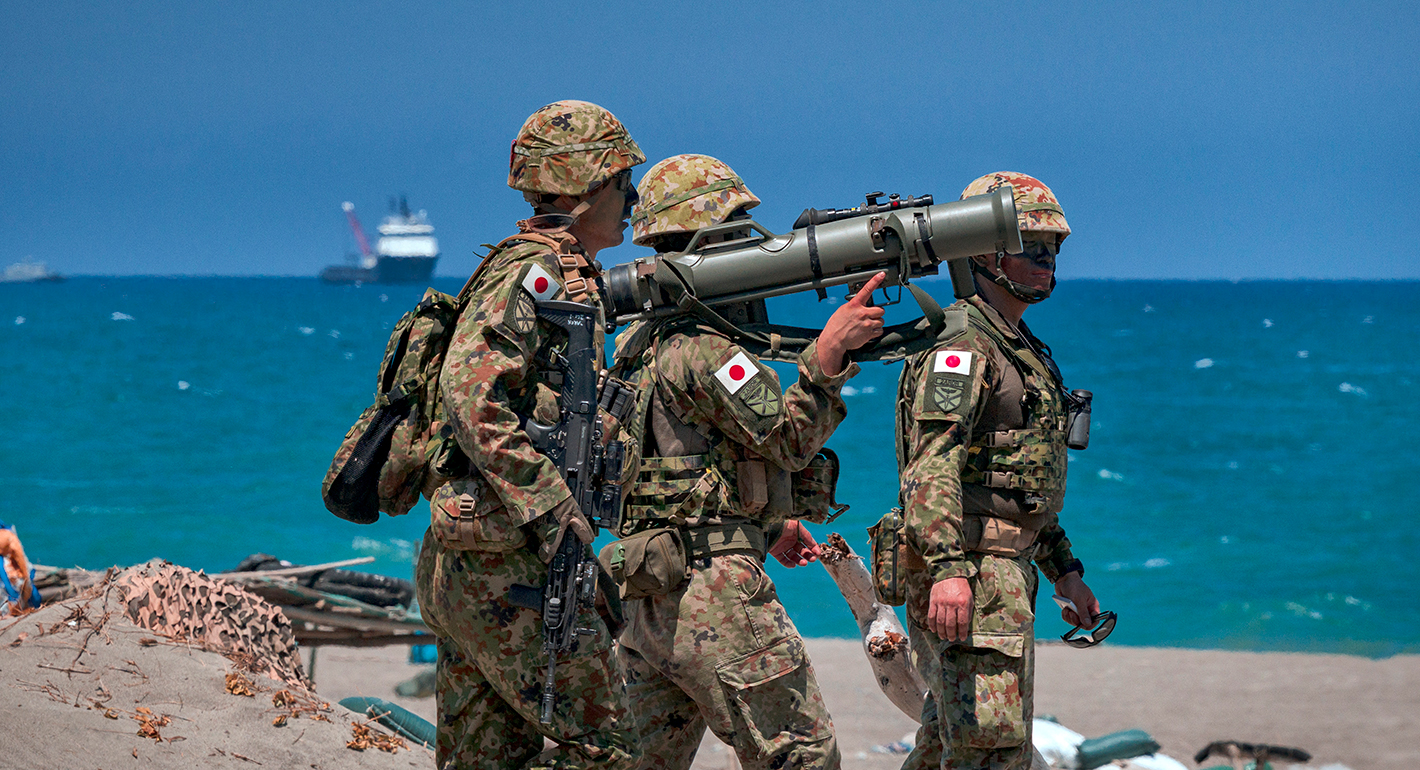
Japan’s revision of its three strategic documents reflects an intention to keep the United States engaged in the region while Japan fills any vacuums of U.S. power to preserve the Indo-Pacific order.

Ryo Sahashi

Chinese biotech companies have been on the receiving end of U.S. economic coercion. Yet their responses have differed significantly because firm and state interests are not uniformly aligned. For Washington, treating all Chinese tech firms the same, irrespective of their actual interests, risks pushing them farther into Beijing’s corner.

Xue Gong
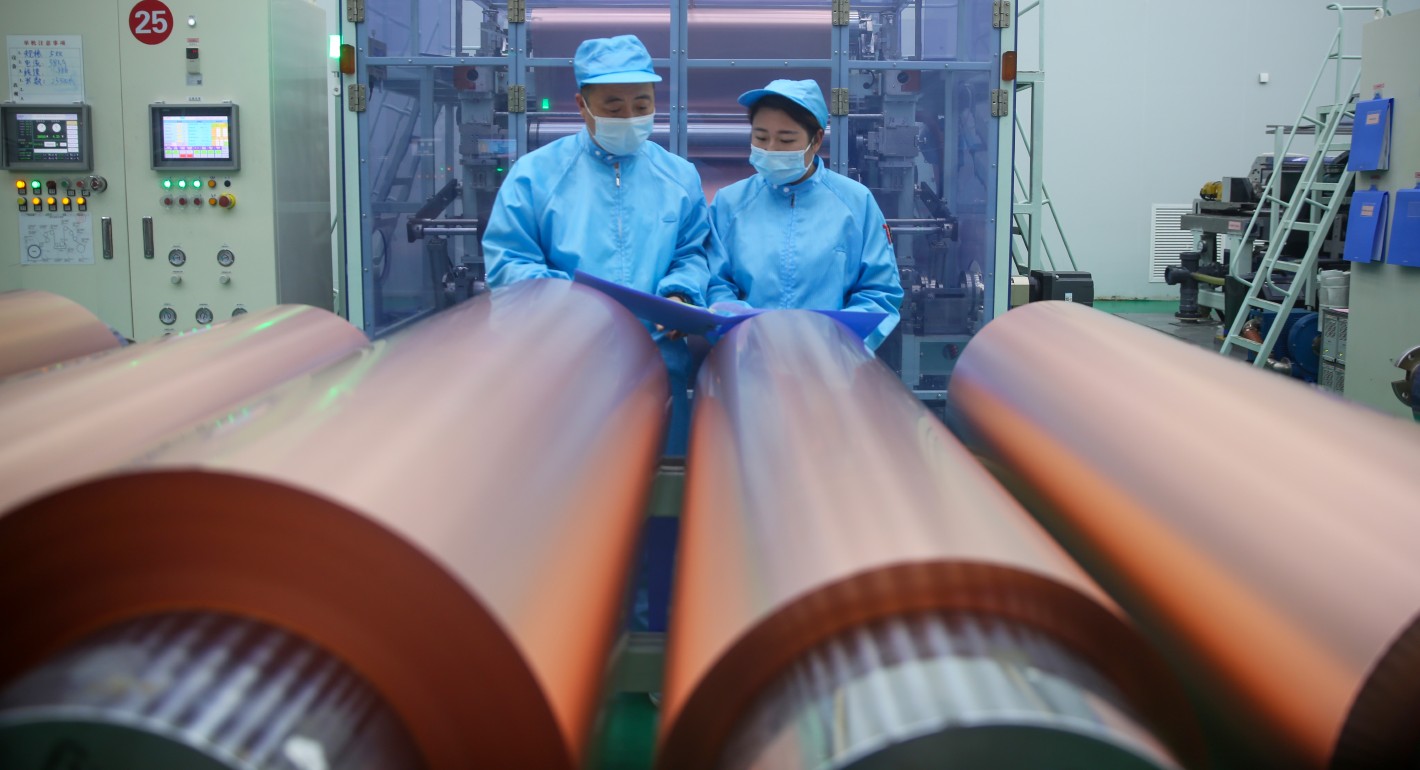
Over the past decade, China has moved from marginal player to major producer of all things batteries. The United States, Europe, and others are aiming to balance the market.

Milo McBride
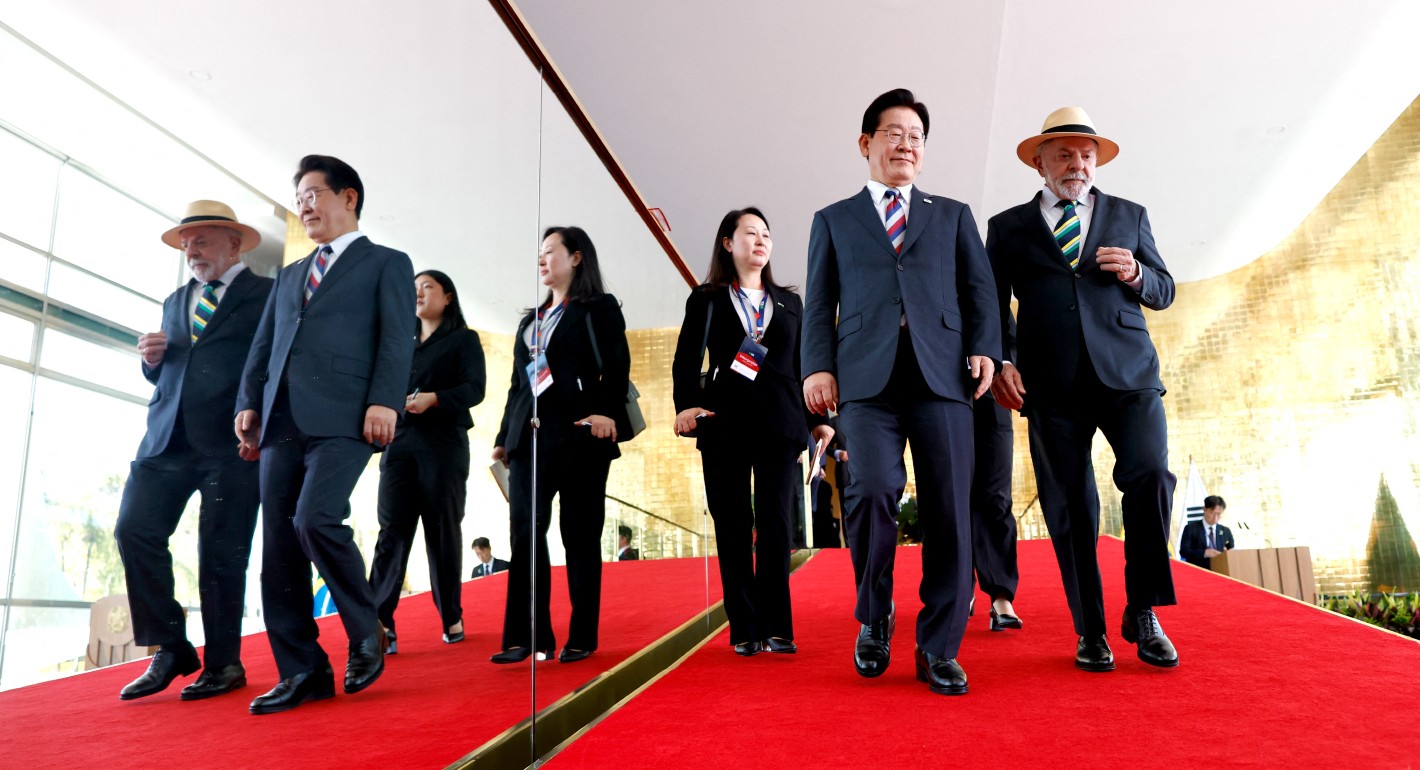
Lee’s tour shows how Seoul is reorganizing its diplomacy away from Pyongyang and toward industrial networks and the geography of the compute economy.

Darcie Draudt-Véjares

Most migrants may have left Ceuta, but the effects may linger.


Alejandro Martin Rodriguez, Sarah Yerkes