• Research
  • Emissary
  • About
  • Experts
Carnegie Global logoCarnegie lettermark logo
DemocracyIran
  • Donate
{
  "authors": [
    "Jane Vaynman",
    "Tristan Volpe"
  ],
  "type": "legacyinthemedia",
  "centerAffiliationAll": "dc",
  "centers": [
    "Carnegie Endowment for International Peace"
  ],
  "collections": [],
  "englishNewsletterAll": "ctw",
  "nonEnglishNewsletterAll": "",
  "primaryCenter": "Carnegie Endowment for International Peace",
  "programAffiliation": "NPP",
  "programs": [
    "Nuclear Policy"
  ],
  "projects": [],
  "regions": [],
  "topics": [
    "Security",
    "Nuclear Policy"
  ]
}
REQUIRED IMAGE

REQUIRED IMAGE

In The Media

Dual Use Deception: How Technology Shapes Cooperation in International Relations

Almost all technology is dual use to some degree: it has both civilian and military applications. This duality of technology presents a challenge not by its very existence but rather through the ways it alters information constraints on the design of arms control institutions.

Link Copied
By Jane Vaynman and Tristan Volpe
Published on Sep 15, 2023
Program mobile hero image

Program

Nuclear Policy

The Nuclear Policy Program aims to reduce the risk of nuclear war. Our experts diagnose acute risks stemming from technical and geopolitical developments, generate pragmatic solutions, and use our global network to advance risk-reduction policies. Our work covers deterrence, disarmament, arms control, nonproliferation, and nuclear energy.

Learn More

International Organization

About the Authors

Jane Vaynman

Former Program Assistant

Tristan Volpe

Nonresident Fellow, Nuclear Policy Program

Tristan Volpe is a nonresident fellow at the Carnegie Endowment for International Peace and assistant professor of defense analysis at the Naval Postgraduate School.

Authors

Jane Vaynman
Former Program Assistant
Tristan Volpe
Nonresident Fellow, Nuclear Policy Program
Tristan Volpe
SecurityNuclear Policy

Carnegie does not take institutional positions on public policy issues; the views represented herein are those of the author(s) and do not necessarily reflect the views of Carnegie, its staff, or its trustees.

More Work from Carnegie Endowment for International Peace

  • Commentary
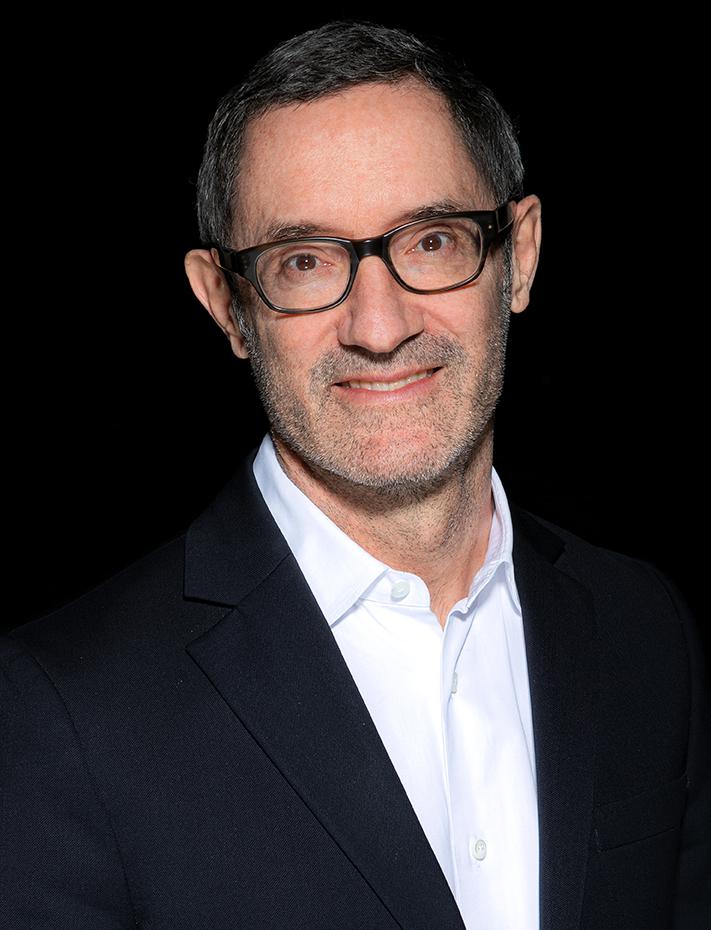
    Can Europe Compete with the United States and China?

    Between the United States’ market-driven approach and China's state-led industrial strategy, Europe is reckoning with how it can remain competitive in the global economy. But is Europe in danger of becoming a U.S. or China colony?

      Noah Barkin, Anu Bradford
  • Commentary
    Carnegie Politika
    Russian Market Sours for Belarusian State Companies

    Minsk’s faith in the future of its larger neighbor’s economy is fading as Belarusian firms in Russia see record losses.    

      Olga Loiko

  • Commentary
    Carnegie Politika
    Are Russia-Japan Relations Really Warming Up?

    The truth is that Japan’s government is seeking a degree of reengagement but at a vastly reduced level than under Abe. Most significantly, Japan has shown no willingness to ease sanctions.

      James D.J. Brown

  • Article
    Continental Asia and the Rise of Portfolio Politics

    “Central Asia” as an analytical category is itself part of the problem. The term is a Soviet administrative inheritance, drawn along lines that served the convenience of Moscow. The Central Asian states the Soviets named no longer see themselves through this category alone and are not aligning across political blocs but are instead building external partnerships sector by sector, assigning different partners to different functions.

      Jennifer B. Murtazashvili

  • Commentary
    Carnegie Politika
    In Russia, Private Companies Have Been Left to Pick Up the Tab for Ukrainian Drone Attacks

    The cost of air defense has become an unregistered tax on revenue for businesses. While military rents are consolidated in the federal budget, the costs of defense are being spread across the balance sheets of companies and regional governments.

      Alexandra Prokopenko

Get more news and analysis from
Carnegie Endowment for International Peace
Carnegie global logo, stacked
1779 Massachusetts Avenue NWWashington, DC, 20036-2103Phone: 202 483 7600
  • Research
  • Emissary
  • About
  • Experts
  • Donate
  • Programs
  • Events
  • Blogs
  • Podcasts
  • Contact
  • Annual Reports
  • Careers
  • Privacy
  • For Media
  • Government Resources
Get more news and analysis from
Carnegie Endowment for International Peace
© 2026 Carnegie Endowment for International Peace. All rights reserved.