• Research
  • Emissary
  • About
  • Experts
Carnegie Global logoCarnegie lettermark logo
DemocracyIran
  • Donate
{
  "authors": [],
  "type": "scholarSpotlight",
  "centerAffiliationAll": "dc",
  "centers": [
    "Carnegie Endowment for International Peace"
  ],
  "collections": [],
  "englishNewsletterAll": "asia",
  "nonEnglishNewsletterAll": "",
  "primaryCenter": "Carnegie Endowment for International Peace",
  "programAffiliation": "AP",
  "programs": [
    "Asia"
  ],
  "projects": [],
  "regions": [
    "North America",
    "United States",
    "East Asia",
    "South Korea",
    "North Korea"
  ],
  "topics": [
    "Security",
    "Foreign Policy"
  ]
}

Source: Getty

Scholar Spotlight

New Scholar Spotlight: Darcie Draudt-Véjares

My work will address the evolving landscape of political, economic, and social dynamics in the Koreas and their implications for U.S. policy.

Link Copied
Published on Feb 21, 2024
Program mobile hero image

Program

Asia

The Asia Program in Washington studies disruptive security, governance, and technological risks that threaten peace, growth, and opportunity in the Asia-Pacific region, including a focus on China, Japan, and the Korean peninsula.

Learn More

How will the long-standing U.S.–South Korea partnership adjust to regional challenges? How do the two countries’ perceptions of each other affect policy decisions on the alliance, North Korea, and Indo-Pacific cooperation in the face of emerging social and economic changes?

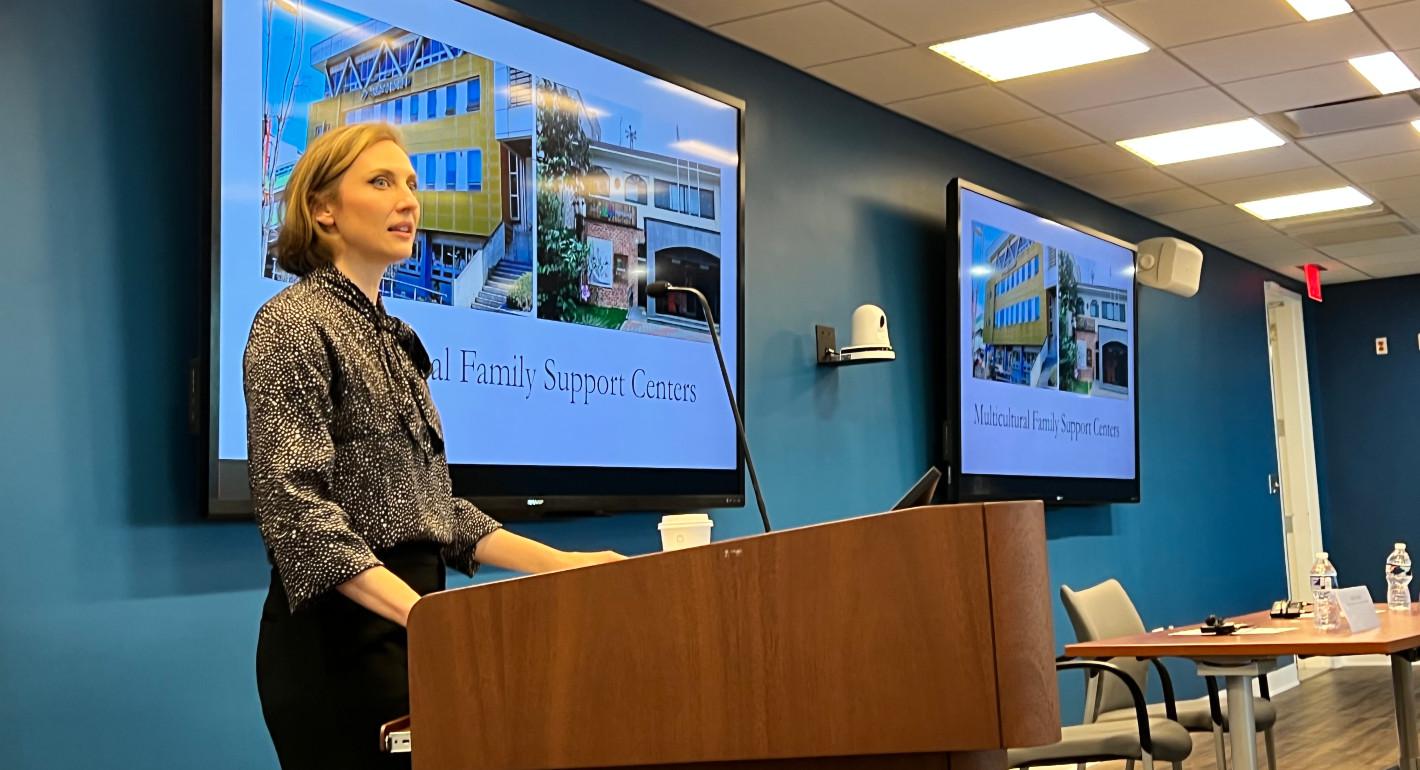
My research explores the interactive and transnational dimensions of domestic and foreign policy regarding U.S. relations with the Korean Peninsula. I delve into the interactive dynamics within and across Washington, Seoul, and Pyongyang, examining how domestic politics and social changes intertwine in transnational alliance issues amid evolving geopolitical landscapes.

I join Carnegie as a political scientist and policy analyst with fifteen years of experience working in and on Korean affairs, including living in Seoul from 2008 through 2013. My work will center around three policy-driven questions, addressing the evolving landscape of political, economic, and social dynamics in the Koreas and their implications for U.S. policy, while scrutinizing the strategic shifts within the broader Indo-Pacific framework.

First, South Korea’s latent debates on whether and how to acquire a nuclear capability to deter North Korea—whether via U.S. redeployment of nuclear assets to the peninsula or the pursuit of its own indigenous nuclear program—have become a full-fledged issue at the top of the strategic agenda. The 2023 bilateral Washington Declaration may have reined in some of the urgency in the near term, but the issue is by no means settled. These debates are still misunderstood in Washington, leading to strategic and political uncertainties.

Second, I bring to our policy conversations on-the-ground insights to changing social and economic trends in both North and South Korea. Demographic decline, gender politics, political polarization, labor market strain, and migration patterns have already had large effects on South Korean politics and security choices. I’ve conducted in-depth field research on these issues, and without understanding them substantively, we risk mischaracterizing and overlooking the interests driving Seoul’s foreign policy.

Third, looking north of the DMZ, Kim Jong Un’s North Korea is a different country than that of his forebears. With Kim’s nurturing of a sound nuclear arsenal and increasingly developed intercontinental missile capabilities, the United States and its allies have entered a new era of nuclear politics. Diplomatic efforts will need to reframe and recalibrate their approach to not only attain security and regional stability but also address governance concerns.

At Carnegie, I’m excited to join a truly global network of thinkers and practitioners to delve into these and other emerging issues, not only to advance the interests of the United States and its allies but also in service of fostering stability, progress, and prosperity in the Indo-Pacific.

SecurityForeign PolicyNorth AmericaUnited StatesEast AsiaSouth KoreaNorth Korea

Carnegie does not take institutional positions on public policy issues; the views represented herein are those of the author(s) and do not necessarily reflect the views of Carnegie, its staff, or its trustees.

More Work from Carnegie Endowment for International Peace

  • Commentary
    Diwan
    Looking Past the Wall on Palestine-Israel

    Policy discussion is ignoring that the Palestinian national project is hollowed out and apartheid is a present danger.

      Nathan J. Brown

  • Commentary
    Strategic Europe
    The Climate Blind Spot in Europe’s New Migration Pact

    The EU’s new migration policy is not suited to today’s realities. With climate change increasingly becoming a driver of displacement, Europe needs to rethink its deterrence-focused approach.

      • Shana Tabak headshot

      Shana Tabak

  • two men sitting next to each other
    Commentary
    Emissary
    Senegal’s Debt Crisis Has Moved Its Leaders from Partners to Rivals

    The impacts of the Faye-Sonko rupture could go well beyond the country’s borders.

      • Dr. Lesley Anne Warner

      Lesley Anne Warner

  • Participants in the 4th Meeting 'In Defense of Democracy' | Pool Moncloa/Fernando Calvo
    Paper
    Post-U.S. International Democracy Support: Aspiration in Search of Substance

    The reinvention of democracy support needs to be carried forward without the clear leadership of one dominant player.

      Richard Youngs, Thomas Carothers

  • Viktor Orban, Prime Minister of Hungary, speaks during a campaign rally of the governing Fidesz Party in Pecel, Hungary, on March 28. The rally is part of the Prime Minister's nationwide campaign trail before the Hungarian General Election scheduled for April 12.
    Paper
    Orbán, Fidesz, and Hungary’s Populist Foreign Policy

    Hungary under Viktor Orbán deployed right-wing populism as a foreign policy strategy, embedding the country in a web of illiberal transnational networks whose legacy will endure even after his April 2026 electoral defeat.

      Zsuzsanna Végh

Get more news and analysis from
Carnegie Endowment for International Peace
Carnegie global logo, stacked
1779 Massachusetts Avenue NWWashington, DC, 20036-2103Phone: 202 483 7600
  • Research
  • Emissary
  • About
  • Experts
  • Donate
  • Programs
  • Events
  • Blogs
  • Podcasts
  • Contact
  • Annual Reports
  • Careers
  • Privacy
  • For Media
  • Government Resources
Get more news and analysis from
Carnegie Endowment for International Peace
© 2026 Carnegie Endowment for International Peace. All rights reserved.