

Paper
James M. Acton, Ankit Panda
{
  "authors": [
    "James M. Acton"
  ],
  "type": "commentary",
  "centerAffiliationAll": "dc",
  "centers": [
    "Carnegie Endowment for International Peace"
  ],
  "collections": [
    "U.S. Nuclear Policy"
  ],
  "englishNewsletterAll": "ctw",
  "nonEnglishNewsletterAll": "",
  "primaryCenter": "Carnegie Endowment for International Peace",
  "programAffiliation": "NPP",
  "programs": [
    "Nuclear Policy"
  ],
  "projects": [],
  "regions": [
    "Ukraine",
    "Russia",
    "United States"
  ],
  "topics": [
    "Security",
    "Nuclear Policy"
  ]
}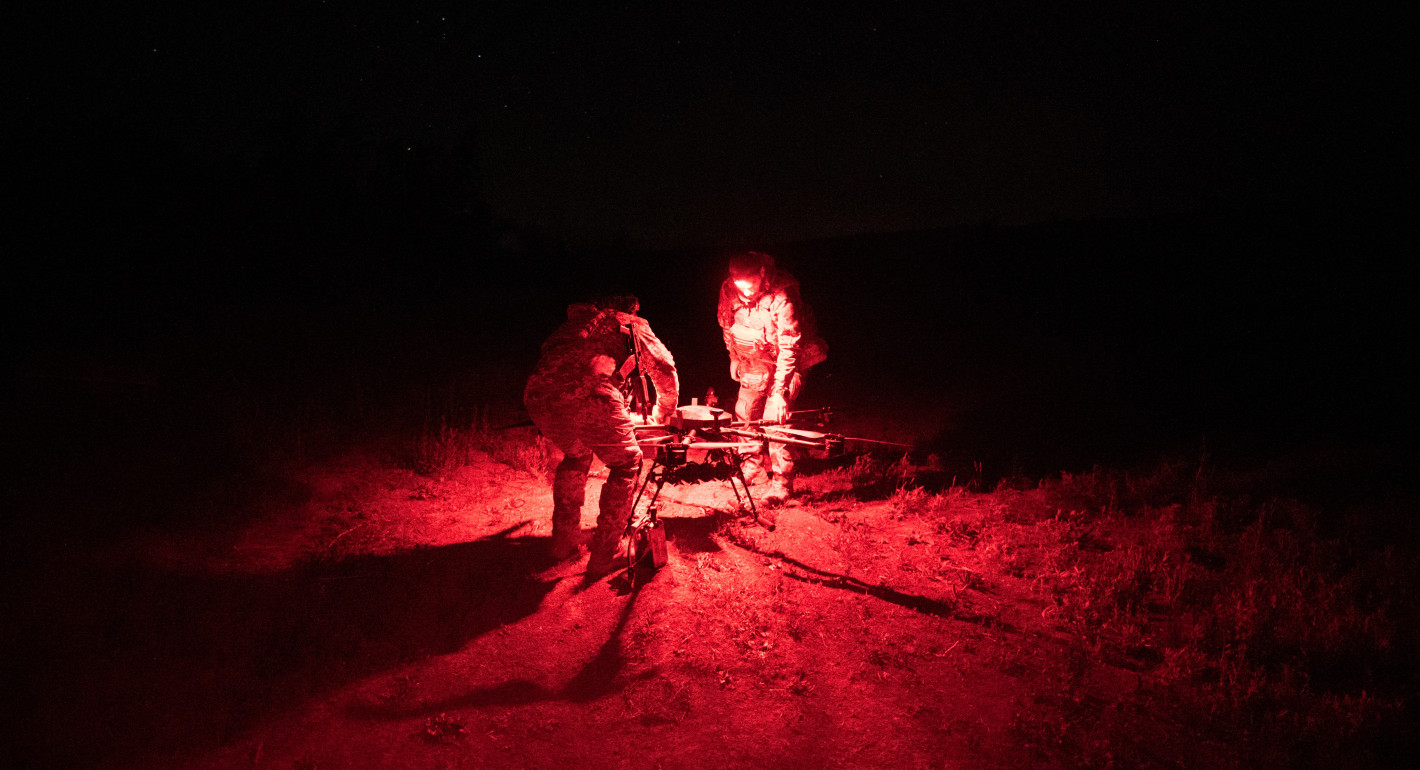
Ukrainian troops check a drone after a mission on May 1, 2024. (Photo by Genya Savilov/AFP via Getty Images)
In the past two weeks, Ukraine appears to have attacked large Russian radars at Armavir and Orsk, severely damaging the former. After more than two years of conflict, Ukrainian strikes against Russian radars—even on Russian soil—may seem unremarkable, but these were no ordinary radars. They were part of Russia’s strategic early warning system, designed to detect an incoming American nuclear strike and to enable Russia to launch its own nuclear forces before they are destroyed.
Ukraine’s attacks raised the risk of Russia’s nuclear use. Its decision demonstrates why President Joe Biden was right to prohibit Kyiv from using U.S.-supplied weapons to strike Russian territory and why, even after making a limited exception for strikes near Kharkiv, he should resist calls for any further loosening of restrictions.
Ukraine, which is facing an existential assault from Russia, attacked the radars with its own indigenous capabilities—though why it did so is unclear. One possibility is that the attack on Armavir was motivated by its probable role in supporting Russian non-nuclear operations. Specifically, that “entangled” radar can likely detect some Ukrainian strikes with non-nuclear ballistic missiles, principally the ATACMS missiles supplied by the United States. Perhaps Kyiv hoped that attacking the radar would help prevent Russia from shooting those missiles down. Indeed, the attack against Armavir may have been in preparation for ATACMS strikes against Crimea last week.
That said, the military benefits to Ukraine of attacking Armavir were likely modest. The radar, which is near Russia’s Black Sea coast, faced south—away from most of Ukraine—and could “see” only a small slice of conflict zone, most notably, Kherson, Crimea, and Russia’s approaches to the peninsula. Moreover, Ukraine’s ATACMS missiles seemed to have little trouble penetrating the air defenses over this region while the Armavir radar was operational.
Meanwhile, there was no direct military benefit to Ukraine’s apparently unsuccessful attack on the Orsk radar. That facility, located in central Asia, is simply too far from Ukraine to support Russian operations there.
Whatever Ukraine’s intentions for its attacks, they had the effects of degrading Russia’s strategic early warning system and of raising the risk of escalation. Russia does not yet appear to have responded to the attacks, and it might not do so. Even if it does, the story might end there. But an uneventful outcome should not obscure the potential dangers. The consequences of a nuclear war could be so dire that even a small increase in likelihood is deeply undesirable.
At first glance, the degradation of Russia’s strategic early warning system may seem like good news. However, given the strange but compelling logic of nuclear deterrence, the entire world should want this system to be reliable and, just as importantly, for Russia to be confident in its reliability. If Moscow believes that Washington could conduct a successful preemptive attack on its nuclear forces, its trigger finger could get very itchy, raising the risk that Russia might launch a large-scale nuclear attack based on a false or misinterpreted warning. Indeed, Russian President Vladimir Putin appears fixated on the concern that the United States might launch a first strike on Russia’s nuclear forces and leadership.
Because Russia’s early warning system has some redundancy, Ukraine’s strikes probably didn’t undermine its performance all that much. But why would Russia assume that Ukraine is done attacking its ballistic missile early warning radars? After all, Kyiv’s attacks clearly demonstrate that it views all such radars as legitimate targets (and those that can monitor the conflict zone are, even if attacking them is a bad idea). As a result, Russia may worry that Ukraine will attack additional radars, potentially degrading its early warning system in more serious ways.
Worse still, what if Russia believes that Ukraine conducted the strike at Washington’s behest, to better position the United States to fight a nuclear war should the current conflict escalate? To be sure, I don’t believe for one second that Washington ordered the strike or would fight a nuclear war on Ukraine’s behalf—but it’s far from clear that Russia shares this assessment. While Moscow has said nothing about the attacks (probably because it is embarrassed that Ukraine succeeding in hitting a target as sensitive as the Armavir radar), its view of the conflict as a whole suggests what its interpretation may be.
Russia sees NATO as being a direct participant in this conflict. As Dmitri Alperovitch has noted, there is “an erroneous conviction [in Moscow] that Ukraine’s targeting is directed by Washington.” Going even further, Moscow believes that Washington is using the conflict to strengthen its geopolitical position at Russia’s expense. Putin, for example, has accused “Anglo-Saxons” of conducting the attacks on the Nord Stream pipelines. While it is easy to dismiss such statements as propaganda, they likely reflect a genuinely paranoid worldview that must induce senior Russian officials to at least ask themselves whether the United States was behind the Armavir strike.
If Russia believes that Ukraine will attack more radars or other nuclear command-and-control assets, especially on U.S. instructions, it may decide to escalate the conflict. Russia’s official nuclear doctrine explicitly provides for the possibility of nuclear use in the event of non-nuclear attacks on its nuclear command and control system—exactly the circumstance that has come to pass. In practice, this threat should be taken seriously rather than literally. Nuclear use would be a disproportionate, and correspondingly unlikely, response to Ukraine’s attacks. However, a Russia that feels its nuclear command-and-control system is in jeopardy, now or in the future, could try to raise the probability of nuclear war—by ramping up its nuclear threats or raising the alert level of its nuclear forces—to signal the danger associated with further attacks and hence deter Ukraine from conducting them.
In assessing the danger, U.S. policymakers should imagine how they, their military and civilian advisers, members of Congress, and social media commentators would react if an American ballistic missile early warning radar were attacked. Indeed, this issue has been discussed recently with the administration of then president Donald Trump going so far as to explicitly threaten it might use nuclear weapons in this exact circumstance. (While the Biden administration has not repeated this threat, it did not rule it out either.) The threat made by the Trump administration should suggest to U.S. policymakers that they would be unlikely to react with equanimity to attacks on their nuclear command-and-control system.
The unfortunate reality is that there is a divergence between U.S. and Ukrainian interests. Kyiv has demonstrated that, in fighting off Russian aggression, it is willing to raise the risk of Russian nuclear use. Fair enough. Americans have their own interests, including seeing Ukraine successfully preserve its freedom and independence, but without risking a nuclear war in the process. It is not enough for American officials to express concern to Kyiv about the recent strikes. The United States should decline to further loosen its restrictions on the use of U.S.-supplied weapons. To relax the rules would risk American weapons being used against highly sensitive targets in Russia—including nuclear installations or leadership facilities, as well as early warning radars—thus potentially dragging the United States into in a high-stakes crisis against a nuclear-armed adversary.
Proliferation News is a biweekly newsletter highlighting the latest analysis and trends in the nuclear policy community.

Jessica T. Mathews Chair, Co-director, Nuclear Policy Program
Acton holds the Jessica T. Mathews Chair and is co-director of the Nuclear Policy Program at the Carnegie Endowment for International Peace.
Recent Work

James M. Acton, Ankit Panda
James M. Acton
Carnegie does not take institutional positions on public policy issues; the views represented herein are those of the author(s) and do not necessarily reflect the views of Carnegie, its staff, or its trustees.

AI capabilities are moving fast. Most institutions—including governments—can’t keep up.


Anton Leicht, Scott Singer

The Bureau of Industry and Security needs to adjust its focus and practices to maintain its position as the U.S. government’s primary champion of international technological competition.

Geoffrey Irving
They face an uphill climb, but they could draw on a strategy that other diplomats have used in the past.


Shana Tabak, Alejandro Martin Rodriguez

European Commission President Ursula von der Leyen is about to give her annual address on the state of the EU. Here’s what she won’t—but should—say.

Rym Momtaz

Depleted financial reserves and a shrinking tax base mean it is no longer possible to simultaneously deliver high defense spending, price stability, and economic growth.

Alexandra Prokopenko