

Commentary
Michael Pettis
{
  "authors": [
    "Michael Pettis"
  ],
  "type": "commentary",
  "centerAffiliationAll": "",
  "centers": [
    "Carnegie Endowment for International Peace",
    "Carnegie China"
  ],
  "collections": [
    "Carnegie China Commentaries"
  ],
  "englishNewsletterAll": "",
  "nonEnglishNewsletterAll": "",
  "primaryCenter": "Carnegie China",
  "programAffiliation": "",
  "programs": [],
  "projects": [
    "China’s Reform Imperative"
  ],
  "regions": [
    "China"
  ],
  "topics": [
    "Economy"
  ]
}
Source: Getty
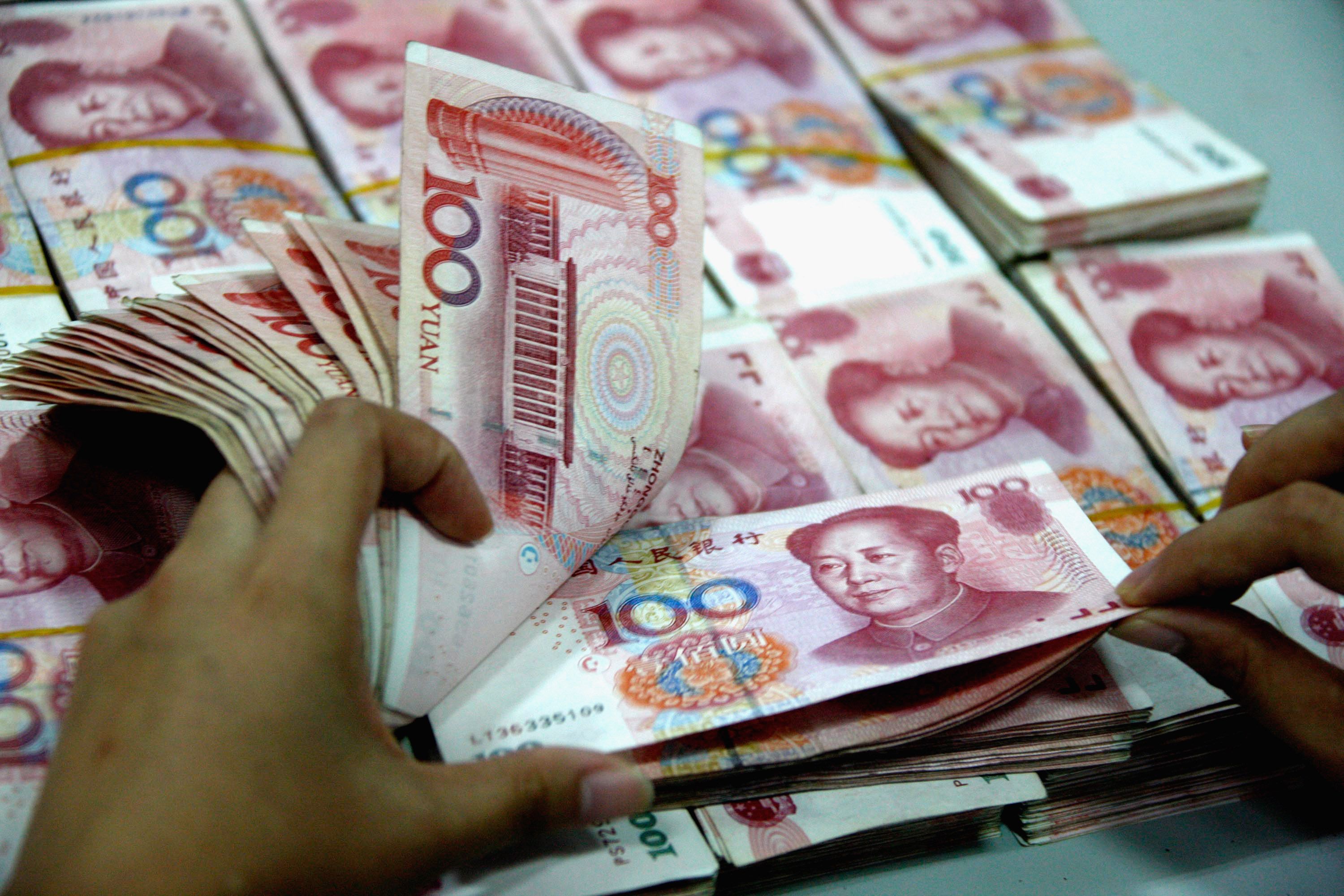
Because of the way credit expansion is managed, monetary expansion in China is directed mainly toward the supply side of the economy.
This publication is a product of Carnegie China. For more work by Carnegie China, click here.
Milton Friedman famously said, “Inflation is everywhere and always a monetary phenomenon,” but few seem to know that the actual sentence in A Monetary History of the United States (coauthored with Anna Jacobson Schwartz and published in 1963) is longer. “Inflation,” Friedman and Schwartz wrote, “is everywhere and always a monetary phenomenon, resulting from and accompanied by a rise in the quantity of money relative to output.”
It is unfortunate that so few know the second part because it is crucial to the sentence’s overall meaning. Specifically, it explains and limits the condition under which the first part of the sentence is typically understood. It is not that monetary expansion is inflationary but rather that it is inflationary to the extent that it causes demand to rise relative to output.
Even Friedman and Schwartz seemed to forget this limiting condition as they followed a logical statement with a political statement: “It follows that the only effective way to stop inflation is to restrain the rate of growth of the quantity of money.” It would have been far more accurate to say that the only effective way to stop inflation is to restrain the rise of demand relative to output, in which case their version is correct only to the extent that monetary expansion causes demand to rise relative to output.
That’s a much less elegant formulation. But perhaps in many, if not most, economies, including the United States, omitting the limiting conditions doesn’t matter. That’s because the financial systems in those economies are structured such that an expansion in the quantity of money seems to cause demand to rise faster than output, and so monetary expansion would indeed be inflationary. Among the obvious ways this happens is when monetary expansion leads directly to an expansion of consumer credit or causes a rise in asset prices, which in turn feeds consumption indirectly through a wealth effect.
While this seems to be the case in the U.S. financial system, is this a quality of all financial systems? Most economists—even Chinese and other non-American economists—are so U.S.-centric in their understanding of economic theory that to ask whether all banking and financial systems operate in the same way as those in the United States seems almost impertinent.
However, in at least two major economies—Japan in the 1960–2000 period and China during the past four decades—they clearly don’t. Whereas in the United States and other similar economies, monetary expansion seems to feed directly or indirectly into boosting the consumption side of the economy, China’s financial system today and Japan’s then have been structured in ways such that monetary expansion results mainly in credit expansion that, for well-understood institutional reasons, is directed mainly into the supply side of the economy.
Most credit in China, for example, is directed through businesses, state-owned enterprises, local governments, and Beijing to investment in infrastructure, property, manufacturing, or extractive industries. A much smaller share is directed to households, and even this, until recently, was used far more for home purchases (where there had been a great deal of inflation) than for consumption. China’s financial system is dominated by banks, and its banking system operates much less through changes in interest rates and credit signals than through regulators instructing banks about how they should manage their credit portfolios and to which sectors they should lend. (Japan in the 1980s called this “window guidance.”)
The result is that credit expansion supports supply more than it supports demand. This is a key difference. In cases in which monetary expansion is directed through the financial system to expand demand relative to output, it may perhaps be true that “the only effective way to stop inflation is to restrain the rate of growth of the quantity of money,” or, to put it differently, that increasing the quantity of money is likely to spur inflation. But in cases in which monetary expansion is directed through the financial system mainly to the supply side of the economy, this is no longer true.
It, however, is what many analysts, including Chinese policymaking elites, still seem to think. Low inflation, and even deflation, have been problems in China in recent years, much as they were in Japan in the 1990s. But after every disappointing inflation release, we hear that the low inflation in China creates much-needed room for the central bank to expand money more aggressively.
Yet for all its aggressive expansion in debt and in the monetary aggregates over the past several years, China still cannot seem to shake off deflation and disinflation (nor could Japan before it). The reason is that China has forgotten the condition in Friedman’s original formulation under which monetary expansion is inflationary, and so it fails to understand why this condition doesn’t apply. Because of the way credit expansion is managed, monetary expansion in China is directed mainly toward the supply side of the economy. While the output generated by each unit increase in money and debt has certainly fallen dramatically over the years, monetary and credit expansion still result in a relative rise in output.
That’s probably the reason why the combination of a highly inflationary global environment and China’s rapid credit and monetary growth has been associated in China with deflation—not inflation. Until there is an institutional transformation of the Chinese banking system that directs credit mainly into the demand side of the economy, which Beijing has been reluctant to support no matter how vulnerable the economy is to weak domestic demand, there is no reason to assume that the relationship between inflation and the rate of growth of the quantity of money must be the same in China as it is in the United States.
Ironically, perhaps the reason China doesn’t experience more deflation is that the economy is already so overinvested that the positive supply side impact of credit expansion has lost much of its force. It is only the declining effectiveness of investment in China that has prevented deflation from being much more severe that it is.

Nonresident Senior Fellow, Carnegie China
Michael Pettis is a nonresident senior fellow at the Carnegie Endowment for International Peace. An expert on China’s economy, Pettis is professor of finance at Peking University’s Guanghua School of Management, where he specializes in Chinese financial markets.
Recent Work
Michael Pettis
Michael Pettis

Huawei pushed hard to enter the Egyptian data centers market, until the Americans made a better offer.

Angie Omar

U.S. trading partners in Asia are closely watching the dispute for signs of how it may affect their own interests.

Barbara Weisel

Chinese strategists are once again debating whether American power is declining and whether U.S. hegemony is experiencing irreversible decay.
Wu Xinbo

With the growth in points of friction between the great powers, organizations like the SCO will continue to play a role in the strategic adaptation of the smaller powers caught between them.

Temur Umarov
Amid celebrations of bilateral ties was a deeper focus on stability in the Middle East.

Amr Hamzawy