

Commentary
Maksim Samorukov
{
  "authors": [
    "Maksim Samorukov"
  ],
  "type": "other",
  "centerAffiliationAll": "",
  "centers": [
    "Carnegie Endowment for International Peace",
    "Carnegie Russia Eurasia Center"
  ],
  "englishNewsletterAll": "",
  "nonEnglishNewsletterAll": "",
  "primaryCenter": "Carnegie Russia Eurasia Center",
  "programAffiliation": "",
  "programs": [],
  "projects": [],
  "regions": [
    "Western Balkans",
    "Russia"
  ],
  "topics": [
    "Foreign Policy",
    "EU",
    "Security"
  ]
}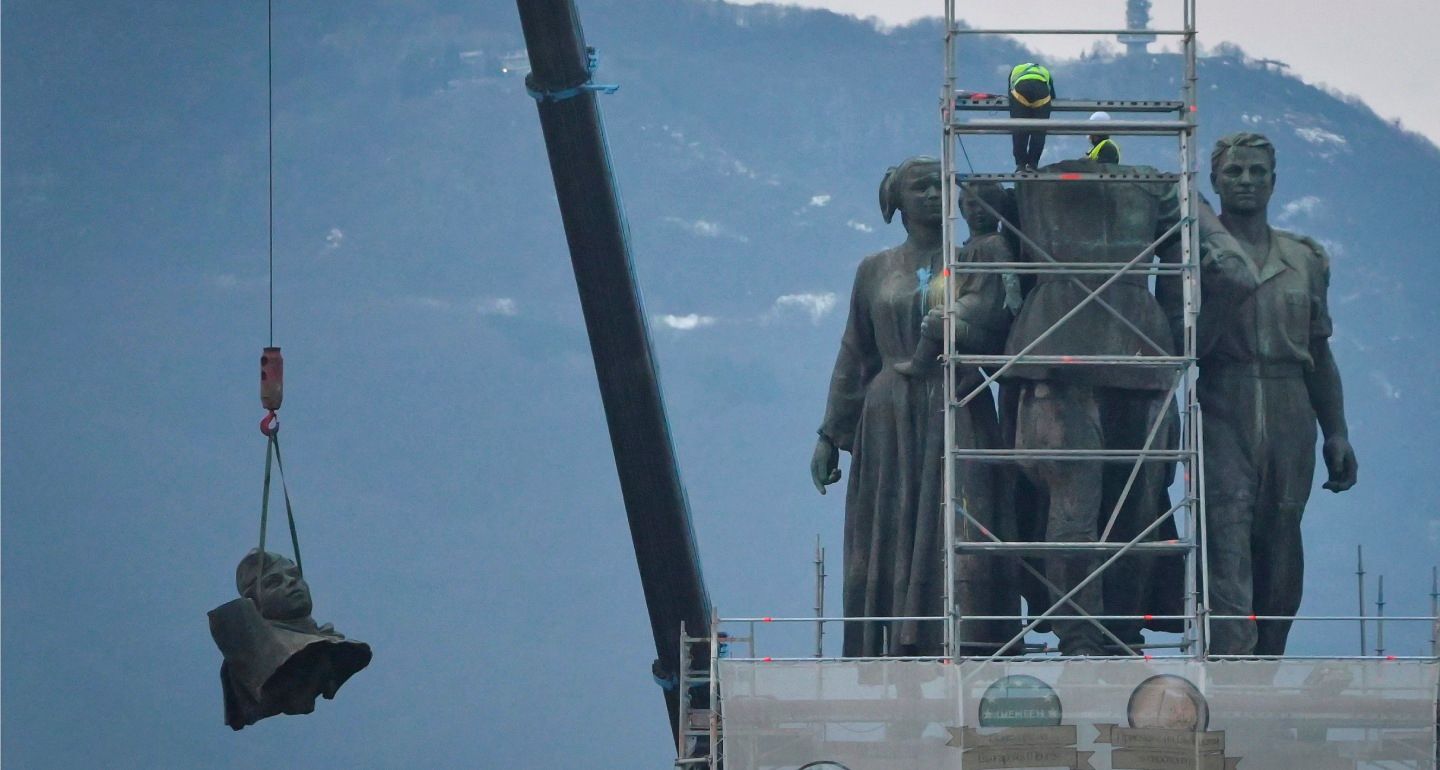
Source: Getty Images
Bulgarians may still know the name of the Russian ambassador better than the frequently changing heads of their own government, but beyond the media buzz, most of Moscow’s leverage in Bulgaria has perished in the flames of Russia’s war against Ukraine.
For over a century and a half, Bulgaria has featured prominently in Russia’s Black Sea strategy. Instead of direct annexation, the country was assigned the role of a humble satellite, always ready to facilitate Russia’s access to Europe and the Mediterranean as well as ward off other powers from Russia’s southern coast. These objectives haven’t changed much in the 21st century. Joint energy projects with Bulgaria were supposed to bring Russian energy giants closer to European markets, bypassing less pliant transit states, while historical affinity with Bulgarians was leveraged to limit NATO’s presence in and around the Black Sea. The results of Russia’s efforts, however, are in many ways the opposite of those intended.
This paper is a part of the project “Russian Intentions and Actions in the Black Sea” by Transatlantic Leadership Network. Other papers of the project are available here.
Fellow, Carnegie Russia Eurasia Center
Samorukov is a fellow at the Carnegie Russia Eurasia Center.
Recent Work
Maksim Samorukov
Maksim Samorukov
Carnegie does not take institutional positions on public policy issues; the views represented herein are those of the author(s) and do not necessarily reflect the views of Carnegie, its staff, or its trustees.

By fueling the arguments of both supporters and opponents of Armenian Prime Minister Nikol Pashinyan, Azerbaijan wants to ensure he is re-elected with a weaker mandate.

Bashir Kitachaev

A much-discussed disagreement over internet restrictions in Russia was never an existential threat for Putin: It was about elite groups protecting their interests.

Alexandra Prokopenko

This piece argues that India’s central challenge is not managing a single flashpoint but resolving the underlying tension between expansion and institutional coherency of the BRICS grouping.

Vrinda Sahai
The battle over free speech has taken center stage since U.S. Vice President JD Vance accused Europe of censorship. From travel bans to social media regulation, especially around the Israel-Palestine conflict, are liberal democratic governments weaponizing free speech?

Rym Momtaz, ed.
Europe seems to have accepted its sidelining in the Middle East. The EU must reassert its support for the international rules-based order and step up engagement.
Rym Momtaz