

Commentary
Nathan J. Brown
{
  "authors": [
    "Nathan J. Brown"
  ],
  "type": "legacyinthemedia",
  "centerAffiliationAll": "dc",
  "centers": [
    "Carnegie Endowment for International Peace",
    "Malcolm H. Kerr Carnegie Middle East Center"
  ],
  "collections": [],
  "englishNewsletterAll": "menaTransitions",
  "nonEnglishNewsletterAll": "",
  "primaryCenter": "Carnegie Endowment for International Peace",
  "programAffiliation": "MEP",
  "programs": [
    "Middle East"
  ],
  "projects": [],
  "regions": [
    "North Africa",
    "Egypt"
  ],
  "topics": [
    "Political Reform",
    "Democracy"
  ]
}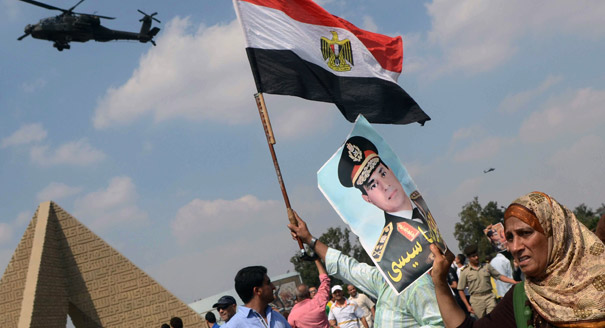
Source: Getty
Egypt’s future constitutional order depends more on whether General Abdel Fattah al-Sisi decides to run for president than on the constitution currently being drafted by the Committee of 50.
Source: Foreign Policy
Those interested in following every word of the work of the Committee of 50 drafting comprehensive revisions to Egypt's constitution now have a variety of sources to follow: one "official" twitter feed; an "unofficial" one; and the latest addition, an "official" Facebook page. But the most important word governing Egypt's future constitutional order will not be mentioned in any of those places. Indeed, it will not even be placed in the final text scheduled to be submitted to voters next month. That fateful word will be spoken only by General Abdel Fattah al-Sisi, and it will be a simple "yes" or "no" concerning his candidacy for the presidency of the Egyptian republic.
That is not to belittle the nature of the other issues being discussed. The matters on which agreement is elusive -- religion and state; the position of the military; the system by which Egypt's next parliament will be elected; the duties or even the existence of an upper house of parliament; judicial structures and guarantees -- are significant. Of course, in the best of worlds the most progressive and airtight clauses will work their effect only very slowly: with Egypt's legal framework and state structures thoroughly authoritarian in their basic framework and modes of operation, nothing will change overnight. As the committee members have elevated debates about freeing the media from state shackles, Islamist broadcasters remain closed. As they deliberate over political freedoms, the country's largest political party remains largely shuttered retaining only the shell of a legal existence. As they craft language to allow protests and demonstrations, supporters of the ousted government are harassed and hounded. None of this means that the wording of the constitution is irrelevant, but even if the delegates agree on general principles (which they have yet to do) and manage to codify that agreement in a skillful manner, there will be much legal and institutional meat to put on the skeletal constitutional framework.But even if that process begins, the most fundamental questions regarding state structure depend on the decision of a figure who is not even in the room. If Sisi decides to run for president, whatever document is produced by the committee will operate in a manner that revives (and even strengthens) the presidency that has dominated the Egyptian state since the office was created after the abolition of the monarch over half a century ago. If he does not run, the main institutions of the Egyptian state will operate in a more decentralized manner. Neither path is likely to be particularly democratic.
Without Sisi in the presidency, the post will likely go to a civilian figure -- either one of Egypt's meager group of politicians or a senior public figure. When Mohamed Morsi occupied the presidency with a substantial social movement and political party behind him, he was unable to make the levers of power work very effectively, and his elected successor is likely to find a similar problem. Various state institutions have used the post-2011 period to carve out considerable autonomy for themselves, and some are striving to ensure that such autonomy gets enshrined in the constitution (most notably the military, the judiciary, al-Azhar, but also, to a lesser extent, the labor federation and even the state-owned press). Even those that do not get constitutional guarantees (particularly the array of security and intelligence services) have shown little inclination to subject themselves to any kind of political oversight.
In short, such a constitutional order resembles the situation I described in the aftermath of the July 3 coup: "if so much state activity is to be insulated, politics (and the organizations, movements, and parties that populate political and civil society) is squeezed very much to the side. The width of the state leaves little room for the people." The fall of Mubarak ended the grip of the presidency over all state institutions, and no civilian president is likely to be able to reestablish it.
But matters could be quite different if Sisi occupies the presidency. No longer would the military establishment be so isolated with one of their own rank at the helm. The security services actively worked to undermine elected President Morsi; they would be far more likely to toe the line if there were a strong president from the military. Sisi's popularity and likely landslide victory would probably cow the parliament and most civilian political parties; such actors would show life only on matters on which Sisi had not clearly spoken. Egypt would once again be ruled from the presidency. To be sure, the situation would be different from the Nasserist period (in which a ruthless security apparatus and a single political party ensured the president's total domination) or even the Mubarak presidency (in which a stultified National Democratic Party still could produce loyal majorities to succumb to the presidential will and other institutions were dominated as much through sycophancy and co-optation as intimidation). A Sisi presidency would likely still find some obstacles -- the institutional autonomy for many actors would remain even if their political will to stand up to the president would weaken; the president would likely keep a watchful eye to ensure that the military did not use its privileged position to coalesce behind a rival; and a fractured parliament could be a difficult body to manage. And the new modes of contentious politics that Egyptians have adopted over the past few years -- demonstrations, petition campaigns, ruthless public criticism -- could still make the society difficult to steer politically, especially as the Sisi mania dies down and Egyptians come to realize that they cannot have their Sisi cake and eat it too.
The current situation -- in which a weak civilian leadership bears formal responsibility, especially for economic issues and social services while the military retains a dominant hand without any accountability -- would seem to be ideal from a general's perspective. It is for that reason that I have long considered Sisi's candidacy unlikely. Moving from his current position to the presidency would not be a demotion, but it would be taking on a set of headaches and perhaps, over the long run, turn some of his enthusiastic boosters into skeptics, especially if public services continue to deteriorate along with general economic conditions.
But the choice between these two alternative futures -- one with a divided and feckless state apparatus and the other with a more unified and decisive one -- may create political pressures on him to seek the job. It is true that neither of these scenarios is democratic in anything more than a plebiscitary sense, but that is an unmistakable result of the political choices the Egyptian people made this past summer.

Nonresident Senior Fellow, Middle East Program
Nathan J. Brown, a professor of political science and international affairs at George Washington University, is a distinguished scholar and author of nine books on Arab politics and governance, as well as editor of five books.
Recent Work
Nathan J. Brown
Nathan J. Brown
Carnegie does not take institutional positions on public policy issues; the views represented herein are those of the author(s) and do not necessarily reflect the views of Carnegie, its staff, or its trustees.
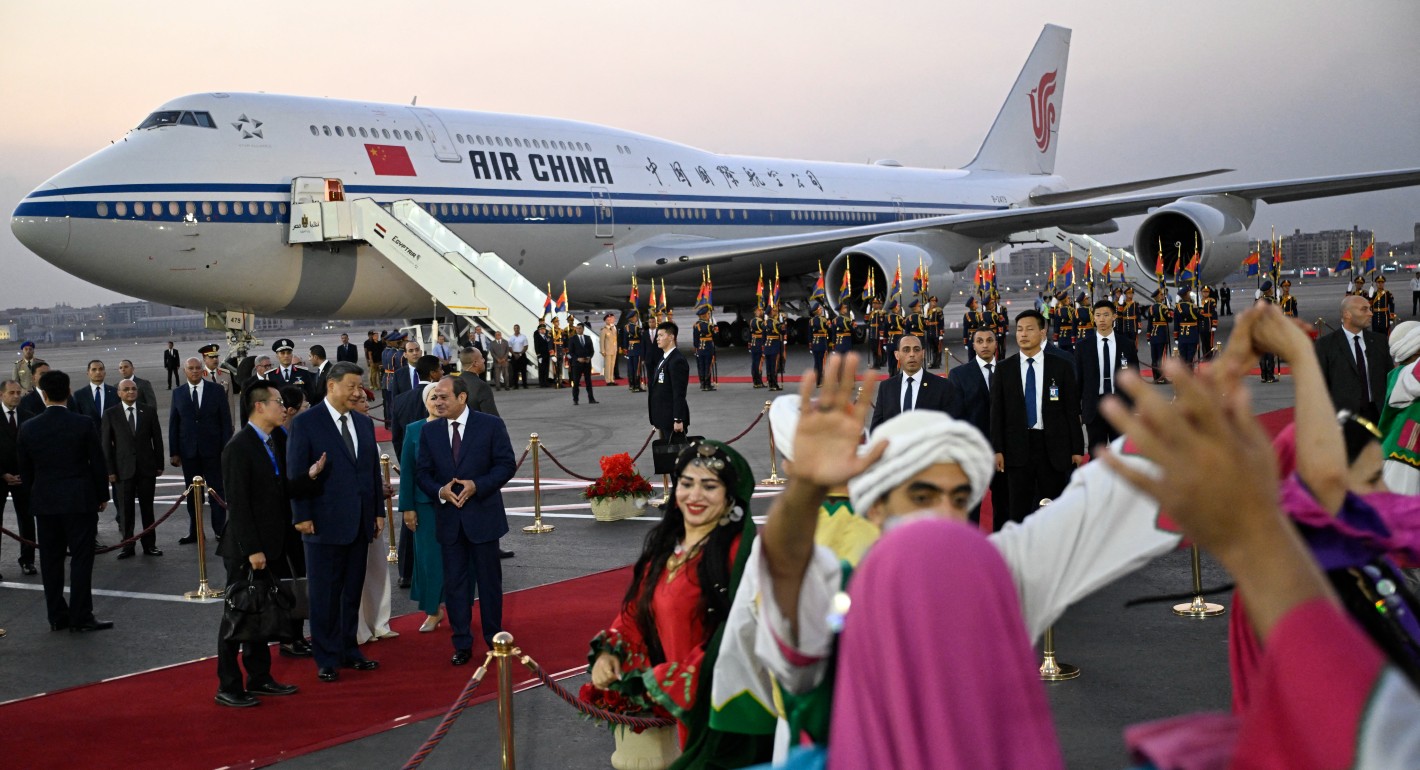
Amid celebrations of bilateral ties was a deeper focus on stability in the Middle East.

Amr Hamzawy
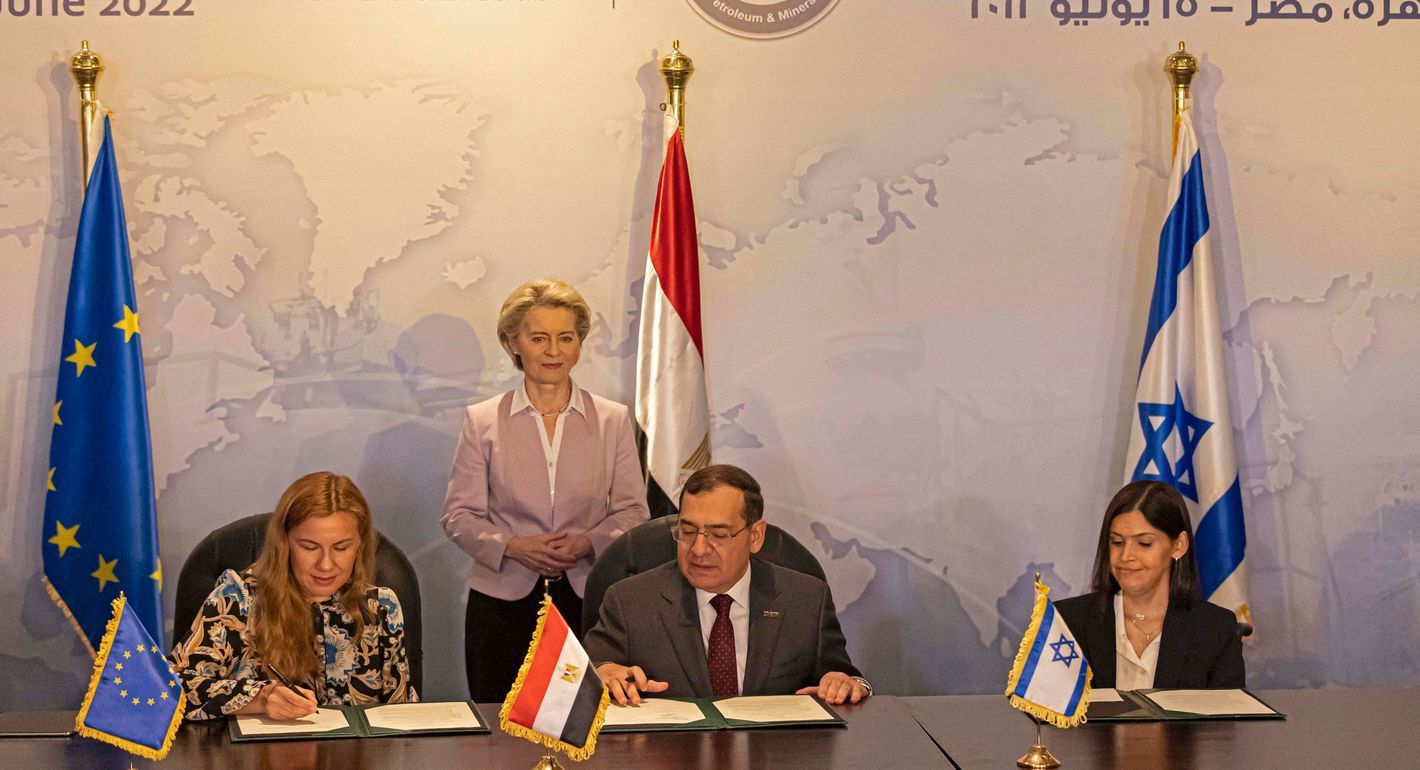
Can economic ties help contain conflict between Egypt and Israel, or do they simply postpone confrontation? Drawing on the German-Russian experience, the article examines how the gas deal creates mutual dependence, keeps channels of cooperation open, and raises the cost of conflict, without necessarily delivering lasting peace.
Nourhan Hefzy

The greater threat to Zelensky comes not from Fedorov alone, but from the convergence between the former defense minister’s political campaign and the anti-corruption investigations moving ever closer to the presidential administration.

Balázs Jarábik
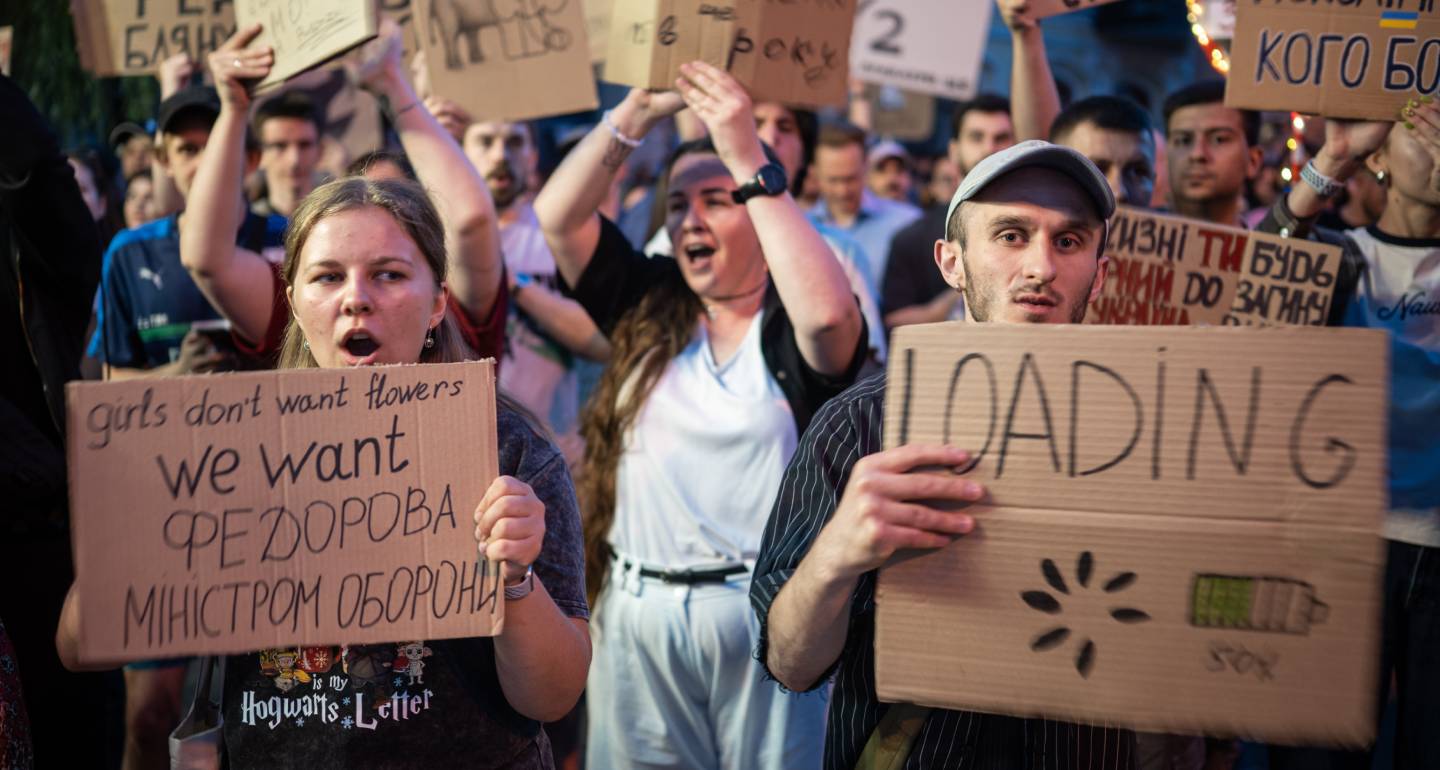
With his public call for new elections in Ukraine, ex-defense minister Mykhailo Fedorov has opened Pandora’s box.

Konstantin Skorkin

In supporting Europe’s far-right, MAGA and Russia both want the same thing: a weaker EU. Europe must defend itself without abandoning the openness these forces exploit.

Armida van Rij