

Q&A
Suzanne Maloney, Aaron David Miller, Karim Sadjadpour
{
  "authors": [
    "Karim Sadjadpour"
  ],
  "type": "legacyinthemedia",
  "centerAffiliationAll": "dc",
  "centers": [
    "Carnegie Endowment for International Peace",
    "Malcolm H. Kerr Carnegie Middle East Center"
  ],
  "collections": [
    "Iranian Proliferation"
  ],
  "englishNewsletterAll": "menaTransitions",
  "nonEnglishNewsletterAll": "",
  "primaryCenter": "Carnegie Endowment for International Peace",
  "programAffiliation": "MEP",
  "programs": [
    "Middle East"
  ],
  "projects": [],
  "regions": [
    "Middle East",
    "Iran"
  ],
  "topics": [
    "Political Reform",
    "Foreign Policy",
    "Nuclear Policy"
  ]
}
Source: Getty
If a nuclear deal with Iran is not reached within the next six months, Congress is intent on passing new sanctions.
Source: WBUR Here and Now
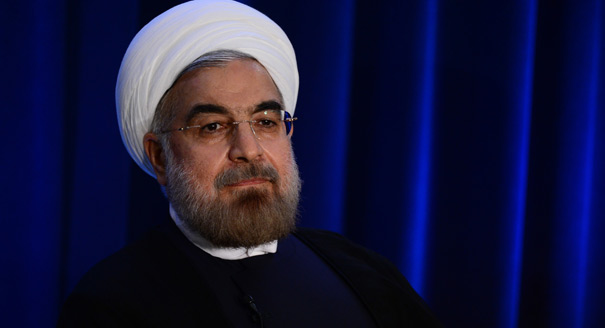
Speaking to Here and Now, Carnegie’s Karim Sadjadpour said that since becoming Iran’s president last year, Hassan Rouhani has tried to reconcile Iran’s revolutionary ideology with its national interests. However, Sadjadpour argued, these two things will be very difficult to resolve and there’s a group of very powerful, entrenched hardliners who stand to lose a lot if Iran becomes more integrated with the outside world political and economically.
“In order to reach a nuclear deal with the United States, Rouhani needs to somehow win the support of hardline forces within the Revolutionary Guards and the office of the Supreme Leader, who really oversee Iran’s nuclear program,” Sadjadpour said. Congress is very skeptical of these talks—they feel like it was their sanctions which forced Iran to the nuclear negotiating table, he concluded, and if a deal is not reached within the next six months, Congress is intent on passing new sanctions.

Senior Fellow, Middle East Program
Karim Sadjadpour is a senior fellow at the Carnegie Endowment for International Peace, where he focuses on Iran and U.S. foreign policy toward the Middle East.
Recent Work


Suzanne Maloney, Aaron David Miller, Karim Sadjadpour

Aaron David Miller, Karim Sadjadpour, Robin Wright
Carnegie does not take institutional positions on public policy issues; the views represented herein are those of the author(s) and do not necessarily reflect the views of Carnegie, its staff, or its trustees.

With the growth in points of friction between the great powers, organizations like the SCO will continue to play a role in the strategic adaptation of the smaller powers caught between them.

Temur Umarov

Amid celebrations of bilateral ties was a deeper focus on stability in the Middle East.

Amr Hamzawy

Canadian Prime Minister Mark Carney has twice inspired praise for standing up to U.S. President Donald Trump: at the 2026 World Economic Forum in Davos and on Canada-U.S. trade negotiations. Is Carney showing a third way better than the EU has in dealing with the Trump administration?

Rym Momtaz, ed.

Middle Eastern states should welcome an accelerated U.S. disengagement from their region.

Michael Young
Xi, Putin, and other regional leaders are back-slapping in Bishkek, but the SCO has yet to answer the most serious questions about continental Asia's economic future.

Evan A. Feigenbaum