

Article
Deborah Gordon, Smriti Kumble, David Livingston
{
  "authors": [
    "David Livingston"
  ],
  "type": "other",
  "centerAffiliationAll": "dc",
  "centers": [
    "Carnegie Endowment for International Peace"
  ],
  "collections": [],
  "englishNewsletterAll": "ctw",
  "nonEnglishNewsletterAll": "",
  "primaryCenter": "Carnegie Endowment for International Peace",
  "programAffiliation": "SCP",
  "programs": [
    "Sustainability, Climate, and Geopolitics"
  ],
  "projects": [
    "Carnegie Oil Initiative"
  ],
  "regions": [
    "North America",
    "United States"
  ],
  "topics": [
    "Climate Change"
  ]
}
Source: Getty
Recent upheavals in the oil market, most notably the growth in North American unconventional oil and the evolving response of OPEC, are prompting a reappraisal of conventional wisdom across a number of areas.
Source: European Centre for Energy and Resource Security
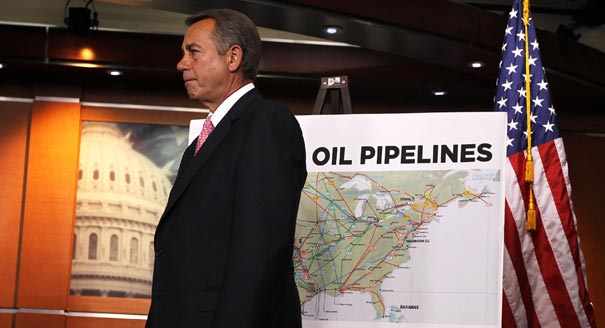
Recent upheavals in the oil market, most notab ly the growth in North American unconventional oil and the evolving response of OPEC, are prompting a re - appraisal of conventional wisdom across a number of areas. Though analysis has tended to focus on global dynamics, many of the oil market’s defining ch aracteristics are determined by regionalized micro - competition. This article explores evolving supply dynamics in the U.S. Gulf Coast, the most important refining hub and single largest source of heavy oil refining capacity. The implications of these evolv ing dynamics hold repercussions for the debate over the Keystone XL pipeline, Saudi Arabia’s ability to maintain a foothold in the North American market, and the heightened competition among heavy crude oils in the Western Hemisphere. It is suggested that U.S. policymakers place their ultimate focus not upon individual pieces of infrastructure, but instead upon establishing strategic priorities for managing the new and dynamic supplies of oil – including heavy oil – that is competing for refinery capacity i n North America.
This article was originally published by the European Centre for Energy and Resource Security.
Former Associate Fellow, Energy and Climate Program
Livingston was an associate fellow in Carnegie’s Energy and Climate Program, where his research focuses on emerging markets, technologies, and risks.
Recent Work

Deborah Gordon, Smriti Kumble, David Livingston

Erik Brattberg, David Livingston
Carnegie does not take institutional positions on public policy issues; the views represented herein are those of the author(s) and do not necessarily reflect the views of Carnegie, its staff, or its trustees.

Instead, governments should adopt climate-friendly measures to address the impact of rising prices.

Henok Asmelash

If U.S. policymakers continue down the path of restricting China’s access to frontier AI, they will eventually have to implement some sort of restriction on cloud access.
Noah Tan

European leaders have now not only lost faith in Donald Trump’s U.S. presidency, but also in America’s hegemony as a whole. But short-term challenges make an immediate divorce unwise.

Rym Momtaz

As the war in Ukraine enters its fifth year, it is worth examining where accountability efforts currently stand, how U.S. policy on Russian aggression has shifted, and what the Ukrainian experience reveals about the challenges of holding international aggressors to account.

Federica D’Alessandra

Tehran may conclude that its ability to disrupt the global economy via the Strait of Hormuz provides enough deterrence to begin quietly rebuilding its nuclear program.


Jane Darby Menton, Mohammad Ayatollahi Tabaar