

Article
Thomas Carothers
{
  "authors": [
    "Thomas Carothers"
  ],
  "type": "other",
  "centerAffiliationAll": "dc",
  "centers": [
    "Carnegie Endowment for International Peace"
  ],
  "collections": [
    "Violence and Conflict",
    "Civic Activism"
  ],
  "englishNewsletterAll": "democracy",
  "nonEnglishNewsletterAll": "",
  "primaryCenter": "Carnegie Endowment for International Peace",
  "programAffiliation": "DCG",
  "programs": [
    "Democracy, Conflict, and Governance"
  ],
  "projects": [],
  "regions": [],
  "topics": [
    "Democracy",
    "Foreign Policy",
    "Civil Society"
  ]
}
Source: Getty
The troubling, even alarming trend of closing space for civil society around the world has a direct but not always recognized link to the large problem of state fragility.
The complex nature of state fragility impedes the search for effective policy responses. While a useful shorthand, state fragility spans a vast sweep of contexts, from troubling patterns of poor state functioning to complete state breakdown. Different indices of fragility produce differing lists of fragile states. The range of causal factors contributing to fragility is wide. Yet as international attention to fragility has increased in recent years, it has converged around at least one central common feature of fragile contexts – systemic exclusion – and one common prescription – encouraging inclusive governance.
Of course, exclusivity and inclusivity are themselves not simple concepts, each having its own multiplicities of meaning and interpretation. The adjective “inclusive,” for example, now appears almost everywhere in policy discussions in the development world, attached to any number of nouns as a polymorphous good – whether it is inclusive politics, inclusive governance, inclusive economics, inclusive states, or inclusive development. Moreover, inclusivity is not just about politics and economics – social and cultural inclusiveness is also relevant. For some analysts, democracy is key to achieving inclusive governing systems. For others, democracy is chronically riddled with patterns of exclusivity due to the tendency of elites to dominate democratic politics.
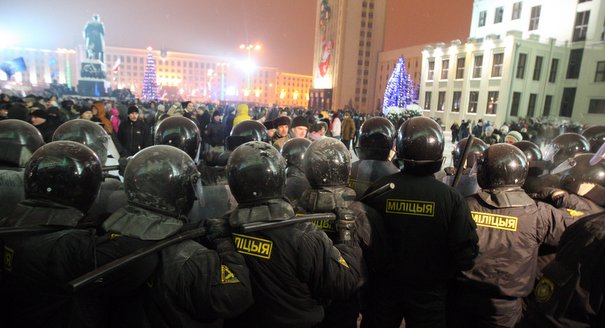
Understanding fragility through the lens of exclusion and inclusion highlights the important connection between fragility and the growing global trend of closing space for civil society. During the past 10 years, a startlingly large number of governments in developing and post-communist countries – by some measures more than 70 governments – have taken steps to curtail, sometimes drastically, independent civil society within their countries. They have done so through legal and regulatory measures restricting the ability of civic groups to organize and operate, extralegal harassment and intimidation, and political messaging that calls into question the legitimacy and authenticity of such organizations. A common element of governments’ efforts to close space for civil society is measures restricting foreign support for civil society and denunciations of such foreign support as subversive activity.

Harvey V. Fineberg Chair for Democracy Studies; Senior Fellow, Democracy, Conflict, and Governance Program
Thomas Carothers, a senior fellow in the Carnegie Endowment for International Peace’s Democracy, Conflict, and Governance Program, is a leading expert on comparative democratization and international support for democracy.
Recent Work
Thomas Carothers
Thomas Carothers
Carnegie does not take institutional positions on public policy issues; the views represented herein are those of the author(s) and do not necessarily reflect the views of Carnegie, its staff, or its trustees.

A notable degree of participative democracy has firmly arrived in Europe. But to have more far-reaching impact, democratic deliberation needs to move into a radically new phase.

Richard Youngs

Much has been said of the changes Brussels is trying to make to the EU enlargement process. Here’s why gradual integration might—or might not—be the answer.

Dimitar Bechev
Economic recovery has brought Sri Lanka a modicum of stability, but domestic strains and great-power rivalry could test how long it lasts.

Avinash Paliwal
Today’s global democratic recession is partly rooted in a common perception that democracies have a delivery problem, with many citizens in both autocracies and democracies alike now believing that strongmen can achieve better governance outcomes. But a study of four countries in Africa reveals that democratic-leaning governments have demonstrated better governance performance than autocratic governments.


Sarah Yerkes, Natalie Triche, Amr Hamzawy

Despite a new textbook, an influx of Russian teachers and managers, and an end to the teaching of Ukrainian, the Kremlin is unlikely to have “reprogrammed” locals.

Konstantin Skorkin