

Paper
George Perkovich
{
  "authors": [
    "George Perkovich"
  ],
  "type": "legacyinthemedia",
  "centerAffiliationAll": "dc",
  "centers": [
    "Carnegie Endowment for International Peace",
    "Carnegie India"
  ],
  "collections": [],
  "englishNewsletterAll": "ctw",
  "nonEnglishNewsletterAll": "",
  "primaryCenter": "Carnegie Endowment for International Peace",
  "programAffiliation": "NPP",
  "programs": [
    "Nuclear Policy"
  ],
  "projects": [],
  "regions": [
    "South Asia",
    "India",
    "Pakistan"
  ],
  "topics": [
    "Nuclear Policy"
  ]
}
Source: Getty
Indian defense minister's intuitive doubt about no-first-use is understandable, but tweet-length musings are no substitute for rigorous analysis of consequences.
Source: Indian Express
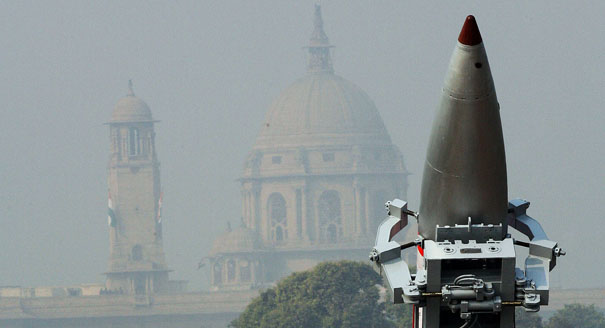
Defence Minister Manohar Parrikar expressed personal doubts about India’s nuclear no-first-use policy last week: “Why should I bind myself? I should say I am a responsible nuclear power and I will not use it irresponsibly.” The statement elicited buzz in South Asia and among nuclear cognoscenti around the world, even though Parrikar is unlikely to shape Indian nuclear policy. Intentionally or not, the defence minister’s rhetoric provides an opportunity to think seriously about the dilemmas in the making of a sound national security policy in media-age democracies.
The musings on no-first-use were not Parrikar’s first moment of impolitic candour. In May 2015, just as Pakistani military and civilian leaders were mounting a public campaign against Indian covert operations in Balochistan, Parrikar blurted in New Delhi that “we have to neutralise terrorists through terrorists only. Why can’t we do it? We should do it.You remove a thorn with the help of a thorn.”
These statements reflect a common sense approach to contesting a state — Pakistan — that has long used covert operations and terrorists against India. Threatening to mount symmetrical responses against Pakistan could augment deterrence of such acts, and could add options for India to respond if deterrence fails and more terrorism occurs. Thus, Parrikar’s observations and suggestions were far from crazy.
But they are superficial, perhaps dangerously so. Their effects may undermine India’s interests, especially with Pakistan. Nuclear doctrine, counter-terrorism strategy, and the conduct of covert operations require careful analysis of the potential risks and benefits of possible policies and actions. Every declaration and action may cause reactions; intended positive effects may be vitiated by unintended negative ones. Maybe Parrikar thought all of this through, but there is little evidence of that.
Parrikar’s statement regarding no-first-use reflects an intuitive concern that India’s declared doctrine may be sub-optimal for inducing caution in the Pakistani military. Yet, saying “I am a responsible nuclear power and I will not use it irresponsibly” begs the question: What would be responsible use of nuclear weapons?
Indian governments and experts have long answered this question by saying that first use would be irresponsible. They have understood that if your adversary believes you will use nuclear weapons first, “he” has incentives to beat you to it and use “his” weapons first. Each contestant in a first-use competition then may seek to develop and deploy more sizeable and quickly useable nuclear forces and demonstrate preparations and resolve to launch these forces early enough in a conflict to beat the adversary to the punch. This becomes a highly unstable and frightening situation. To believe otherwise would require confidence that nuclear war can be kept limited and somehow not result in massive destruction. There are no data to prove or disprove this proposition, because there have been no nuclear wars. (The US’s use of nuclear weapons in 1945 was against a Japan that had no means to retaliate in kind).
The Chinese authorities always have shared the traditional Indian view on first use. Israeli authorities, while not acknowledging possession of nuclear weapons, have said similarly that
they “will not be the first to introduce nuclear weapons” into the Middle East. Of course, the US, Russia and other nuclear-armed states take a different approach, reflected in the massive, hair-triggered nuclear arsenals they built.
If Parrikar were more familiar with these issues or more serious in questioning no-first-use, he should have explained whether and how India will need to expand its nuclear forces and related infrastructure, and revise its operational plans, so as to manage the potentially destabilising dynamic of such a shift in policy. He would have acknowledged the enormous costs and complications involved in this.
Similar risks and economic and strategic costs are involved in the counter-terrorism and covert operations domains on which Parrikar also has loosely commented. The point is not that India should eschew developing and deploying covert capabilities to threaten to harm Pakistan as Pakistan has harmed India. It is, rather, that India should have a clear understanding how it would manage the effects of doing so.
Here, three considerations are particularly important, as my colleague, Toby Dalton, and I have analysed in our new book, Not War, Not Peace?. First, would adopting a first-use nuclear posture and doctrine, and conducting covert, subconventional violence in Pakistan, be likely to compel the Pakistani military to reduce its build-up and reliance on nuclear weapons and demobilise anti-Indian militants? Or, instead, would the Pakistani military become more empowered and determined to compete with India in these domains?
Second, would the policy shifts suggested by Parrikar make India more like Pakistan? Would India become an over-nuclearised state and/or be perceived as such,
domestically and internationally? Would India lose the high ground in the regional and global struggle against terrorism and create a basis for Pakistanis and others to say that both states are “guilty” and must either reap what they sow or mutually compromise? The answers are not self-evident, but before announcing new policies, Indian leaders could be expected to offer some.
Third, are public musings about shifts of policy in these areas counterproductive for India? There is evidence that each declaration of Indian bellicosity, doctrinal revision, covert capability, or putative military capability, reinforces the Pakistani military’s narrative that India poses an unremittingly growing threat to Pakistan which only the Pakistani military can deter. This narrative reinforces the Pakistani establishment’s claim for more resources and more deference in determining how best to protect the country from India.
Thoughtful Indians recognise these dilemmas, of course. But, as the American election just demonstrated more broadly, blustery candour can be politically appealing even if it does not improve a country’s international position.

Japan Chair for a World Without Nuclear Weapons, Senior Fellow
George Perkovich is the Japan Chair for a World Without Nuclear Weapons and a senior fellow in the Carnegie Endowment for International Peace’s Nuclear Policy Program. He works primarily on nuclear deterrence, nonproliferation, and disarmament issues, and is leading a study on nuclear signaling in the 21st century.
Recent Work
George Perkovich
George Perkovich
Carnegie does not take institutional positions on public policy issues; the views represented herein are those of the author(s) and do not necessarily reflect the views of Carnegie, its staff, or its trustees.

The India–EU Free Trade Agreement (FTA) is shaping up to be one of the most consequential trade negotiations, both economically and strategically. But, what’s in the agreement, what’s missing, and what will determine its success in the years ahead

Vrinda Sahai, Nicolas Köhler-Suzuki

Drawing on ten public discussions from the India AI Impact Summit 2026, this article highlights key outlooks on open source in AI that are likely to shape policy and governance conversations going forward.

Shruti Mittal
The regime bets that international legitimacy can be translated into domestic stability. But that depends upon whether it can leverage international goodwill to manage grievances and the economy at home.

Zoha Waseem, Yasser Kureshi
Tehran may conclude that its ability to disrupt the global economy via the Strait of Hormuz provides enough deterrence to begin quietly rebuilding its nuclear program.

Jane Darby Menton, Mohammad Ayatollahi Tabaar
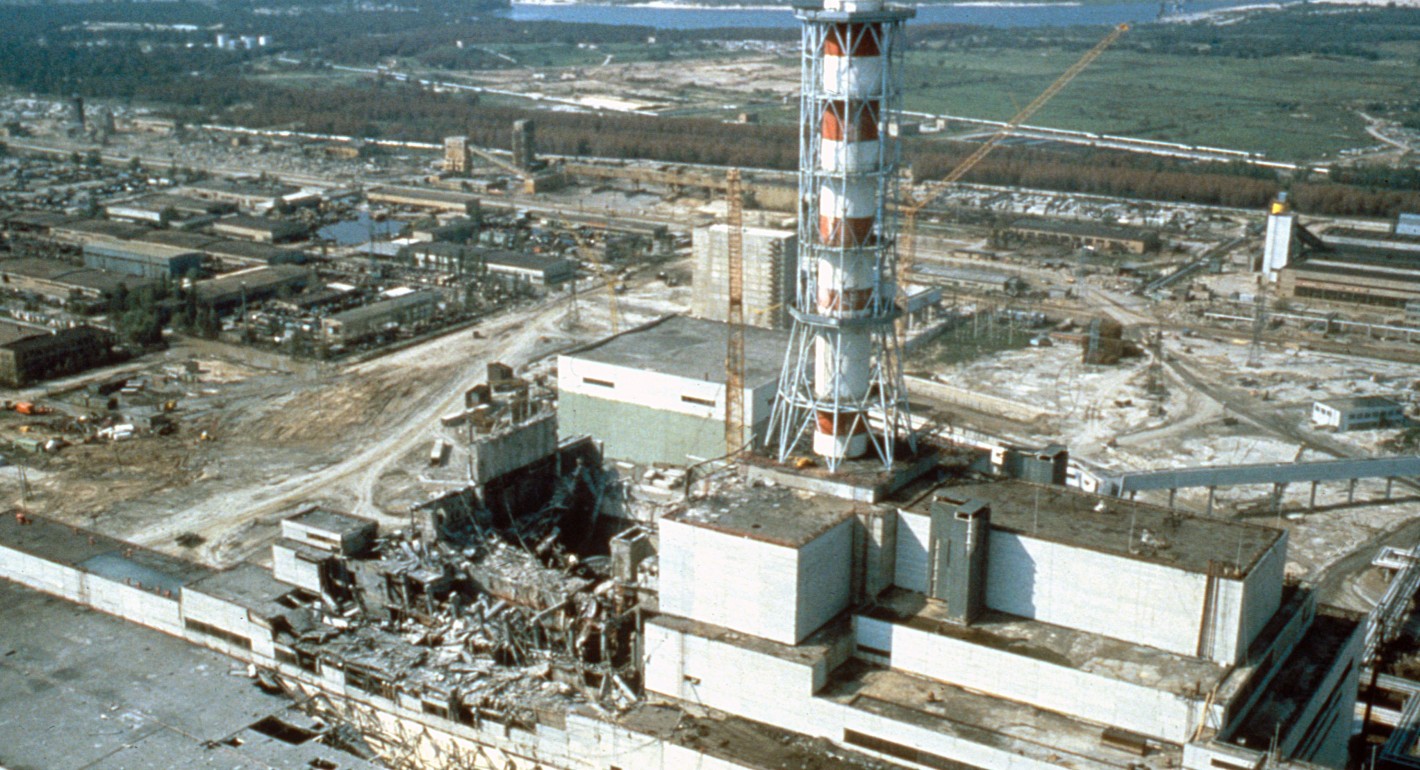
The 1986 incident showed that a nuclear accident anytime is a nuclear accident for all time.
Corey Hinderstein