

Paper
Eugene Rumer, Richard Sokolsky
{
  "authors": [
    "Richard Sokolsky"
  ],
  "type": "other",
  "centerAffiliationAll": "",
  "centers": [
    "Carnegie Endowment for International Peace"
  ],
  "collections": [],
  "englishNewsletterAll": "",
  "nonEnglishNewsletterAll": "",
  "primaryCenter": "Carnegie Endowment for International Peace",
  "programAffiliation": "",
  "programs": [],
  "projects": [],
  "regions": [
    "North America",
    "United States",
    "East Asia",
    "South Korea"
  ],
  "topics": [
    "Security",
    "Foreign Policy"
  ]
}
Source: Getty
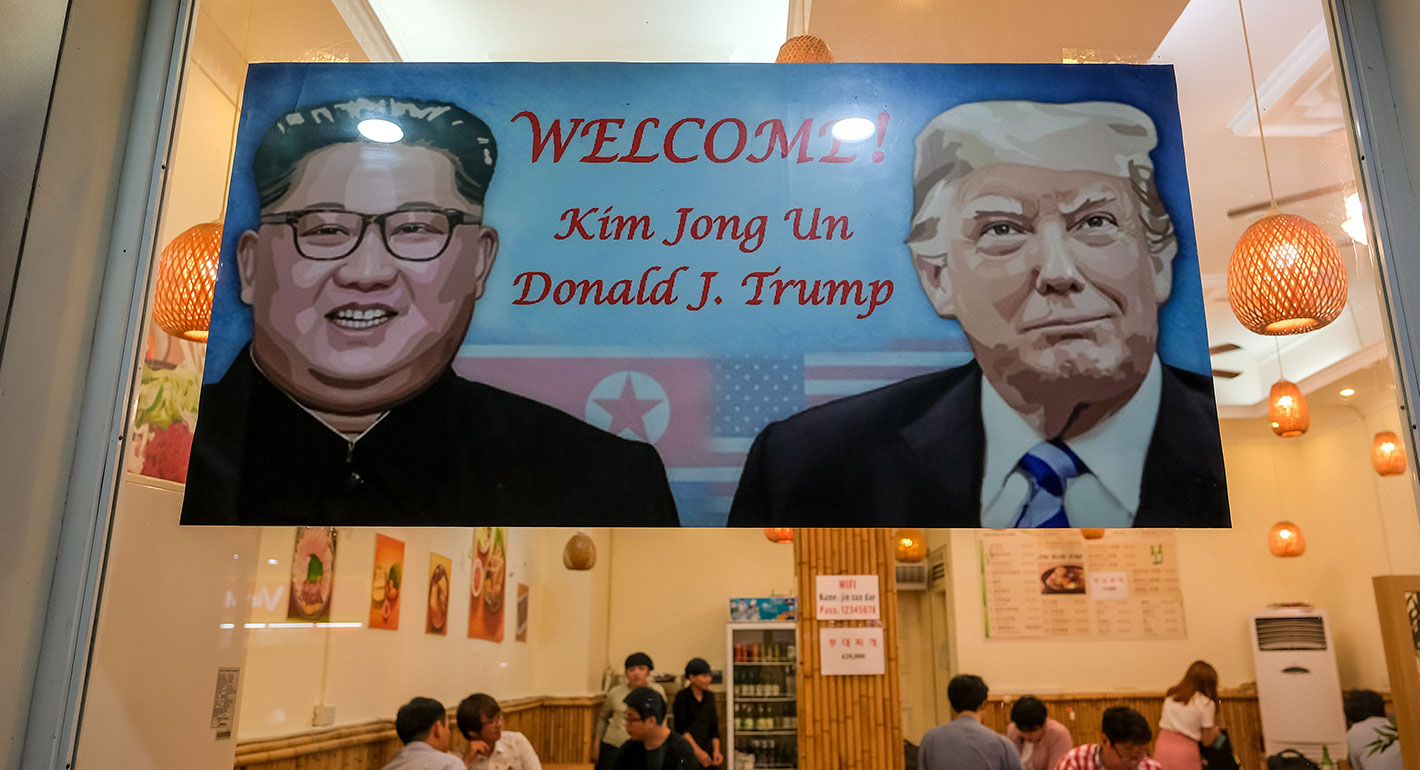
Washington and Seoul must agree on the purpose of their alliance if it is no longer needed to deter aggression by a hostile North Korea. Reaching a consensus on this question will not be easy.
Source: 38 North
Further progress toward building a permanent peace and security regime for the Korean Peninsula will require, at least in the short-run, heavy lifting from North and South Korea if the Trump administration continues to thwart progress on a declaration officially ending the Korean War and other steps to lower tensions and build trust on the peninsula.1 If the two Koreas are successful in moving toward a peace treaty, or if the Trump administration decides to pull US troops out of South Korea, Washington and Seoul will need to take a hard look at adapting the US-South Korean alliance to changing geopolitical dynamics in the region. In the event that US troops leave South Korea, there are alternative security and military arrangements the two countries can and should adopt if North Korea ceases to be a military threat and enduring North-South reconciliation is achieved. These changes are feasible and affordable and would maintain stability and the balance of power in Northeast Asia. Before they are implemented, however, Washington and Seoul must first agree on the purpose of their alliance if it is no longer needed to deter aggression by a hostile North Korea. Reaching a consensus on this question will not be easy.
1 This report is adapted from a previous article by the author and Daniel R. DePetris published on 38 North on November 15, 2018, entitled, “Imagining a New US-South Korean Security Architecture.”

Nonresident Senior Fellow, Russia and Eurasia Program
Richard Sokolsky is a nonresident senior fellow in Carnegie’s Russia and Eurasia Program. His work focuses on U.S. policy toward Russia in the wake of the Ukraine crisis.
Recent Work
Eugene Rumer, Richard Sokolsky
Eugene Rumer, Richard Sokolsky
Carnegie does not take institutional positions on public policy issues; the views represented herein are those of the author(s) and do not necessarily reflect the views of Carnegie, its staff, or its trustees.

Regardless of the outcome, there’s another path to ensuring that progress doesn’t stall.
Zaur Shiriyev

But their "principal to principal" model will only be as effective as the political strength of each leader back home.

Damien Ma

China’s Ministry of Public Security is often portrayed as a domestic law enforcement agency, but it is also a global security actor. This paper explores how MPS has used international law enforcement and security cooperation agreements—over 200 since 2006—to advance China’s vision of security in a changing global environment.


Sophie Zhuang, Sheena Chestnut Greitens, Cameron Waltz

The demands of the Kremlin’s war in Ukraine, demographic problems, and public hostility toward Central Asians mean Russia does not have enough workers.

Salavat Abylkalikov

Amid uncertainty caused by the Iran war, the global drive for nonproliferation has stalled. With Europe diplomatically marginalized and countries reassessing their nuclear options, efforts to curb the spread of nuclear weapons risk becoming irrelevant.

Jane Darby Menton