

Article
Paul Stronski
{
  "authors": [
    "Paul Stronski"
  ],
  "type": "legacyinthemedia",
  "centerAffiliationAll": "dc",
  "centers": [
    "Carnegie Endowment for International Peace"
  ],
  "collections": [],
  "englishNewsletterAll": "asia",
  "nonEnglishNewsletterAll": "",
  "primaryCenter": "Carnegie Endowment for International Peace",
  "programAffiliation": "AP",
  "programs": [
    "Asia"
  ],
  "projects": [],
  "regions": [],
  "topics": [
    "Foreign Policy"
  ]
}
Source: Getty
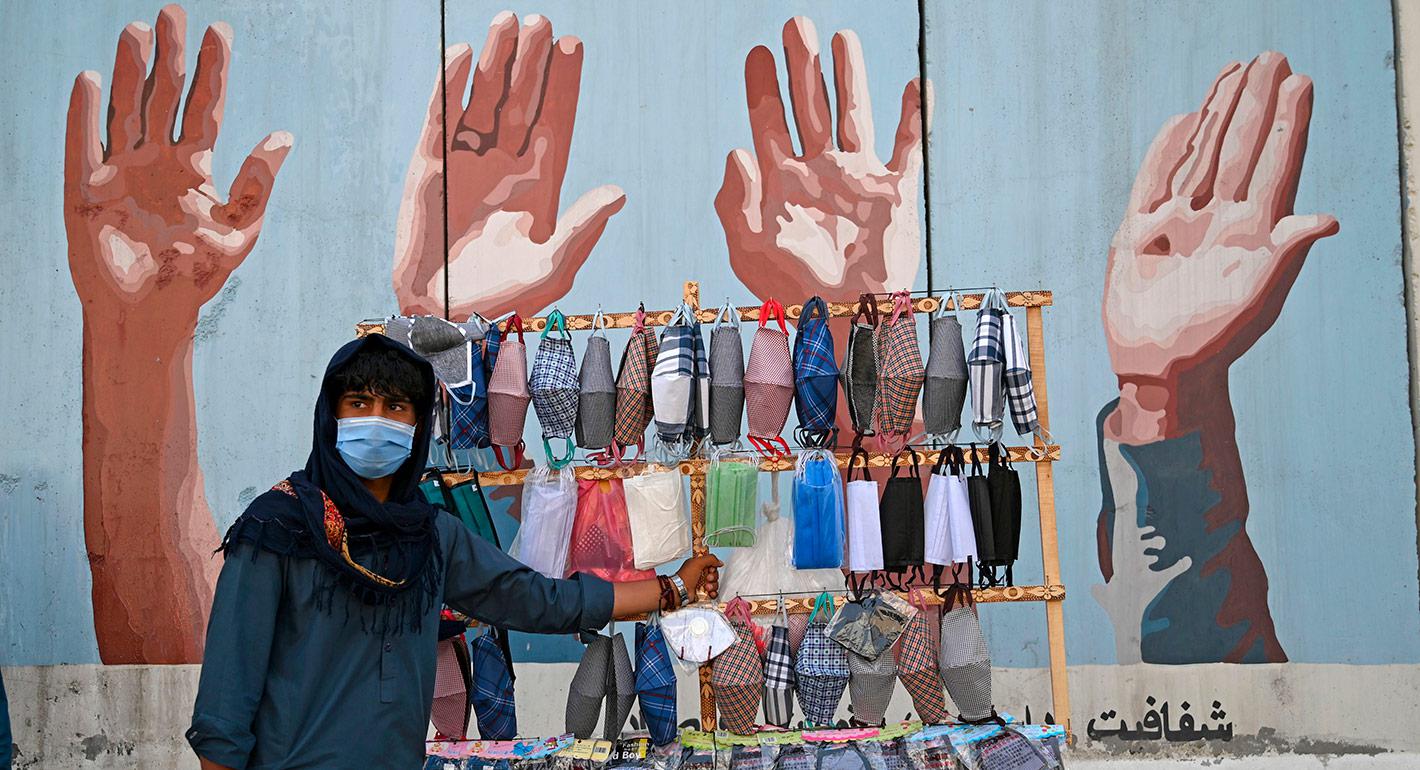
Political leaders promised relief to hard-hit enterprises and families but assistance has been slow. All three governments rushed to re-start their economies in May, with inconsistent messaging impeding public awareness on how to re-open safely.
Source: East Asia Forum
Central Asia has so far avoided the tragic human toll of COVID-19 seen among many of its neighbours, but the pandemic has laid bare the region’s longstanding structural and governance problems. COVID-19 is exposing a lack of preparedness in the region’s notoriously corrupt public-health and emergency response sectors.
At first, some — Kazakhstan, Kyrgyzstan and Uzbekistan — seemed to effectively curb COVID-19’s spread by closing borders and implementing lockdowns, but a lack of transparency and limited testing may have kept infection rates artificially low. With shuttered economies, interrupted supply chains, and the return of migrant labourers from abroad, the costs of large-scale shelter-in-place policies led to inflation, shortages of basic goods and public grumbling.
Political leaders promised relief to hard-hit enterprises and families but assistance has been slow. All three governments rushed to re-start their economies in May, with inconsistent messaging impeding public awareness on how to re-open safely. This led to massive flouting of basic COVID-19 protection measures, including social distancing and mask mandates.
Central Asia’s authoritarian levers of power — security services and law enforcement — have since proven incapable of enforcing basic public safety measures that could save lives in the COVID-19 era. Instead, they simply monitor the public mood for dissent.
All three countries are now struggling to contain a far deadlier second wave.
Kazakhstan’s health system is under strain as it now has the highest official infection rate in the region, with over 105,000 confirmed cases as of the end of August. That number does not include more than 230,000 cases registered as ‘pneumonia’ earlier in the year, suggesting the spread of the virus could be far more extensive than admitted. Given the regime’s history of wasteful spending, its public health failures are exacerbating social discontent and tarnishing the reputation of the new President Kassym-Jomart Tokayev.
Neighbouring Uzbekistan reported over 41,000 COVID-19 cases by late August, an implausibly low number given its population of over 30 million is almost twice that of Kazakhstan. Corruption in the healthcare sector has stymied the government’s response. Despite pledges by its new reformist president to open up media space and make government officials more accountable to the public, Tashkent has cracked down on the unauthorised release of information about COVID-19.
In Kyrgyzstan, widespread poverty and poor governance have made the pandemic a major challenge. The country depends on the international community for essential medical supplies and protective gear. Infections are high among medical staff and in rural areas, leaving volunteers with little training to fill gaps in patient care. Poor public awareness also facilitates COVID-19’s spread, while the lack of medicine and up-to-date knowledge of the disease force doctors and patients alike to rely on folk remedies.
Yet Kazakhstan, Kyrgyzstan and Uzbekistan have handled the crisis far more responsibly than neighbouring countries Tajikistan and Turkmenistan. Despite a spike in respiratory illness, in March and April Tajik authorities denied the disease’s presence in the country and moved ahead with large-scale gatherings. It was only in late April that Tajik authorities admitted COVID-19’s presence in the country. Within weeks, COVID-19 numbers went from single digits to the thousands.
Totalitarian Turkmenistan continues to deny COVID-19 exists in its borders, but exiled Turkmen journalists and human rights organisations report rising pneumonia-like cases in the country. Food, hospital bed and cash shortages contradict the notion that all is well.
The pandemic is undermining basic human security across the region. Government responses are hampered by large-scale poverty and corruption, the lack of social safety nets, the mass return of unemployed migrant labourers and mistrust of governing authorities, pushing many citizens into poverty. Remittances, key to poverty alleviation — and accounting for 30 per cent of Tajikistan’s 2018 GDP —are falling. Public health systems are collapsing under the weight of the pandemic while governments seem more concerned about regime security than public health. People are growing angry on social media and even with sporadic protests, unprecedented in places like Uzbekistan and Turkmenistan. The region’s larger states, Kazakhstan and Uzbekistan, are reaching into government reserves, but for the others — all highly indebted to China — prospects look worse.
Central Asia needs assistance from the international community, but the region has never been a priority for the West. The Trump administration’s dysfunctional foreign policy is unlikely to change that, despite Washington’s concerns about China’s growing footprint there.
Russia is also distracted as it struggles to deal with the pandemic. The Russian economy has taken a hit from the sharp decrease in global energy prices. With migrant labour opportunities drying up there, Moscow risks losing an important lever of influence over its Central Asian neighbours.
China appears well-poised to take advantage of Russia and the West’s troubles. Beijing has whitewashed its COVID-19 history, is marketing its digital tools of monitoring populations and disease to local governments and is deploying flashy humanitarian missions.
Unexpected social or political instability in the region would pose new challenges to its main security and investment partners, China and Russia. The potential for instability could also create problems for the West, given Central Asia’s proximity to Afghanistan, Iran and other hotspots. It is a worrying scenario.

Former Senior Fellow, Russia and Eurasia Program
Paul Stronski was a senior fellow in Carnegie’s Russia and Eurasia Program, where his research focuses on the relationship between Russia and neighboring countries in Central Asia and the South Caucasus.
Recent Work
Paul Stronski
Paul Stronski
Carnegie does not take institutional positions on public policy issues; the views represented herein are those of the author(s) and do not necessarily reflect the views of Carnegie, its staff, or its trustees.

The acknowledgment has sparked fears of a new arms race with China and Russia.

Chris O’Meara
Smaller powers cannot go it alone, but Canadian history shows that integration with the United States will not always be benign.
Paul Samson

The European Commissioner for Trade is headed to China. But after President Xi’s bridge-building visit to Washington, can a more isolated EU overcome Beijing’s stranglehold on critical raw materials? Who will blink first?

Rym Momtaz, ed.
The summit may be remembered as a fatal blunder, when Washington, Beijing, and the AI industry collectively chose ceremony over action.

Jeffrey Prescott

European NATO countries are wrestling with the possibility of U.S. disengagement from the alliance. With the continent’s security increasingly uncertain, governments must restore the credibility of their collective defense.



Hans-Dieter Lucas, Adam Thomson, Pierre Vimont