

Other
François Godement, Ashley J. Tellis
{
  "authors": [
    "François Godement"
  ],
  "type": "legacyinthemedia",
  "centerAffiliationAll": "dc",
  "centers": [
    "Carnegie Endowment for International Peace"
  ],
  "collections": [],
  "englishNewsletterAll": "asia",
  "nonEnglishNewsletterAll": "",
  "primaryCenter": "Carnegie Endowment for International Peace",
  "programAffiliation": "AP",
  "programs": [
    "Asia"
  ],
  "projects": [],
  "regions": [],
  "topics": [
    "Technology"
  ]
}
Source: Getty
The global debate about 5G has usually taken for granted that America is almost absent from the scene. Yet America’s pullback is more of an appearance than a reality.
Source: Institut Montaigne
The global debate about 5G – Huawei’s marketing lead and the security issue, Europe’s fragmented landscape– has usually taken for granted that America is almost absent from the scene. Yet America’s pullback is more of an appearance than a reality. Yes, it is no longer the world’s maker of handheld devices, or of much hardware gear. Once a leader for standards with CDMA (after Europe’s GSM norm, now forgotten), it has not been half as present as Chinese entities – companies, public organizations and lobbying – in defining new norms for 5G inside the international standards body 3GPP. "The Valley" is not focused on complete hardware products but on software for which it obtains huge global returns, chip design and subsets that go inside others’ brands. The three telcos – AT&T, Verizon, and Sprint (instead of the 23 European companies, not counting virtual operators) - are also very profitable. But they do not build, of course.
The simmering Huawei security issue, brought to a climax by Donald Trump’s decision on May 15 to ban Huawei from U.S. telecommunications, may seem to have been a self-inflicted wound. Where Europe has two underfinanced suppliers (Ericsson and Nokia), the U.S. seemed to have none.
That perception is wrong. American software, chip design and subsets run inside almost every existing IT system – including nascent 5G networks. Rather than take risky bets over brand dominance (with the exception of Apple), the US digital industry makes itself indispensable to competitors.
This article was originally published by Institut Montaigne.

Former Nonresident Senior Fellow, Asia Program
Godement, an expert on Chinese and East Asian strategic and international affairs, was a nonresident senior fellow in the Asia Program at the Carnegie Endowment for International Peace.
Recent Work
François Godement, Ashley J. Tellis

François Godement, Abigaël Vasselier
Carnegie does not take institutional positions on public policy issues; the views represented herein are those of the author(s) and do not necessarily reflect the views of Carnegie, its staff, or its trustees.

The induction of INS Aridhaman, which features several technological enhancements, now gives India the third nuclear ballistic missile submarine to ensure continuous at-sea deterrent.

Dinakar Peri

The Russian state has opted for complete ideological control of the internet and is prepared to bear the associated costs.

Maria Kolomychenko

Despite having the resources and expertise, the Russian space industry missed the opportunity to offer the United States or China a mutually rewarding partnership in the lunar race.

Georgy Trishkin

Central Asia’s digital ambitions are achievable, but only if policy is aligned with the region’s physical constraints.

Aruzhan Meirkhanova
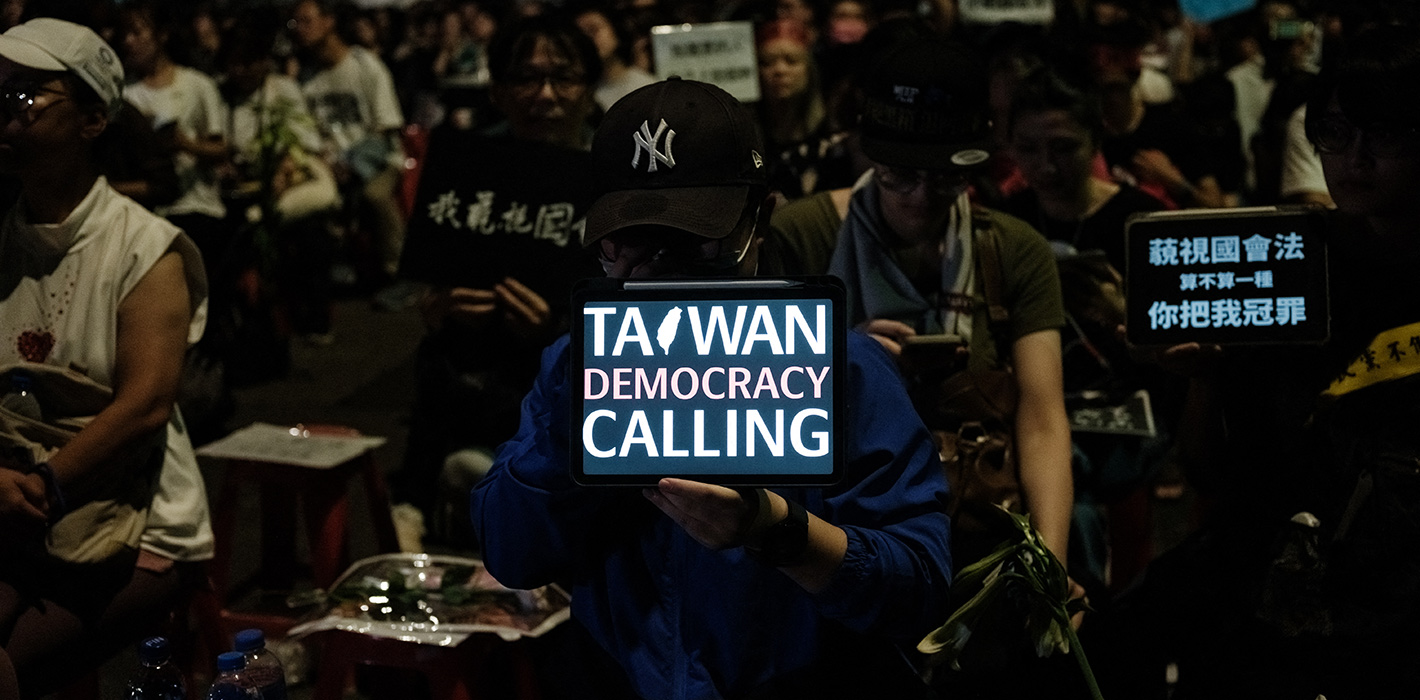
Governments now deploy online platforms to shape public opinion and influence collective cognition. This is acutely apparent between China and Taiwan.

Frank Cheng-Shan Liu