• Research
  • Emissary
  • About
  • Experts
Carnegie Global logoCarnegie lettermark logo
DemocracyIran
  • Donate
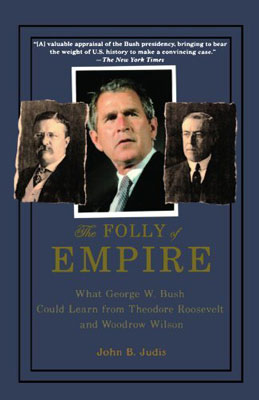
The Folly of Empire: What George W. Bush Could Learn From Theodore Roosevelt and Woodrow Wilson
Book

The Folly of Empire: What George W. Bush Could Learn From Theodore Roosevelt and Woodrow Wilson

John Judis draws sharp contrasts between the Bush administration's policies, especially with regard to Iraq, and those of every administration from Franklin Roosevelt through Bill Clinton.

Link Copied
By John Judis
Published on Aug 29, 2004

Source: Scribner

John Judis draws sharp contrasts between the Bush administration's policies, especially with regard to Iraq, and those of every administration from Franklin Roosevelt through Bill Clinton. The result is a thought-provoking look at America's position in the world—then and now—and how it has been formed, that will spark debate and controversy in Washington and beyond. Judis raises crucial questions about why the Bush administration has embarked on a foreign policy that has been proven unsuccessful and presents damning evidence that its failure is already imminent. The final message is a sobering one: Leaders ignore history's lessons at their peril.

About the Author: John B. Judis is a visiting scholar at the Carmegie Endowment for International Peace and also senior editor at The New Republic. Judis's books include The Emerging Democratic Majority, The Paradox of American Democracy: Elites, Special Interests, and the Betrayal of Public Trust; William F. Buckley: Patron Saint of the Conservatives; and Grand Illusion: Critics and Champions of the American Century. His articles have appeared in The American Prospect, The New York Times Magazine, The Washington Post, Foreign Affairs, The Washington Monthly, American Enterprise, Mother Jones, and Dissent.

About the Author

John Judis

Former Visiting Scholar

As a visiting scholar at Carnegie, Judis wrote The Folly of Empire: What George W. Bush Could Learn from Theodore Roosevelt and Woodrow Wilson.

    Recent Work

  • In The Media
    This Election Could be the Birth of a Trump-Sanders Constituency

      John Judis

  • In The Media
    Policy Chops

      John Judis

John Judis
Former Visiting Scholar
John Judis
Democracy

Carnegie does not take institutional positions on public policy issues; the views represented herein are those of the author(s) and do not necessarily reflect the views of Carnegie, its staff, or its trustees.

More Work from Carnegie Endowment for International Peace

  • Commentary
    Strategic Europe
    There Is No Shortcut for Europe in Armenia

    Europe has an interest in supporting Armenian leader Nikol Pashinyan as he tries to make peace with neighbors and loosen ties with Russia. But it is depersonalized support in the long term, not quickfire flash, that will win the day.

      Thomas de Waal

  • A person faces away from the camera wearing a yellow jacket with "PRESS" printed across the back
    Paper
    The Impact of Ending U.S. International Media Assistance

    The future looks bleak for independent media worldwide, but there is a robust infrastructure of knowledge, organizations, and people to build upon.


      Daniel Sabet, Susan Abbott
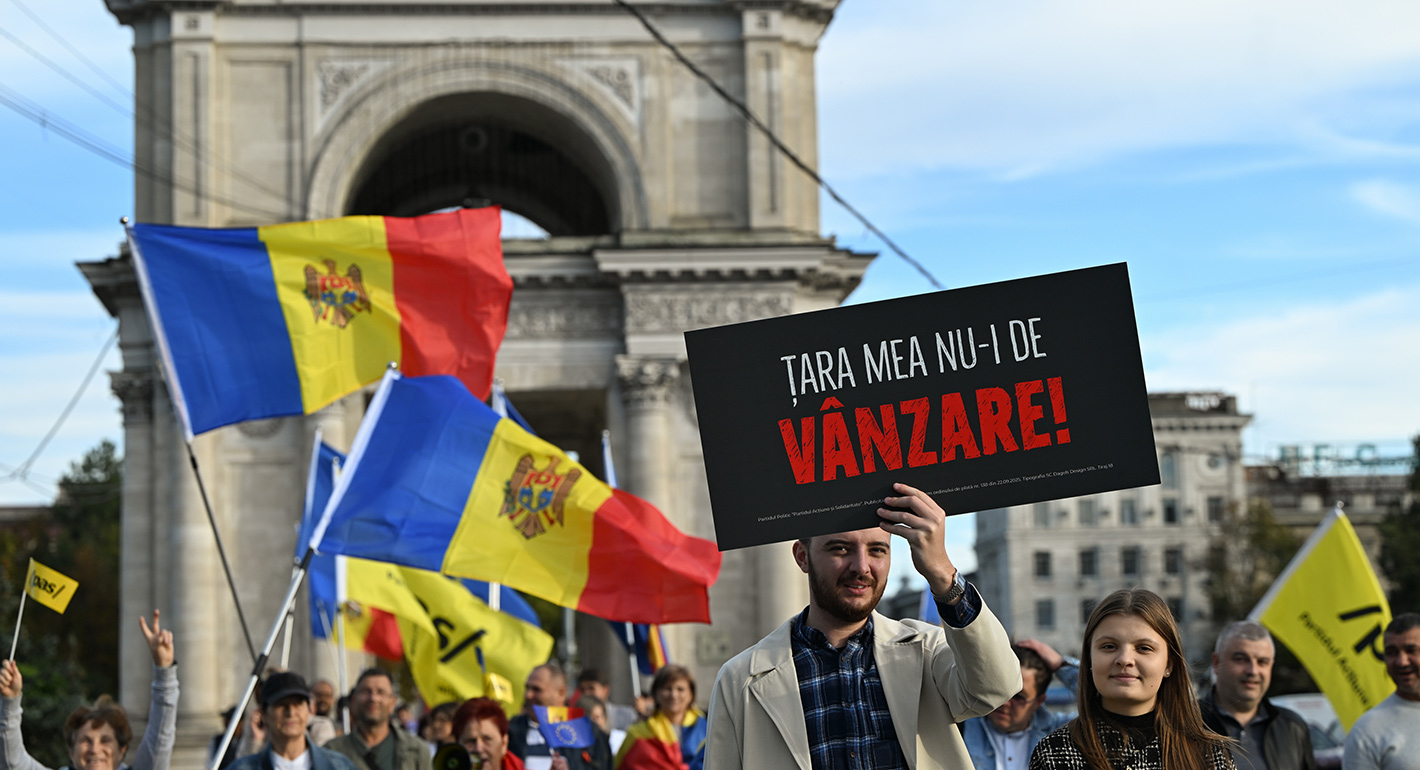
  • Hundreds of members and supporters of the ruling Party of Action and Solidarity (PAS) join Prime Minister Dorin Recean during a pro-EU rally on the final day of the electoral campaign in Chisinau, Moldova, on September 26, 2025.
    Paper
    Alarm or Caution? Defending Democracy During Backsliding

    Defenders of democracy often split over perceptions, methods, urgency levels, and priorities.

      • Murat Somer

      Murat Somer, Jennifer McCoy

  • The tops of people's heads. Raised above their heads are "No Kings" signs, an upside-down American flag, and a rainbow flag.
    Commentary
    Emissary
    Protests Like No Kings Can Only Go So Far to Stem Authoritarianism

    Lessons from other backsliding democracies show that mass mobilization needs to feed into an electoral strategy. 

      Saskia Brechenmacher, Shreya Joshi

  • Commentary
    Strategic Europe
    Win or Lose, Orbán Has Broken Hungary’s Democracy

    Hungarians head to the polls on April 12 for an election of national and European consequence. Three different outcomes are on the cards, each with their own implications for the EU.

      Zsuzsanna Szelényi

Get more news and analysis from
Carnegie Endowment for International Peace
Carnegie global logo, stacked
1779 Massachusetts Avenue NWWashington, DC, 20036-2103Phone: 202 483 7600
  • Research
  • Emissary
  • About
  • Experts
  • Donate
  • Programs
  • Events
  • Blogs
  • Podcasts
  • Contact
  • Annual Reports
  • Careers
  • Privacy
  • For Media
  • Government Resources
Get more news and analysis from
Carnegie Endowment for International Peace
© 2026 Carnegie Endowment for International Peace. All rights reserved.