

Even if the Iran war stops, restarting production and transport for fertilizers and their components could take weeks—at a crucial moment for planting.
Noah Gordon, Lucy Corthell
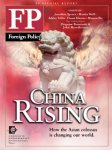
See what these leading experts have to say on such key questions as, are the United States and China on a collision course? And, what are the economic and strategic implications of China's transformation?
Source: Foreign Policy, January/February 2005

The report is based on the Carnegie conference, "China's Peaceful Rise?” held in the fall of 2004. Click here for speaker biographies, videos, and transcripts of that event.
The Once and Future China by Jonathan Spence
Clash of the Titans by Zbigniew Brzezinski and John Mearsheimer
Why is China Growing So Slowly by Martin Wolf
A Grand Chessboard by Ashley Tellis
Lifting All Boats by Homi Kharas
Dangerous Denials by Minxin Pei
Click on the link above for full text of this report.
Jonathan Spence
Zbigniew Brzezinski
Dr. Zbigniew Brzezinski served as national security adviser to President Jimmy Carter from 1977-1981. He is the author of several acclaimed books on foreign policy, most recently, Strategic Visions: America and the Crisis of Global Power.
John Mearsheimer
Martin Wolf
Former Senior Fellow
Ashley J. Tellis was a senior fellow at the Carnegie Endowment for International Peace.
Homi Kharas
Former Adjunct Senior Associate, Asia Program
Pei is Tom and Margot Pritzker ‘72 Professor of Government and the director of the Keck Center for International and Strategic Studies at Claremont McKenna College.
Even if the Iran war stops, restarting production and transport for fertilizers and their components could take weeks—at a crucial moment for planting.
Noah Gordon, Lucy Corthell
For years, the United States anchored global cyber diplomacy. As Washington rethinks its leadership role, the launch of the UN’s Cyber Global Mechanism may test how allies adjust their engagement.
Patryk Pawlak, Chris Painter
Censorship in China spans the public and private domains and is now enabled by powerful AI systems.
Nathan Law
Most of Moscow’s military resources are tied up in Ukraine, while Beijing’s foreign policy prioritizes economic ties and avoids direct conflict.
Alexander Gabuev, Temur Umarov
With the White House only interested in economic dealmaking, Georgia finds itself eclipsed by what Armenia and Azerbaijan can offer.
Bashir Kitachaev