

Commentary
Why Pakistan, Saudi Arabia, and Turkey are joining forces on regional security.
Alper Coşkun, Amr Hamzawy

REQUIRED IMAGE
Today’s nuclear threats come not only from these massive arsenals, but also from the newest and smallest contributors to "nuclear numbers." The emergence of new nuclear states could set off a "cascade of proliferation" and increase the likelihood of terrorists obtaining nuclear capability.
On July 16, 1945, Manhattan Project scientists and officers watched their "gadget" explode in the New Mexico desert. Soon after, the United States dropped two atomic bombs on Japan. By 1949, the U.S. had 200 nuclear weapons. In that same year, the Soviet Union tested its first atomic bomb. By 1953, both the U.S. and the USSR had developed thermonuclear (or hydrogen) bombs that were roughly 1,000 times more powerful than fission weapons. The arms race had begun.
From one weapon 60 years ago to 27,600 today, the anniversary of the atomic age is a timely occasion to assess global nuclear arsenals. In this Carnegie analysis, we provide the most current data on the status of nuclear weapons worldwide, derived from Deadly Arsenals II.
In the four decades after Hiroshima and Nagasaki, the arms race reached unimaginable levels. The U.S. nuclear arsenal peaked in 1966 at 31,700. The Soviet stockpile continued to grow until 1986, when Moscow possessed over 40,700 warheads. Since then, these arsenals have been slowly but steadily declining. Arms control agreements such as the Intermediate Nuclear Forces Treaty, the Strategic Arms Reduction Treaty, and the Strategic Offensive Reductions Treaty established limits on deployed warheads. On the eve of the Soviet collapse in 1990, the U.S. had reduced its arsenal to approximately 21,200 warheads while the Soviet Union had drawn its stockpile down to 33,500.
Since then, U.S. programs to assist Russia and the former Soviet republics with the dismantlement of weapons have led to even lower nuclear numbers, though such reductions could be much deeper. Fifteen years after the Cold War logic evaporated, Washington and Moscow still possess 95% of the world’s nuclear weapons. They are historic anomalies—the only nuclear states that measure their stockpiles in thousands rather than in tens of weapons. China, for example, has some 400 nuclear weapons, a pittance compared to the American and Russian stockpiles.
Today’s threats come not only from these massive arsenals, but also from the newest and smallest contributors to "nuclear numbers." The emergence of new nuclear states could set off a "cascade of proliferation" and increase the likelihood of terrorists obtaining nuclear capability.
We are at a crossroads. The world must choose between greater nuclear danger and universal restraint. Future "nuclear numbers" will depend on the course of today’s nonproliferation strategy. The graph below reflects both our risks and our opportunities.

Jane Vaynman
Former Program Assistant
Joshua Williams
Carnegie Endowment for International Peace
Carnegie does not take institutional positions on public policy issues; the views represented herein are those of the author(s) and do not necessarily reflect the views of Carnegie, its staff, or its trustees.
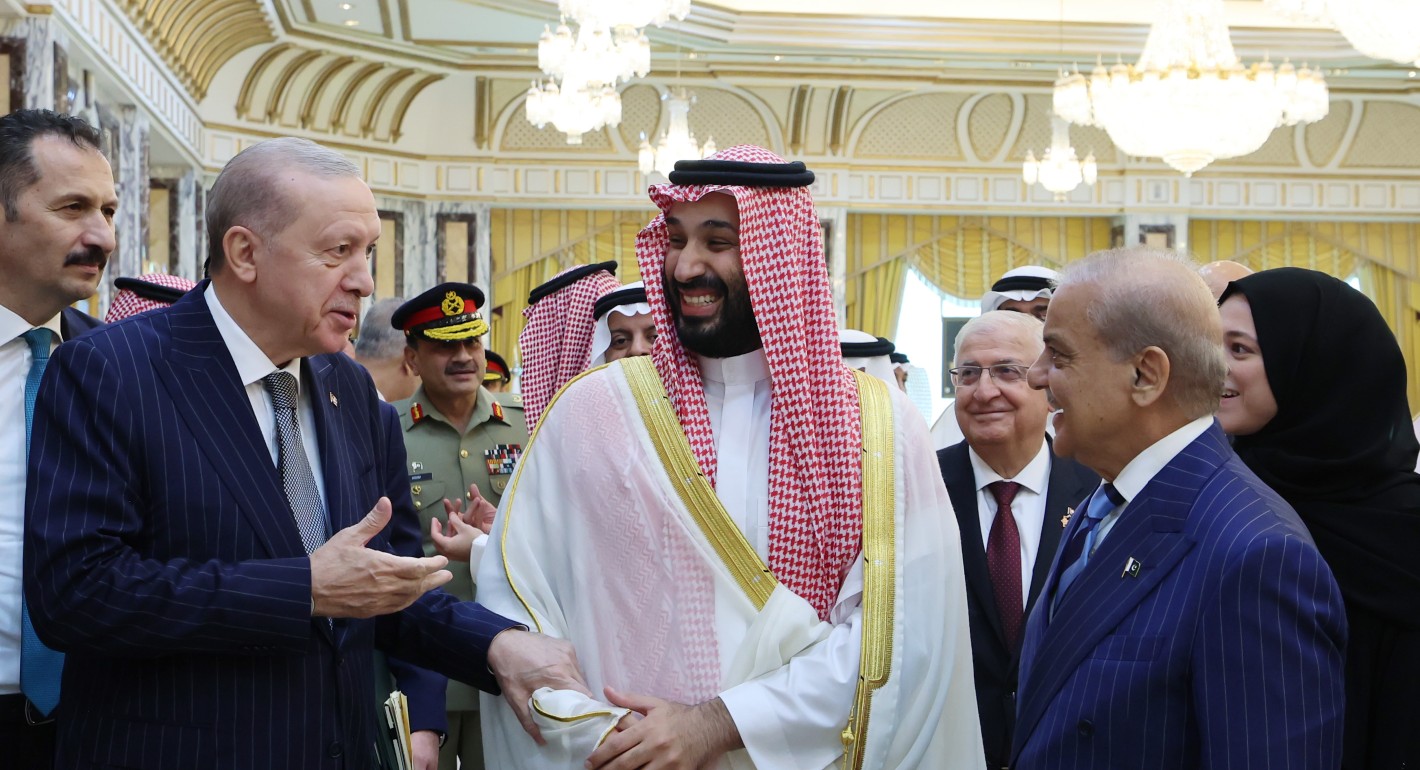
Why Pakistan, Saudi Arabia, and Turkey are joining forces on regional security.


Alper Coşkun, Amr Hamzawy

The truth of the strategic situation is that Europe and Russia are extremely unlikely to be able to “turn the page” on their confrontation within the next two decades.

Arkady Moshes

Despite public disputes over trade and immigration, the strategic partnership’s foundations remain sturdy.

Sameer Lalwani

Russia spent years building a “sovereign internet,” concentrating web infrastructure exclusively within Russian territory. Ukrainian drone attacks have shown how vulnerable that approach has left the Russian internet.

Maria Kolomychenko

It signals a new era of tech diffusion and warfare.

Steve Feldstein