

Article
China has showcased its engineering prowess with small modular reactor demonstration projects. But turning these technological achievements into commercial success will be a greater challenge.
Tong Zhao
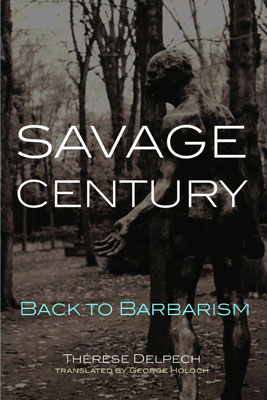
Blending a detailed knowledge of international security affairs with history, philosophy, psychology, and literature Thérèse Delpech reminds us of the warnings that were missed as the “civilized” world failed to prevent various atrocities that made the twentieth century so deadly. Delpech asks whether it is possible that today we are on the verge of similar, tumultuous times.
Source: Washington

Blending a detailed knowledge of international security affairs with history, philosophy, psychology, and literature Thérèse Delpech vividly reminds us of the signs and warnings that were missed as the “civilized” world failed to prevent the world wars, Holocaust, Soviet death camps, and Cambodian killing fields that made the twentieth century so deadly. Drawing a parallel between 1905 and 2005, Delpech warns that it could happen again in this current era of increasing international violence and global lawlessness. She looks ahead to imagine various scenarios and regions that could provide flashpoints in the future.
Thérèse Delpech is the director for strategic studies at the Atomic Energy Commission of France and senior research fellow at CERI (Fondation Nationale des Sciences Politiques). She is also the French Commissioner at the UN for the disarmament of Iraq and a member of the IISS Council as well as of RAND Europe’s Advisory Board.
“Thérèse Delpech has one of the freshest, most forceful, most disciplined intellects in the world, especially on the subject of what kind of world it is and where it is heading. In Savage Century, she debunks the happy talk of globalization in a way that is compelling, corrective and dazzlingly literate. She grabs us by the scruff of the neck and makes us look, as she does, gimlet-eyed at the past century, the present state of affairs, and the potential for an even more savage century ahead. In short, she is a constructive pessimist. If the world were to act on the warnings and prescriptions she offers in this masterly book, we may avoid the worst and perhaps even achieve the best future possible. In which case, she — and we — might have reason to be optimists.”
—Strobe Talbott, President, The Brookings Institution
“Thérèse Delpech’s Savage Century is a book of passion and reason: a bold study of the sources of global political savagery, and a fierce argument against repeating the mistakes that have led to our dire straits. She writes as a philosopher and poet as well as a keen and well-informed analyst. Her book is convincing, and memorable.”
—Peter Brooks, Sterling Professor of Comparative Literature, Yale University
“An unblinking look at the human capacity for barbarism and our capacity for complacency and self-delusion in international relations, Delpech’s book uses the history of the early 20th century to illuminate what’s in store for the 21st. Her passionate eloquence pierces denial and cannot fail to leave one with a deeper understanding of the choices that fill our news every day.”
—Jessica T. Mathews, President, Carnegie Endowment for International Peace
“Savage Century is a philosophic essay of a most serious matter. Delpech outlines a frightening picture, yet asserts that the power of human will and freedom alone can spare humanity from the dangers around and within us. This is a highly personal essay, but it will force every reader to think deeply about the challenges of our future.”
—John J. Hamre, President and CEO, Center for Strategic and International Studies
“Thérèse Delpech, one of France's foremost thinkers on international security, has dared what historians no longer attempt: a grand sweep through 20th century European history as prelude to an equally brilliant analysis of the grave, even existential challenges facing the West today. The originality of this work flows from the author's envy-inspiring command of literature, philosophy, science and psychology. Effortlessly, she draws on the insights of Freud and Flaubert, Einstein and Nietzsche to address the predicaments of contemporary world politics. A highly intelligent and elegant essay in the best European tradition.”
—Josef Joffe, Publisher-Editor, Die Zeit
“Thérèse Delpech brings her philosophical perception and special strategic skills to bear on close readings of the history of the 20th century and its disasters -- the unmatched violence, the barbary, the ethical void and the denial of memory. She compels us to contemplate what the 21st century may bring with such an historic heritage and with new potentials for destructive terrorism and weapons. With true French elan and sardonic humour she analyses the actions of contemporary leaders of the West, sleepwalking into the new century without any strategic concepts and suffering from collective historical amnesia. Delpech provides a masterly outline of the strategic challenges facing the West in the 21st century, making good use of her unparalleled insights in military affairs and high politics.”
—Rolf Ekéus, OSCE High Commissioner on National Minorities and Executive Chairman, United Nations Special Commission (Iraq), UNSCOM, 1991 -1997
“Thérèse Delpech’s Savage Century is a book of passion and reason: a bold study of the sources of global political savagery, and a fierce argument against repeating the mistakes that have led to our dire straits.”
—Peter Brooks, Sterling Professor of Comparative Literature, Yale University
“The book is a learned approach to world affairs that makes a timely case for long-term reflections on the possible consequences of present-day choices for future generations, as moral horizons and political responsibilities continue to lag behind interconnected global challenges.”
—Andrew Linklater, The International History Review
Praise for L’Ensauvagement
"One doesn’t know what to admire most in this book: the precision of information, the scope of reference, the originality of the approach…"
—Le Nouvel Observateur
"From Iranian nuclear ambitions to the Taiwan question, Delpech reviews all the situations which might lead mankind to succumb to the perennial temptation of savagery—a passionate and lucid book."
—L’argus de la presse
"L’ensauvagement transcends its surface content, articulates great hope that our reason and will might take hold and overcome unreason."
—Politique étrangère
"Combining introspection and prediction, geopolitics and philosophy, Thérèse Delpech has issued a warning cry."
—Politique internationale
Thérèse Delpech
Carnegie does not take institutional positions on public policy issues; the views represented herein are those of the author(s) and do not necessarily reflect the views of Carnegie, its staff, or its trustees.

China has showcased its engineering prowess with small modular reactor demonstration projects. But turning these technological achievements into commercial success will be a greater challenge.

Tong Zhao

Despite public disputes over trade and immigration, the strategic partnership’s foundations remain sturdy.

Sameer Lalwani

With its public finances in shambles, the far right polling at 35 percent ahead of the 2027 presidential election, and a growing protest movement, is France’s crisis a threat to the EU’s geopolitical awakening?

Rym Momtaz, ed.

Putin’s conservative staffing policies and search for ever greater control have cemented parliament’s transformation into a bureaucratic appendage of the executive branch.

Andrey Pertsev

Russian strikes are weakening the economy sustaining Ukraine’s war effort. Closing the growing funding gap will require more European support and politically contentious reforms in Kyiv.

Balázs Jarábik