

Commentary
If the Russian-speaking community in Latvia cannot articulate their interests without being seen as disloyal, they could end up embracing a pro-Kremlin agenda.
Sergejs Potapkins
Source: Getty
Regional disparities in investment, labor markets, and government transparency mean that regional development will be a key feature of Ukraine’s postwar future.
Russia’s full-scale invasion has reshaped Ukraine not only in geopolitical terms but also in its internal structure. From shifts in linguistic identity and population movements to widening imbalances in local budgets, investment patterns, and governance capacities, the war has exposed—and in many cases exacerbated—long-standing disparities between regions.
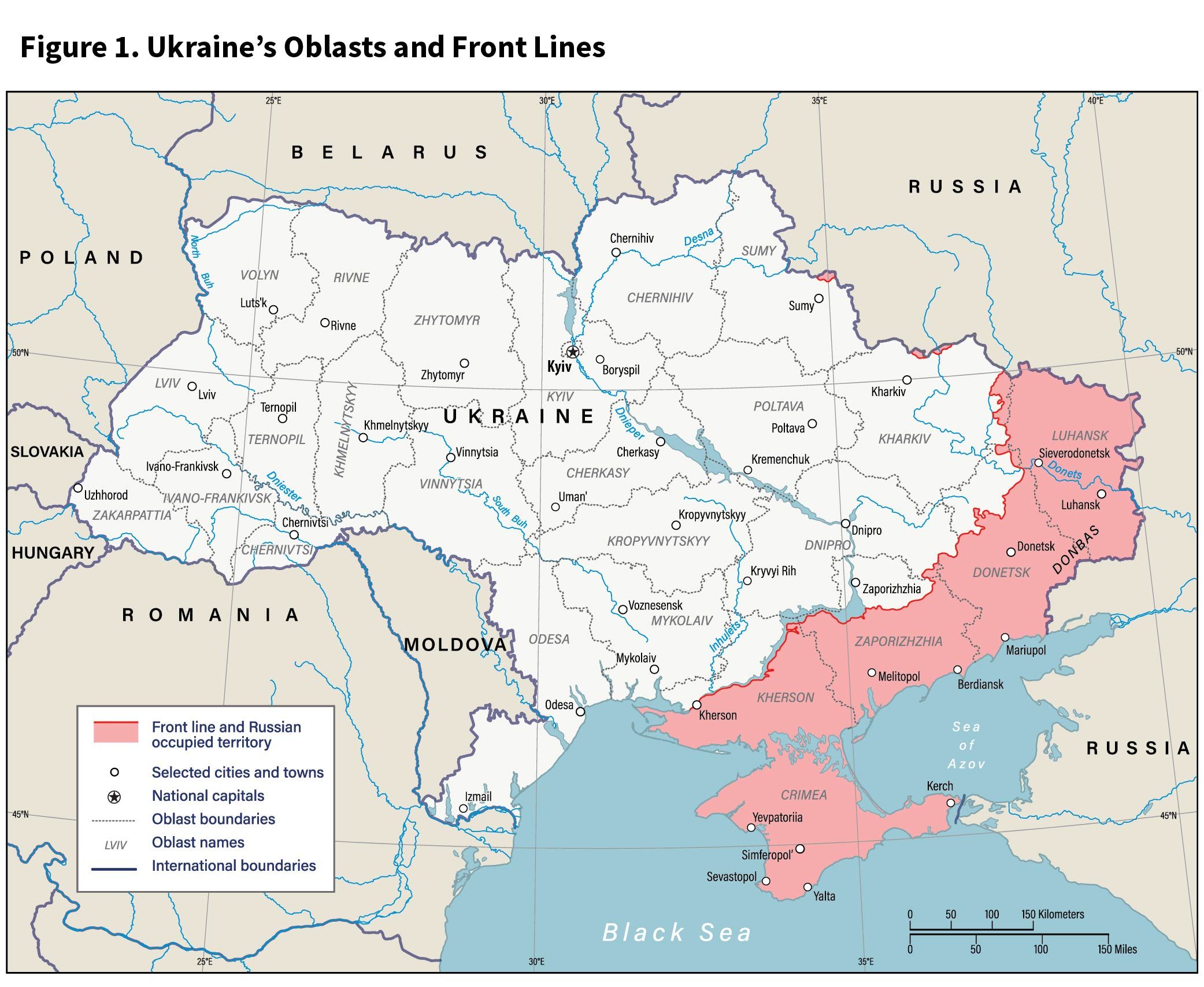
This paper examines the multidimensional consequences of Ukraine’s wartime transformation, tracing how people, capital, infrastructure, and political influence are being redistributed across the country. Many of these shifts, such as the movement of people and businesses away from frontline regions (see figure 1), are unsurprising outcomes of the war that reflect the resilience of Ukraine’s society and economy. Other shifts, such as the concentration of power and resources in major cities—especially Kyiv—at the expense of smaller settlements, could create long-term challenges for Ukraine’s economic development and European integration. Understanding and managing this internal realignment must therefore underpin all reconstruction planning, from transport and energy infrastructure to housing, social services, and investment policy.
One of the most profound and lasting consequences of Russia’s war has been the collapse of Moscow’s cultural and linguistic influence in southeastern Ukraine. Once considered by Russia to be the heartland of the “Russian world,” Ukraine’s southern and eastern regions are undergoing a quiet but irreversible transformation. The war has not only delegitimized Russia’s political claims over these regions but also undermined the foundations on which those claims once rested.
The demographic and linguistic shifts are striking. Population surveys in territories controlled by Ukraine suggest that the share of Ukrainians who identified as ethnic Russians fell from 20.2 percent in 2000 to an estimated 1.9 percent in 2024.1 More tellingly, the proportion of Ukrainians who identified Russian as the language they used at home nearly halved between 2020 and 2025, falling from 25 to 13 percent.2
This shift is not merely about language—it signals a deeper political and cultural realignment. In April 2025, 58 percent of Ukrainians opposed teaching Russian in schools, up from just 8 percent in 2019.3 Even in Ukraine’s south and east, where support for Russian-language instruction was once overwhelming, significant opposition has emerged. The rejection of the Russian language today reflects not only a reassessment of identity but also a repudiation of Russia’s political project.
This realignment is accompanied by a surge in civic identification. Already in summer 2024, 92 percent of southern Ukrainians and 83 percent of eastern Ukrainians cherished Ukrainian citizenship.4 Among Russian-speaking Ukrainians, 62 percent viewed Russia as an enemy, and more than a third believed that Moscow’s war aims include the destruction of the Ukrainian people.5 These are not short-term reactions; they mark a generational rupture.
Nonetheless, a residual 12 percent of Ukrainians still believed that the Russian language should be preserved as a cultural asset due to its historical ubiquity. While a minority, this group represents a potential vector for political manipulation under the banner of linguistic rights. To prevent such exploitation, Kyiv must clearly separate policies aimed at supporting ethnic minorities from those governing language use. The current momentum should be used to consolidate Ukrainian-language education, public media, services, and civic infrastructure, ensuring that the next generation grows up in a more cohesive, Ukrainian-speaking public sphere.
To prevent such exploitation, Kyiv must clearly separate policies aimed at supporting ethnic minorities from those governing language use.
The war has profoundly reshaped Ukraine’s fiscal geography, exacerbating preexisting imbalances and producing new forms of territorial inequality. Nowhere is this more evident than in the widening gap between the capital and the rest of the country. In 2024, Kyiv—home to just 8 percent of Ukraine’s population—generated 39 percent of all city-level revenues.6 While most regions suffered steep fiscal contraction, Kyiv recorded 14 percent GDP growth between 2023 and 2024, consolidating its dominance as Ukraine’s financial and administrative core. This growth was fueled not only by the inflow of internally displaced people but also by the relocation of businesses, financial institutions, and government operations from regions affected by the war. Kyiv has thus absorbed much of the country’s human and financial capital, reinforcing structural centralization at a time when other regions struggle to maintain viable economies.
The contrast with the rest of Ukraine is stark. Small towns saw their revenues collapse by as much as 45 percent in 2024 compared to the previous year. Regional (oblast-level) governments experienced a 26 percent drop in their own source revenues (meaning revenue from local sources, such as taxes and fees), compounded by a 25 percent decline in state transfers. These financial losses have undermined the foundations of decentralization reforms enacted after 2014, reforms that were previously hailed by Ukraine’s partners as one of the country’s major domestic governance successes.7
The war has further tilted the fiscal balance toward cities, particularly Kyiv. Financial transfers from the center to cities have risen by 48 percent since 2022, while transfers to rural communities have stagnated or declined. This shift is partly driven by necessity: Wartime displacement has increased urban populations and concentrated the demand for services in large cities. However, this urbanization trend risks sidelining smaller communities; strengthening those was the essence of the decentralization reform. Infrastructure decay, outmigration, and a shrinking rural tax base threaten to hollow out hundreds of towns and villages, especially in frontline areas.
This urbanization trend risks sidelining smaller communities.
The redirection of the military tax to the central budget in 2023 further weakened community finances. Before the change, municipalities received a share of the personal income taxes paid by military personnel stationed in their jurisdictions. This tax had temporarily boosted local budgets during wartime. Once the central government reallocated this revenue stream to the state level, municipal authorities lost a critical source of fiscal stability and investment capacity, particularly for infrastructure and social services. The move was justified as a measure to streamline defense spending, but in practice it deepened the financial dependency of local governments on transfers from the central government.8
Education has traditionally been the largest expenditure in local budgets, even with subsidies from the central government. Now, the sector is cofinanced at 51 percent by local authorities as the center reduces its share of educational costs.9 As local revenues shrink and state transfers remain insufficient, communities struggle to maintain schools and childcare facilities that once anchored local public life. The contraction of these educational networks undermines not only access to basic services but also the broader social infrastructure painstakingly built during the decentralization era. If sustained, this process could reverse one of Ukraine’s key achievements since 2014: empowering communities through the provision of quality public services close to citizens. This, in turn, would erode local capacity and trust in self-governance.10
Kyiv’s economic dominance is underpinned by its concentration of major enterprises11: 165 large firms operate in the capital city, compared to 68 in Dnipropetrovsk Oblast, 38 in Lviv Oblast, and 37 in Kyiv Oblast outside of the city.12 The next tier of regions hosts fewer than 20 each. As human and financial capital gravitates toward Kyiv and select hubs in the west, other regions—particularly in the east and south—struggle to remain economically viable.
One likely consequence of these trends is accelerated urbanization across all regions, regardless of their prewar development level. As job opportunities dwindle in smaller settlements, populations will continue to migrate toward urban centers. This demographic shift threatens not only the viability of local economies but also the preservation of regional cultural heritage. In many towns and large villages, the capacity to collect, safeguard, and transmit intangible and material cultural assets is rapidly eroding. Economic decline may simply outpace the time and resources needed to preserve them.
Disparities in per capita income growth underscore the regional divergence. Between 2021 and 2024, the regions with the highest growth were all in the west: Zakarpattia (19.9 percent), Ivano-Frankivsk (17.1 percent), and Ternopil (15 percent).13 In contrast, the war-torn east and south saw precipitous per capita income declines. Outside of Dnipropetrovsk, Kyiv, and Lviv Oblasts—which remain fiscal hubs—the prospects for balanced development appear increasingly bleak.
This evolving fiscal landscape indicates that decentralization-related reforms will continue, but under growing financial pressure and with narrower reach. Educational, healthcare, and cultural service networks are already shrinking, especially in areas affected by outmigration and economic decline. The erosion of local institutional capacity is compounded by the loss of personal income tax revenues, which in less capable communities are traditionally tied to the payrolls of schools and colleges. As these institutions close or consolidate, communities lose both employment and fiscal anchors, weakening budgets in sparsely populated areas and reinforcing a self-perpetuating cycle of decline.
To illustrate the evolving economic imbalances in wartime and postwar Ukraine, this section compares two pairs of regions: first, Lviv and Kharkiv—representing economically strong western and eastern oblasts—and second, Zakarpattia and Mykolaiv—two border regions with contrasting prewar geopolitical orientations.
The comparison between Lviv and Kharkiv highlights the decisive role of geography in shaping economic trajectories under wartime conditions. In Kharkiv Oblast, approximately 70 percent of large enterprises have been destroyed, relocated, or forced to suspend operations.14 As a result, regional and municipal budgets have declined by 40 percent, while Kharkiv city faces extensive destruction of housing stock and sustained disruptions in electricity supply. Across eastern Ukraine, businesses experienced a 70 percent drop in sales between the Russian invasion and the end of 2023.
In stark contrast, Lviv Oblast has absorbed economic activity and human capital displaced from the east. The west saw a 39 percent decline in business sales, and Lviv had a 23 percent increase in job vacancies compared to prewar levels.15 It has also emerged as a magnet for foreign investment: Ireland’s Kingspan Group, for example, announced a 280 million euro ($320 million) investment in a building materials manufacturing campus near Lviv that will produce advanced insulation, other building materials, and district heating solutions.16 The campus represents the largest manufacturing investment promised to Ukraine and marks the first major commitment by a Western business since the full-scale invasion began, with the campus expected to create over 700 jobs.17 Key sectors such as logistics, energy, construction, and information technology have expanded significantly, with a notable influx of relocated firms. Since February 2022, the number of defense manufacturers operating in the country has more than doubled.18
The second comparison—Zakarpattia and Mykolaiv—demonstrates how border geography shapes economic adaptation under wartime stress. Zakarpattia, which borders four EU member states (Poland, Slovakia, Hungary, and Romania), has undergone a rapid and profound transformation. By late February 2024, the region had seen a 55 percent increase in job vacancies—the highest growth rate in the country. Foreign investment has followed suit, including a $150 million investment in renewable energy projects by Türkiye’s ONUR Group. Zakarpattia has successfully diversified away from its prewar dependence on tourism and remittances toward manufacturing and business services.19
Mykolaiv Oblast, by contrast, has a strategic location on the Black Sea; as a result, it continues to bear the brunt of its proximity to the front lines. The region has suffered significant population loss, widespread damage to port infrastructure and industrial assets, and the effective blockade of traditional maritime shipping routes.20 This divergence underscores a broader wartime pattern: Proximity to the EU border generates secure trade channels and investor confidence, while formerly strategic maritime hubs have become economic liabilities. These shifts are reshaping the spatial logic of Ukraine’s postwar economy in fundamental ways.
Ukraine faces a significant labor shortage that threatens the country’s postwar economic recovery. To meet the government’s growth targets for gross domestic product through 2034, the estimated need for additional workers ranges from 4.5 to 8.6 million.21 Labor market pressures are intensifying: In 2024, 60 percent of employers identified the inability to find qualified employees as their primary challenge. This shortage was attributed mainly to wartime mobilization (67 percent) and external migration (54 percent).22 By the end of 2024,23 74 percent of employers reported persistent workforce deficits, particularly in sectors requiring high specialization and foreign language skills.24
Some of the hardest-hit sectors include agriculture and agricultural machinery, where expensive equipment remains idle due to a lack of trained operators. In the mining and energy sectors, coal mines consistently report a shortfall of at least one hundred workers each.25 Traditionally male-dominated sectors—such as construction, transport, and metallurgy—are increasingly recruiting women to fill the labor gap. At the same time, a growing mismatch between workforce qualifications and business needs has emerged: 25 percent of employers cited skills gaps as a major concern. Notably, 63 percent of job seekers expressed a willingness to retrain, underscoring a strong demand for accessible reskilling pathways.26 Simultaneously, 64 percent of firms began employing women in traditionally male-dominated roles.
Necessity is also reshaping hiring practices. The share of companies employing people with disabilities increased from 36 percent in 2023 to 50 percent in 2024. The proportion of employers hiring internally displaced persons (IDPs) rose from 35 to 47 percent, and the share of companies hiring military personnel into civilian jobs nearly doubled, from 24 to 43 percent (see figure 2). Labor shortages are also forcing employers to challenge age-related hiring norms. By 2024, 77 percent of businesses were hiring workers over the age of fifty, contributing to a drop in age discrimination complaints from 23 to 12 percent.27
Long-term demographic trends further complicate the labor outlook. By 2050, Ukraine’s population could decline from 41.2 million in 2021 to 32 million within Ukrainian-controlled territories,28 and by 2070, the elderly (those older than sixty) may outnumber the working-age population (aged eighteen to fifty-nine), 11.1 million versus 10.9 million. Even if the war ended this year, veterans and their families would constitute up to 15 percent of the population, numbering 4 to 6 million—and more than 60 percent of them are under the age of forty. Another growing group is people with disabilities, who make up around 9 percent of the population (approximately 3.4 million in mid-2025),29 compared to 6.6 percent or 2.7 million in 2021.30 Although 40 percent of this group does not require workplace adaptations, only 16 percent are currently participating in the labor force.
There are 3.7 million registered IDPs in Ukraine,31 concentrated primarily in Dnipropetrovsk (498,000), Kharkiv (494,000), and Kyiv (304,000) Oblasts, as well as in Kyiv city (374,000).32 Among them, the unemployment rate stands at 15 percent, compared to the national average of 11 percent, and 61 percent of unemployed IDPs are actively seeking work.33 Particular difficulties are faced by IDPs aged fifty-five to fifty-nine, who encounter age-related hiring barriers, and by women aged twenty-five to thirty-five, who must often balance job seeking with childcare responsibilities.
Businesses are emerging as first responders to this population crisis, often acting faster than the state. Many are leading the way in integrating veterans, employing people with disabilities and older workers, and rebalancing gender roles within teams. These practices—once seen as exceptional—may foreshadow the future structure of Ukraine’s labor market.
Under martial law, Ukraine has become a country of two faces when it comes to transparency. On paper, it ranks among Europe’s leaders in open data reform—scoring third in the EU’s Open Data Maturity Report.34 Yet on the ground, wartime governance has ushered in a new era of opacity. The gap between national commitments and local practices has widened, exposing a critical fault line in Ukraine’s democratic resilience.
To start, Ukraine has no current, verified population data. The last official census was conducted in 2001. While the state-affiliated Institute of Demography estimates the current population at 31.5 million,35 the regional and age breakdowns remain unknown. The State Statistics Service’s last report on population dates back to early 2022.36 Even the Institute of Demography lacks access to updated internal figures. This data vacuum complicates not only wartime governance but also the planning and evaluation of postwar recovery policies—from education and healthcare to regional investment.
One wartime resolution has enabled government authorities to withhold critical public information in the name of national security.37 By May 2025, 80 percent of Ukrainian municipalities ignored national open data regulations. Transparency International found that 72 percent of cities and towns failed to meet even minimal standards of municipal openness,38 with local councils—especially near the front lines—often holding meetings in secret or switching to online-only formats that block public oversight.39
In response to mounting concerns from local and international watchdogs, Ukraine’s parliament adopted amendments in May 2024 to strengthen transparency at the local level.40 These changes to the Law on Local Self-Government mandate online broadcasts and archiving of local council plenary sessions and standing committee meetings; publication of agendas, minutes, and roll-call votes; as well as the publication, in open-data format, of territorial communities’ property assets and the results of the mandatory inventories conducted for their management.41
While the legal framework has improved, implementation remains highly uneven.42
Western municipalities have shown higher levels of compliance, while many cities in the east and south continue to invoke wartime conditions to justify nondisclosure. The result is a distorted landscape of accountability: strong formal transparency at the national level contrasted with increasingly limited access to information at the local level. The disconnect is so pronounced that even members of parliament have reported being unable to access budgetary data from their own municipalities.
The result is a distorted landscape of accountability: strong formal transparency at the national level contrasted with increasingly limited access to information at the local level.
The erosion of access to information is not limited to local governments. The Cabinet of Ministers’ decree on open data publication—first adopted in 2015—has been amended twenty-two times since 2022, often in ways that complicate rather than clarify obligations. Sectoral NGOs now find themselves in the paradoxical position of having to lobby the state to uphold its own open data standards, arguing that core datasets must remain public even under wartime conditions.43
This dual reality—a highly rated transparency framework paired with widespread local opacity—poses a strategic risk. Ukraine’s international reputation as a reform-oriented democracy depends on more than compliance with EU benchmarks; it rests on the daily accountability of local institutions to citizens. As Ukraine moves toward EU accession and postwar reconstruction, restoring public access to information—especially at the local level—will be essential to rebuilding trust, improving service delivery, and ensuring democratic oversight in the most affected regions.
The war has inflicted immense physical and economic damage on Ukraine’s infrastructure. The Kyiv School of Economics estimated that by early 2025, war-related destruction reached $170 billion,44 with housing alone accounting for $60 billion, transport for $38.5 billion, and energy systems for $14.6 billion (see figure 3). Over 90 percent of this destruction is concentrated in frontline regions—chiefly Donetsk, Kharkiv, and Mykolaiv.45 When broader economic losses are included, Ukraine’s total reconstruction needs rise to $524 billion, according to the World Bank.46
With more than 2.5 million homes damaged or destroyed and only a fraction rebuilt, the housing crisis has become one of Ukraine’s most pressing reconstruction challenges. Homeownership, which stood at 95 percent in 2021, declined sharply to 79 percent by 2024. The loss of property and surge in rentals have been accompanied by rapidly rising rental prices.47
The gap between displacement and housing provision has reached crisis proportions. In early 2025, approximately 3.7 million people remained internally displaced within Ukraine, yet the government’s response has been severely inadequate. According to 2024 Ministry of Communities and Territories Development data, only 4,200 IDPs had been provided with temporary housing between 2022 and 2024, while 23,100 remained on waiting lists.48 Other sources indicate an even starker picture: In September 2025 news reporting found only 63 individuals had received permanent housing, while nearly 220,000 active requests remained unaddressed.49 This severe shortfall persists despite massive expenditure: The cost of supporting displaced persons through accommodation payments in 2022 alone reached 53.5 billion hryvnia ($1.2 billion).50 The disparity between urgent needs and actual delivery highlights not only fiscal constraints but also systemic failures in coordination and implementation.
In April 2022, the Cabinet of Ministers approved a program to enable local budgets to purchase or construct temporary housing for IDPs, with an initial target of 53,400 apartments intended to accommodate 186,000 people. However, this ambitious initiative was canceled just four months later due to fiscal constraints, with nothing to show.51
While the Office of the President has signaled potential support for Ukrainian refugees returning from Poland,52 the scale of destruction—combined with limited state capacity and growing donor fatigue—means that the housing crisis will remain one of the most intractable challenges of Ukraine’s postwar recovery.
The scale of destruction . . . means that the housing crisis will remain one of the most intractable challenges of Ukraine’s postwar recovery.
In response to reconstruction needs, Ukraine has assembled an investment catalogue featuring 250 projects, with financing needs exceeding $40 billion.53 Yet only $7.4 billion—barely 1.4 percent of the estimated $524 billion54 in reconstruction needs—has been secured through state and donor financing for 2025. This dramatic shortfall reflects not only Ukraine’s fiscal limitations and growing donor fatigue but also the symbolic nature of much of Europe’s mobilization for recovery. Reconstruction has so far served more as a political gesture of solidarity than as a structured plan backed by concrete commitments or financial instruments. Structural imbalances persist between where funds are allocated and where capital naturally flows, leaving some regions oversupplied and others neglected. Investor sentiment, while publicly optimistic, has yet to translate into sustained or large-scale commitments. Without clearer prioritization, transparent coordination, and binding funding mechanisms, Ukraine’s recovery risks remaining an exercise in rhetoric rather than a road map for rebuilding.
Nevertheless, a 2023 survey found that all American companies operating in Ukraine intended to remain after the war; 31 percent were even ready to increase investment.55 A more bullish 57 percent of European firms, according to the European Business Association, expressed readiness to invest even during wartime, with 79 percent indicating willingness to join reconstruction efforts.56 Furthermore, nearly one-third of surveyed European CEOs viewed Ukraine as an attractive destination for new investors.
Yet the data tell a different story. Foreign direct investment (FDI) in Ukraine dropped 25 percent in 2024 compared to 2023, falling from $4.5 billion to $3.3 billion.57 What investment remains is heavily concentrated in a few major cities: Kyiv accounts for 42.4 percent of all FDI, followed by Dnipro (14 percent) and Lviv (4.1 percent).58 Much of the south and east—the areas most affected by destruction—has been effectively bypassed. This reflects a broader demographic and institutional shift westward, as businesses, human capital, and government attention retreat from the front lines.
This relocation is visible in business movement patterns. Since the full-scale invasion began in 2022, nearly 19,000 companies have changed their legal addresses.59 In 2024 alone, 11,083 companies relocated, down 18 percent from 2023 and 25 percent from the 2022 emergency evacuation peak, signaling stabilization after the initial crisis response.60 Nearly 775 firms have moved out of Kyiv city into the surrounding region. Aside from the suburbs of Kyiv, western regions, particularly Lviv and Zakarpattia, have emerged as the primary relocation destinations, reinforcing the shift in Ukraine’s economic center of gravity away from war-damaged regions.
Compounding this geographic divide is a policy mismatch. The Ukrainian government has identified defense, energy, information technology, construction, and agriculture as strategic investment sectors.61 But National Bank of Ukraine data for 2024 show that actual FDI flows are concentrated elsewhere: 25 percent went to industry (with 23 percent of that to processing), 22 percent to wholesale and retail trade (including vehicle repair), 20 percent to finance and insurance, and 11 percent to real estate.62
This misalignment between national priorities and investor behavior is already producing long-term structural distortions. Western and central regions, such as Ivano-Frankivsk and Cherkasy, are gradually emerging as new investment poles, while the war-affected southeast risks slipping into sustained economic marginalization. Unless actively addressed, this divergence could solidify into a durable postwar imbalance—one that shapes Ukraine’s economic geography for decades.
Unless actively addressed, this divergence could solidify into a durable postwar imbalance—one that shapes Ukraine’s economic geography for decades.
The broader challenge is thus twofold: to scale up total investment and to steer it toward long-term national recovery and convergence. Strategic investment in logistics, defense manufacturing, and renewable energy—especially in war-affected and depopulated areas—is necessary not only for recovery but also for rebalancing Ukraine’s development model in line with EU expectations. Failure to do so risks reproducing wartime vulnerabilities in peacetime, with unequal recovery undermining national cohesion, European integration, and the broader legitimacy of postwar reconstruction.
Between 2014 and 2022, Ukraine’s decentralization reforms gave new powers to 1,469 amalgamated territorial communities and were widely regarded as a democratic success story. Yet the full-scale Russian invasion triggered an abrupt, albeit often necessary, recentralization of authority. The 2022 merger of the Ministry for Regional Development with the Ministry of Infrastructure symbolized a strategic pivot: National defense and logistics began to take precedence over local autonomy and participatory governance.63
Centralization was a systemic response to the extraordinary pressures of war. However, it effectively froze the further development of local self-government. Decisionmaking migrated upward, fiscal flows were redirected to the center, and previously devolved powers were gradually reclaimed. The relocation of the military personal income tax—a key revenue stream for local budgets—to the central government in 2023 was a major blow to community finances, already weakened by population displacement and business closures.64 Although the central government pledged to use these funds for military needs, by August 2024, only half had been spent on defense. Due to bureaucratic inefficiency, the rest has sat unused rather than being redirected elsewhere, undermining both the credibility of the measure and the financial sustainability of local governments.65
Despite this recentralization, the war also revealed the resilience of Ukraine’s lowest-tier institutions. Local communities and civic initiatives were among the first to respond to the humanitarian and logistical challenges of the invasion. They provided crucial support to displaced persons, residents, and armed forces—demonstrating adaptive capacity and proving the value of decentralized governance even in extreme conditions.
Yet the broader institutional picture remains grim. Research conducted by the Centre of United Actions, a Ukrainian civil society organization, in late 2023 and early 2024 showed that the pace of decentralization reforms had slowed dramatically.66 Central authorities reclaimed powers on security grounds, while regional fiscal autonomy shrank. Sectoral reforms intended to be implemented at the local level—particularly in healthcare, education, and planning—either stalled or were delayed indefinitely. Strategic documents crafted before the invasion quickly became obsolete. Communities in combat-affected areas now focus on repairing critical infrastructure and stabilizing population levels, rather than advancing long-term development plans.
This power imbalance between the center and localities will not resolve on its own. In frontline and occupied territories, administrative structures have collapsed or become hollowed out. Meanwhile, safer municipalities face new challenges from population influxes, stretched services, and rising resident expectations.67 The removal of key fiscal instruments such as the military income tax and the void left by outdated local strategies have created a governance vacuum in many areas.
This power imbalance between the center and localities will not resolve on its own.
The path forward is not uniformly bleak. In some cases, the decentralization of donor funds has enabled local governments and civic actors to play a more proactive role in reconstruction, enhancing transparency and accountability. In some cases, donor programs have channeled funds directly to municipalities—like the EU’s Ukraine–Local Empowerment, Accountability and Development Programme (97 million euros, or $112 million)68 and the (now defunct) U.S. Agency for International Development’s Decentralization Offering Better Results and Efficiency program.69 Such programs enable civil society and local governments to drive reconstruction with greater transparency. The town of Bucha provides a notable example, where a civil society office secured $1.5 million in reconstruction funding immediately after its liberation in the spring of 2022.70
But these are exceptions, not the rule. Without a clear postwar road map that redefines the division of responsibilities between central and local governments, Ukraine risks perpetuating the inefficiencies of an overcentralized system and losing one of its most celebrated reform achievements. In the context of European integration and postwar recovery, local governments will be essential implementers of reform. Public support for and trust in local government remains solid.71 Restoring the balance between central authority and local autonomy will require deliberate institutional rebuilding, backed by fiscal tools, strategic clarity, and political will.
Ukraine remains one of the world’s most displaced nations, with 3.7 million IDPs and 6.9 million refugees abroad in 2025.72 Meanwhile, poverty in Ukraine has deepened since the onset of the full-scale invasion, with an estimated 1.8 million people newly impoverished, bringing the total to 9 million.73 Displacement is both a driver and a symptom of this social fragility.
Only 5 percent of refugees intend to return to Ukraine within the next year.74 The primary factor that would persuade refugees to return, cited by 67 percent of respondents to a poll in November 2024, is the end of the war and the de-occupation of territories. Additional factors include access to employment (43 percent), housing (21 percent), and basic services such as electricity, heating, and water (19 percent).
Refugees from eastern Ukraine, northern oblasts, and Kyiv city are especially reluctant to return from abroad. They are concerned about the proximity of their former homes to the front lines and their vulnerability to missile strikes,75 as well as the destruction of housing and limited employment opportunities.76 Among refugees who are actively employed or are seeking employment in their host countries, expectations of a return to Ukraine are significantly lower (52 percent) than among those not engaged in the labor force (69 percent).77 This suggests that economic integration abroad, while critical for resilience, may reduce the likelihood of repatriation.
The demographic implications of refugees remaining abroad are especially stark. Children account for 29 percent of Ukrainian refugees, and adult women 44 percent. These groups’ long-term absence from the country will only deepen labor shortages and accelerate demographic decline long after the war ends.78
Inside Ukraine, 73 percent of IDPs still hope to return home—a notable decline from 83 percent in 2022.79 Regional displacement patterns shape these expectations: Those who remained within their region of origin are more likely to plan a return (75 percent) than those displaced across regions (67 percent). IDPs from currently occupied territories are least likely to plan short-term returns, with just 1 percent expecting to go back soon, although a majority (69 percent) still hope to return someday.80
Certain demographics among IDPs are more inclined toward return. These include female-headed households (69 percent), older individuals aged sixty and above (78 percent), families with dependents (71 percent), those with relatives still living in their place of origin (78 percent), and individuals whose homes were undamaged (70 percent).81
Western Ukraine continues to absorb the majority of IDPs. These regions now face a growing challenge: transitioning from a short-term humanitarian response to long-term integration strategies. More broadly, targeted policies that support employment, housing, and education for displaced populations are essential. With strategic planning and adequate resources, today’s displacement patterns could be transformed into a catalyst for regional revitalization—helping depopulated or stagnant areas recover through the integration of new residents.
With strategic planning and adequate resources, today’s displacement patterns could be transformed into a catalyst for regional revitalization.
Ukraine’s regional landscape is being reshaped by Russia’s war, in terms of the movement of people, capital, and power. While national identity has been fortified through resistance, the internal equilibrium of opportunity is under growing strain. Kyiv is emerging as a dominant center—politically, economically, and demographically—alongside regional hubs like Lviv and Zakarpattia. Meanwhile, many peripheral regions face accelerating decline, hollowed out by displacement, depopulation, and economic disinvestment.
This moment of rupture offers a rare opportunity to rebuild the Ukrainian state on more balanced and resilient terms. Reconstruction cannot remain a symbolic exercise in European solidarity; it must respond to Ukraine’s actual economic geography and social needs. Investments should prioritize the country’s living arteries: transport corridors, logistics hubs, and cross-border connections that bind Ukraine to the European market. The recently opened European-gauge railway link in Mukachevo, near the border with Slovakia and Hungary, illustrates the kind of pragmatic integration that delivers tangible value and connects regional economies rather than merely showcasing them.82
But rebuilding infrastructure alone will not secure Ukraine’s future. Social investment—support for veterans, affordable housing, healthcare, and community services—will be just as critical in restoring internal security and sustaining national cohesion. These measures are not humanitarian add-ons but pillars of long-term stability: They help anchor returning populations, reduce social fragmentation, and convert wartime endurance into durable social resilience.
Support for veterans, affordable housing, healthcare, and community services . . . are not humanitarian add-ons but pillars of long-term stability.
Equally, reconstruction must extend beyond physical and social assets to institutional renewal. The decentralization agenda, once a flagship reform, must be revived and adapted to postwar realities. Local governance must be restored not just in form but in function, enabling communities to shape their own futures and ensuring that recovery builds a stronger state and a more cohesive society.
The demographic risk is equally real. With millions displaced and low return intentions among women and children,83 some regions may face irreversible depopulation. Unless policies support inclusive return, labor reintegration, and educational access, Ukraine’s recovery and long-term economic viability will be at greater risk.
The government, with EU support, is developing programs to facilitate the return of refugees and IDPs, recognizing that housing, employment, and safe schooling are the main preconditions cited in surveys for coming back.84 Brussels is also preparing to revise by 2027 its temporary protection regime,85 under which Ukrainians who are not employed will gradually lose wartime privileges.86 While intended to encourage reintegration, these measures risk creating social and logistical pressures unless Ukraine can offer credible prospects for livelihoods and security at home.
Yet the greatest resource Ukraine possesses is the civic resilience of its people. Local communities were the first responders in war; they must now be empowered as drivers of recovery. Their experience, adaptability, and legitimacy position them not as passive recipients of aid, but as essential partners in state-building.
Ukraine cannot afford to trade unity for centralization, nor resilience for inequality. Rebuilding the country around a few thriving metropolitan centers while much of its territory remains depopulated, underfunded, and disconnected is a recipe for trouble down the road. The war has proven Ukraine’s capacity to endure, but endurance alone does not guarantee renewal. Without thoughtful policy interventions, reconstruction could reproduce the very asymmetries that stunted the country before the invasion. Yet if managed with clarity and realism, recovery could lay the foundation for a more balanced, cohesive state—one held together less by central power than by shared purpose and mutual dependence.
Mariya Levonova is the CEO of the Centre of United Actions and an experienced policy professional who has led major research projects on political parties, local governance, civic engagement, and municipal resilience in wartime Ukraine. She specializes in strategic communications, stakeholder engagement, and evidence-based policymaking, working closely with government institutions and international partners.
Balázs Jarábik is a political analyst, former Slovak diplomat, and consultant specializing in Eastern Europe. He is the founder of Minority Report, a political-risk consultancy, and author of the Essential Ukraine series at R.Politik. Previously, he was a nonresident scholar at the Carnegie Endowment for International Peace and head of the political and analysis department at the European Union Advisory Mission in Ukraine.
Mariya Levonova
Mariya Levonova is the CEO of the Centre of United Actions and an experienced policy professional who has led major research projects on political parties, local governance, civic engagement, and municipal resilience in wartime Ukraine. She specializes in strategic communications, stakeholder engagement, and evidence-based policymaking, working closely with government institutions and international partners.

Balázs Jarábik
Balázs Jarábik is a political analyst, former Slovak diplomat, and consultant specializing in Eastern Europe. He is the founder of Minority Report, a political-risk consultancy, and author of the Essential Ukraine series at R.Politik. Previously, he was a nonresident scholar at the Carnegie Endowment for International Peace and head of the political and analysis department at the European Union Advisory Mission in Ukraine. His work focuses on political transitions, governance, and regional security across Ukraine, Belarus, Moldova, and Central Europe.
Carnegie does not take institutional positions on public policy issues; the views represented herein are those of the author(s) and do not necessarily reflect the views of Carnegie, its staff, or its trustees.

If the Russian-speaking community in Latvia cannot articulate their interests without being seen as disloyal, they could end up embracing a pro-Kremlin agenda.

Sergejs Potapkins
Washington’s decision to support some UN functions while letting others wither is pulling the organization apart at the seams.

Stewart Patrick, Theodore Zaritsky

Are Germany’s economic, industrial, and political struggles becoming a liability for the EU’s ability to rise to the geopolitical moment?

Rym Momtaz, ed.

Russia’s ruling party would have benefited from Putin appearing as its distant patron, but as an active frontman imposing his views on the public, he has done nothing but harm both the party’s election campaign and the ruling system overall.

Andrey Pertsev

The Bureau of Industry and Security needs to adjust its focus and practices to maintain its position as the U.S. government’s primary champion of international technological competition.

Geoffrey Irving