
• Research
  • Emissary
  • About
  • Experts
Carnegie Global logoCarnegie lettermark logo
DemocracyIran
  • Donate
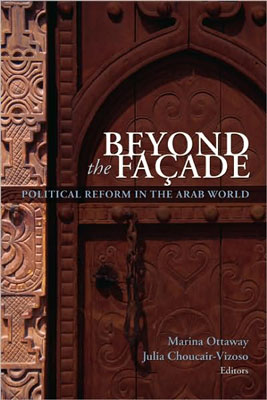
Beyond the Façade: Political Reform in the Arab World
Book

Beyond the Façade: Political Reform in the Arab World

Reform is a politically charged issue in the Middle East. Carnegie experts force us to recognize the reality of conflicting interests and the limitations of external actors to bring about political reform, while drawing lessons on how to make international democracy promotion more effective.

Link Copied
By Marina Ottaway and Julia Choucair-Vizoso
Published on Nov 19, 2007

Additional Links

Introduction: Evaluating Middle East ReformTable of ContentsPaperback - $22.95Hardback - $57.95
Program mobile hero image

Program

Middle East

The Middle East Program in Washington combines in-depth regional knowledge with incisive comparative analysis to provide deeply informed recommendations. With expertise in the Gulf, North Africa, Iran, and Israel/Palestine, we examine crosscutting themes of political, economic, and social change in both English and Arabic.

Learn More

Source: Washington

Reform is a politically charged issue in the Middle East. Governments admit change is necessary, but do not want to surrender power. Opposition groups want democracy, but cannot generate sufficient momentum. The Bush administration’s “freedom agenda” has brought the issue into focus but blurred the distinction between democracy promotion and forceful regime change. 

Some governments have taken steps toward political reform. Are these meaningful changes, or empty attempts to pacify domestic and international public opinion? How do we distinguish reforms that alter the character of the political system from those that are only window dressing? 

Beyond the Façade: Political Reform in the Arab World evaluates the changes that are taking place in the region and explores the potential for further reform.  The essays provide careful, detailed examinations of ten countries, highlighting the diversity of processes and problems. Beyond the Facade forces us to recognize the reality of conflicting interests and the limitations of external actors to bring about political reform, while drawing lessons on how to make international democracy promotion more effective.


About the Editors
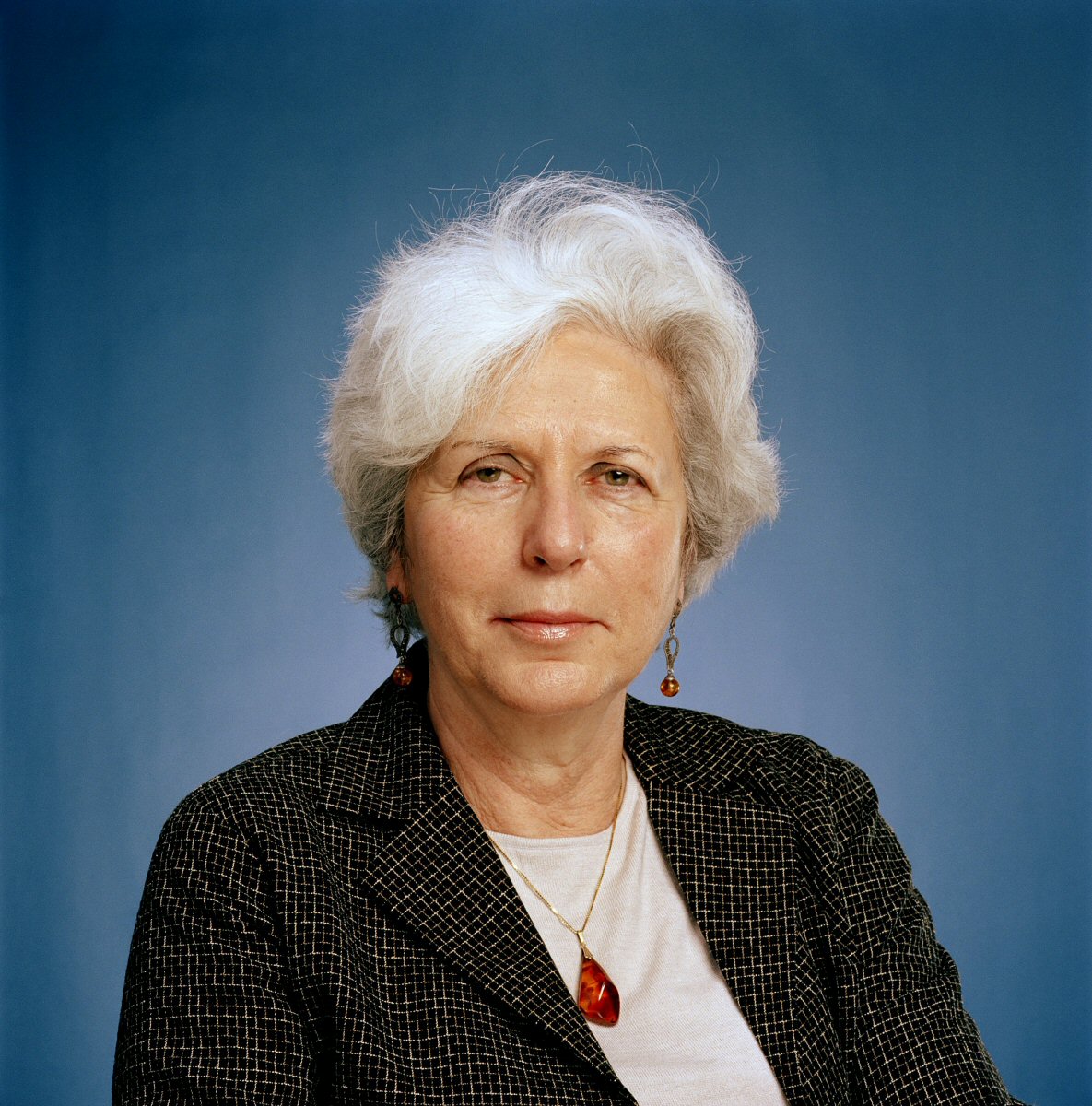
Marina Ottaway is a senior associate in the Democracy and Rule of Law Program and director of the Carnegie Middle East Program. Her most recent book, Uncharted Journey: Promoting Democracy in the Middle East (co-edited with Thomas Carothers), was published in January 2005.

Julia Choucair-Vizoso is a former associate at the Carnegie Endowment for International Peace in Washington, D.C.  She is currently a Ph.D. candidate in Political Science at Yale University. Her research focuses on the possibility of democratic change in the Arab world, with attention to political, economic, and social reform trends in the region.

Advance Praise

"This superb collection traces the empirical reality of political reform in the Arab world, recounting the experience of ten countries in a coherent, concise, and consistently insightful fashion."
—Foreign Affairs

“A significant and needed contribution ... the only volume which addresses political reform across the Arab world with country chapters written by leading specialists.”
—Robert Springborg, MBI Al Jaber Chair in Middle East Studies and director, London Middle East Institute, School of Oriental and African Studies, University of London

“Beyond the Façade is a non-ideological and therefore faithful, well argued, and well documented answer to a question more open than ever: what is the future of politics in that most sensitive part of the world?”
—Ghassan Salamé, Professor of International Relations, Institut d'études politique de Paris, and former minister of culture, Lebanon

About the Authors

Marina Ottaway

Former Senior Associate, Middle East Program

Before joining the Endowment, Ottaway carried out research in Africa and in the Middle East for many years and taught at the University of Addis Ababa, the University of Zambia, the American University in Cairo, and the University of the Witwatersrand in South Africa.

Julia Choucair-Vizoso

Former Editor in Chief, Sada

Julia Choucair Vizoso is editor in chief of the online journal, Sada. Her research interests include Middle Eastern politics, authoritarianism, and identity politics.

Authors

Marina Ottaway
Former Senior Associate, Middle East Program
Marina Ottaway
Julia Choucair-Vizoso
Former Editor in Chief, Sada
North AmericaUnited StatesMiddle EastPolitical ReformDemocracyForeign Policy

Carnegie does not take institutional positions on public policy issues; the views represented herein are those of the author(s) and do not necessarily reflect the views of Carnegie, its staff, or its trustees.

More Work from Carnegie Endowment for International Peace

  • apan's 8,900-ton Maritime Self-Defense Force supply ship Oosumi leaves Muroran port escorted by the 4,550-ton destroyer Murasame bound for Kuwait February 20, 2004 in Muroran, Japan.
    Article
    Japan’s Security Policy Is Still Caught Between the Alliance and Domestic Reality

    Japan’s response to U.S. pressure over Hormuz highlights a broader dilemma: How to preserve the alliance while remaining bound by legal limits, public opinion, and an Asia-centered security agenda. Tokyo gained diplomatic space through an alliance-embracing strategy, but only under conditions that may not endure.

      • Ryo Sahashi

      Ryo Sahashi

  • Article
    Kenya’s Health Deal Is a Stress Test for the America First Global Health Strategy

    U.S. agreements must contend with national data protection laws to make durable foreign policy instruments.

      • A Black woman with long hair wears a black blazer

      Jane Munga, Rose Mosero

  • Commentary
    Diwan
    Trump’s Plan for Gaza Is Not Irrelevant. It’s Worse.

    The simple conclusion is that the scheme will bring neither peace nor prosperity, but will institutionalize devastation.

      Nathan J. Brown

  • Trump seated and gesturing while speaking
    Commentary
    Emissary
    The Iran War Is Making America Less Safe

    A conflict launched in the name of American security is producing the opposite effect.

      • Sarah Yerkes

      Sarah Yerkes

  • illustration of AI chat bubbles
    Commentary
    California Sees Ways AI Can Support Policymaking. Here’s What It Needs to Succeed.

    For AI to capture the public’s policy concerns, people need to know that the models are elevating human concerns in human words, not generating their own.

      • Micah Weinberg headshot

      Micah Weinberg

Get more news and analysis from
Carnegie Endowment for International Peace
Carnegie global logo, stacked
1779 Massachusetts Avenue NWWashington, DC, 20036-2103Phone: 202 483 7600Fax: 202 483 1840
  • Research
  • Emissary
  • About
  • Experts
  • Donate
  • Programs
  • Events
  • Blogs
  • Podcasts
  • Contact
  • Annual Reports
  • Careers
  • Privacy
  • For Media
  • Government Resources
Get more news and analysis from
Carnegie Endowment for International Peace
© 2026 Carnegie Endowment for International Peace. All rights reserved.