

Paper
Douglas H. Paal
Source: Getty
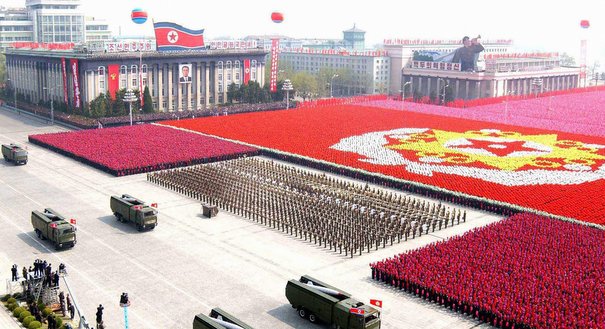
With external pressure and internal problems causing increasing strain in Pyongyang, the Obama administration’s Special Envoy to North Korea can afford to be patient and wait out Kim Jong Il’s maneuvers over nuclear talks.
The Obama administration’s Special Envoy to North Korea, Stephen Bosworth, finally arrived in Pyongyang last night after months of deteriorating relations between the North and the other members of the Six Party Talks (6PT). Administration officials have done their utmost to play down expectations for his visit, and this was reinforced by Pyongyang’s unrealistic characterizations of the upcoming talks.
Ever since the Obama administration held its nose and sent former President Bill Clinton to Pyongyang to repatriate two American journalists from captivity in the North last August, Chairman Kim Jong Il has seemed to be trying to recreate the heady atmosphere of 2000, when there was a flurry of positive-sounding diplomacy between Washington and Pyongyang. What makes this risky and otherworldly for the U.S. and other Six Party partners is that it follows and sharply reverses a year of extraordinary bellicosity from the North.
The Six Party nations want North Korea to return to the denuclearization process that ended in August 2008, without having to reward Pyongyang again for what it was compensated to do previously. Moreover, the U.S. says it has no interest in engaging in a long bilateral negotiation to persuade the North to return to the Six Party bargaining table. In addition, Washington wants its envoy to negotiate directly with Vice Foreign Minister Kang Sok Ju, rather than Ri Gun, who is the interlocutor with envoy to the 6PT, Sung Kim.
All these conditions reportedly have been agreed in advance, permitting Bosworth and his delegation to go, but it is unknown precisely what price Pyongyang may have in mind. Judging from the Chosun Sinbo, published by North Korean affiliates in Tokyo, the Pyongyang authorities have far-reaching changes in the peninsula’s security structure in mind, with demands that would roil the U.S. alliances with Korea and Japan, if agreed.
The Chosun Sinbo articles have repeatedly stated that the North seeks a “permanent peace guarantee system” to replace the armistice that ended the Korean War. In these and other articles, the North has made clear that for it to contemplate giving up its nuclear weapons, all threats to the North must be removed. In various outlets, the North has indicated that the extended nuclear deterrence that Washington extends to Seoul and Tokyo would have to be ended in exchange for reducing the North’s nuclear capacity.
The Chosun Sinbo has a good record of reflecting what Pyongyang actually is thinking, so based on these claims, there is little expectation for either a breakthrough or even incremental progress during the Bosworth mission.
For its part, the Obama administration continues to signal that it can be patient and wait out Kim Jong Il’s maneuvers over nuclear talks. UN sanctions are being enforced and squeezing the North. The Proliferation Security Initiative is limiting the threat of “loose nukes” from Pyongyang. And, the weakness of the North’s industrial capacity is constraining the expansion of its nuclear force, making it likely to continue to be deterred by U.S. capabilities.
But stepping back from the carefully stated positions of the two sides, reporting on North Korea suggests that it is in some trouble and may have its own internal incentives to be more forthcoming over time. Kim Jong Il is a leader who clearly has health problems. Views differ on how serious or even life threatening Kim Jong Il’s condition may be, but the coincidence of shifts in policy with his personal ups and downs over the past year is hard to ignore.
The agricultural harvest this autumn reportedly was very bad. Some Northern sources blame South Korea for failing to deliver fertilizer in the absence of a return to the denuclearization talks. The North is sure to need food this winter. While China’s recent diplomacy with the North has contained a variety of incentives to induce Pyongyang back to the bargaining table, possibly including food, it is not likely to be enough to meet all Pyongyang’s needs.
Finally, in what appears yet another sign of desperation, Pyongyang last week forced its population to turn in old currency for new notes, at a rate of 100 won to 1. With an upper limit of W100,000 that can be turned in, or roughly $40, this measure strikes deeply at the newly emerging middle class in North Korea engaged in the recently authorized, then more recently constrained, private markets.
Ostensibly designed to contain inflation, the currency swap is more likely intended to regain control over the economy and limit the number of people seeking alternatives to dependence on the government in the tightly controlled North. Whatever the intent, the government’s actions seem sure to have alienated large numbers of North Koreans and many of the Chinese and Russians who trade with them.
Kim Jong Il’s sudden action on the currency recalls Burmese dictator Ne Win’s failed efforts to revive his economy in 1987, when reportedly on the advice of an astrologer, he ordered that all kyat be denominated in numbers that add up to 9, supposedly indicating Ne Win would live to be 90. As the economy spiraled down in the aftermath, Ne Win was removed from power the following year and Burma’s streets filled with protestors in 1988 and 1989, complaining about related economic and other conditions.
While there is as yet no reason to predict this sort of outcome for the far more disciplined North Korea, nonetheless it suggests the degree of stress that Pyongyang is under. As the Obama administration’s representative, Ambassador Bosworth has little reason to be in a hurry this week.
Distinguished Fellow, Asia Program
Paal previously served as vice chairman of JPMorgan Chase International and as unofficial U.S. representative to Taiwan as director of the American Institute in Taiwan.
Recent Work
Douglas H. Paal

Douglas H. Paal, Tong Zhao, Chen Qi, …
Carnegie does not take institutional positions on public policy issues; the views represented herein are those of the author(s) and do not necessarily reflect the views of Carnegie, its staff, or its trustees.

It should address the shortcomings of previous crisis communication efforts and adapt to the demands of frontier AI.

Lucy Luo

Washington’s decision to support some UN functions while letting others wither is pulling the organization apart at the seams.

Stewart Patrick, Theodore Zaritsky

While there are notable demographic, economic, and geographic divides over AI, there is also substantial alignment between Republicans and Democrats.

Ian Klaus, Mark Baldassare, Rachel George, …

Are Germany’s economic, industrial, and political struggles becoming a liability for the EU’s ability to rise to the geopolitical moment?

Rym Momtaz, ed.

China’s police training infrastructure construction projects provide benefits to recipient countries, promote China’s image as a major global security provider, and are likely to reinforce alignment between Beijing’s security priorities and those of countries in the Global South.

Cameron Waltz, Sheena Chestnut Greitens, Kim Nguyen, …