

Commentary
How is AI reshaping space security, creating governance challenges, and where does international diplomacy stand today?
Tejas Bharadwaj, Almudena Azcárate Ortega
Source: Getty
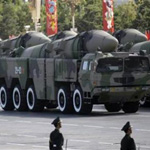
The U.S. Nuclear Posture Review defines China as a partner for international cooperation, but also expresses concerns about the modernization of China's nuclear arsenal, the lack of transparency, and its future intentions.
The Obama administration’s Nuclear Posture Review (NPR) makes some encouraging changes. The reorientation of threat perception provides the basis for further nuclear disarmament, strengthening of the nonproliferation regime, and broader international cooperation on nuclear security to counter nuclear terrorism, and to facilitate peaceful nuclear use.
The declaratory policy makes it clear that the United States will not use or threaten to use nuclear weapons against Nuclear Non-Proliferation Treaty (NPT) non-nuclear-weapon-states who comply with their treaty obligations, even if they were to pose threats of chemical weapon—and less clearly, biological weapon—attacks. This indicates that the possible use of U.S. nuclear weapons would occur only against the other established nuclear-weapon states, non-NPT states, and NPT members who do not comply with treaty obligations.
The NPR further promises that nuclear use will only be considered in “extreme circumstances” and for the “vital interest” of the United States, its allies and partners. Although it fails to adopt the “sole purpose policy” that many have called for, it does make such a policy an objective in the future.
The continued nuclear reduction in the new Strategic Arms Reduction Treaty (START) should be cheered as a step in the right direction, though not as big a step as expected. The significance lies in the momentum the treaty helps to build up. The decision to forsake new nuclear capabilities aimed to fulfill new military missions should not be underappreciated either.
However, the reduction of nuclear weapons’ role is one step forward and a half step backward. The negative security assurance to the non-nuclear-weapon states has two conditions: NPT compliance, and the right to reverse. There is still some distance from the “sole purpose policy,” and even more from the no-first-use policy as adopted and suggested by China. Continued maintenance of a triad nuclear force structure, high alert status, and upgraded nuclear weapon infrastructure is justified by the need to maintain strategic stability vis-à-vis Russia and China, even though the former is no longer an enemy and the latter shares increasing responsibilities and interests with the United States. Ballistic missile defense (BMD) and conventionally armed ballistic missiles play a bigger role in deterring potential regional nuclear adversaries and maintaining strategic stability with Russia and China, promising to be a source of tension in the future.
In contrast to the previous two post-Cold War NPRs, China receives much more attention. By defining China primarily as a partner for cooperation in international affairs, the new NPR tries to send a positive message to China. At the same time, on behalf of the United States and China’s Asian neighbors, it expresses concerns about the modernization of China’s nuclear arsenal, the lack of transparency, and its future intentions. China is mentioned 37 times in the report, as compared to only twice in what was leaked of the last NPR report. Of the 37, China is mentioned 18 times together with Russia, in the context of “strategic stability.” The emphasis on strategic stability implies that the United States accepts mutual deterrence with China as a reality and will design its nuclear relationship with China based on that reality.
This has implications for the U.S.-China nuclear relationship. First, it suggests that the United States will not try to develop offensive and defensive capabilities aimed to negate China’s nuclear deterrent. Second, China still has reason to wonder about the purposes and capabilities of ballistic missile defenses and conventionally armed ballistic missiles. And third, China’s nuclear weapon modernization programs would have a direct impact on U.S. nuclear-related decisions. The United States would like China to contribute its share to the strategic stability. Yet, the issue of Taiwan, which presents a possible scenario for military conflict between China and the United States, is not mentioned at all in the NPR report. This does not mean Taiwan is totally irrelevant. Some hard questions for China to ask include: whether Taiwan will be considered a U.S. partner, for whose defense nuclear weapons are still on the table? Would the status quo of the Taiwan Strait be considered a “vital interest” for the United States? Would China’s military action against Taiwan be viewed as an “extreme circumstance” in which nuclear weapons still have a role to play?
The NPR urges high-level dialogues with China “to enhance confidence, improve transparency and reduce mistrust.” However, China’s concern over BMD and PGS (Prompt Global Strike) needs more than just dialogues and talks if it is to be relieved. If China is regarded as part of the “newly emerged regional missile threat,” not only against Taiwan, but also against U.S. regional allies, U.S. maritime dominance in the Pacific, and military troops and installations of the United States and its allies in the region, against which the United States and its allies are setting up regional BMD architectures, tension over the BMD is going to stay and loom larger than before.
The NPR suggests it would be reasonable for China to believe that these latter issues would be central subjects in future strategic dialogues. While China would probably require time to explore this potential and China’s interests in each area, it will be cautious in looking for indicators that Washington would back reassuring words with a willingness to limit capabilities.
Yunzhu Yao is senior colonel in the Chinese People’s Liberation Army and currently a fellow with the Weatherhead Center for International Affairs at Harvard University.
Yunzhu Yao
Carnegie does not take institutional positions on public policy issues; the views represented herein are those of the author(s) and do not necessarily reflect the views of Carnegie, its staff, or its trustees.

How is AI reshaping space security, creating governance challenges, and where does international diplomacy stand today?


Tejas Bharadwaj, Almudena Azcárate Ortega
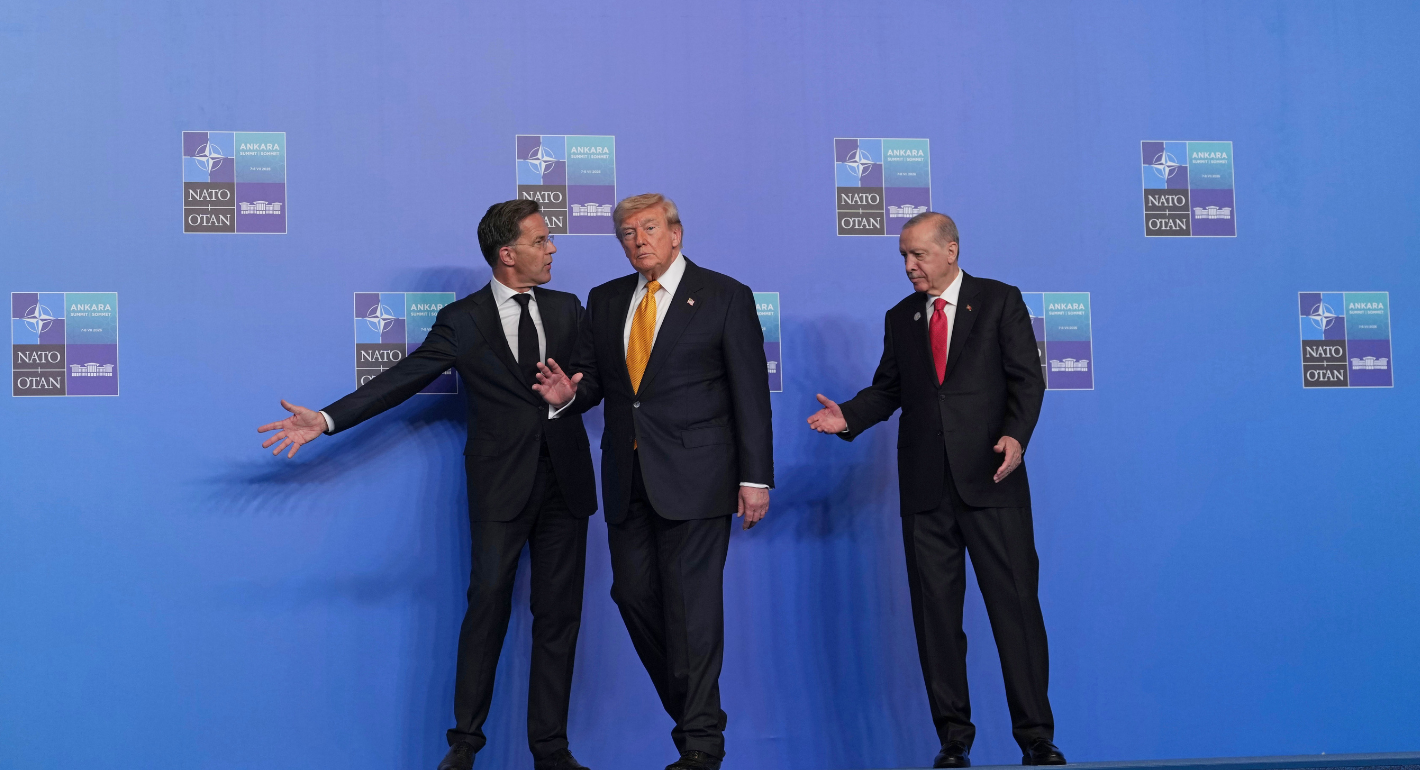
Nearly a year and a half after Europeans leaned into sucking up to Trump, the strategy has produced some benefits when it comes to Ukraine.

Rym Momtaz

Morocco and Algeria, each in its own way, are having to navigate the global economic fallout of the U.S.-Israeli military campaign against Iran.

Yasmine Zarhloule

Despite Morocco’s hopes that its film industry would reap rewards, the blockbuster’s success will be tainted by controversy surrounding filming in occupied Western Sahara.

Sarah Yerkes
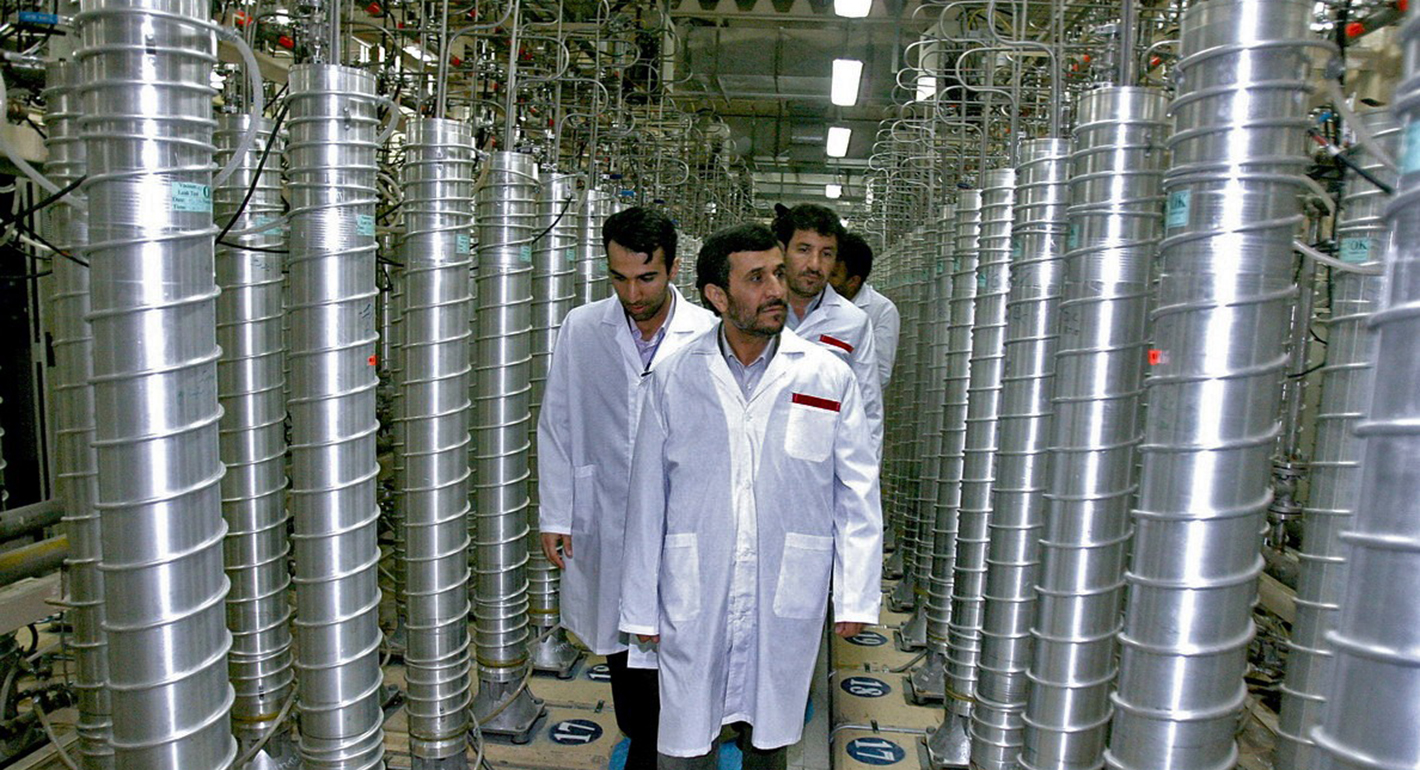
The nuclear weapons threshold is increasingly important for proliferation strategy and policy. Policymakers should better understand the implications of the threshold phenomenon in the current international security environment and plausible strategies to deal with the growing challenge that it presents.


Ariel (Eli) Levite, Toby Dalton