• Research
  • Emissary
  • About
  • Experts
Carnegie Global logoCarnegie lettermark logo
DemocracyIran
  • Donate
Rising Tension Between North and South Korea

Source: Getty

Article

Rising Tension Between North and South Korea

While tensions are rising on the Korean Peninsula and forecasting the North Korean leadership’s next steps is difficult, none of the parties involved have any interest in further escalation.

Link Copied
By Vladimir Dvorkin
Published on May 27, 2010
Program mobile hero image

Program

Russia and Eurasia

The Russia and Eurasia Program continues Carnegie’s long tradition of independent research on major political, societal, and security trends in and U.S. policy toward a region that has been upended by Russia’s war against Ukraine.  Leaders regularly turn to our work for clear-eyed, relevant analyses on the region to inform their policy decisions.

Learn More

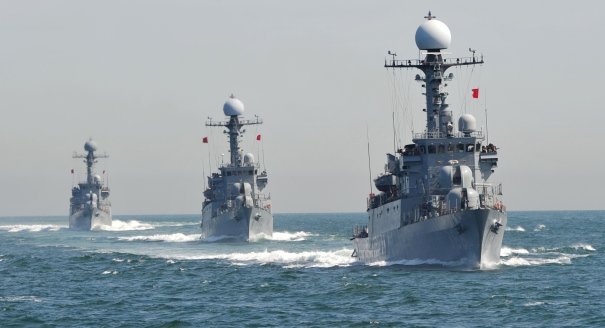
The rising tension on the Korean Peninsula sparked by the torpedoing of a South Korean military vessel, which evidence suggests was committed by North Korea, once more demonstrates the unpredictable nature of Kim Jong Il’s political regime.

The incident makes forecasting the North Korean leadership’s next steps difficult. Are further military provocations likely, or will the situation be limited to belligerent rhetoric? Much will depend on the positions taken by China and Russia. However, the harsh response from the United States, coupled with South Korea’s decision to suspend humanitarian aid to North Korea, leaves little chance for a rapid settlement of the conflict.

It is hard to say what type of sanctions the UN Security Council might impose on North Korea, or how Pyongyang may react. No one has an interest in further escalation, much less outright military conflict—not least North Korea, given its severe economic difficulties.

But the latest crisis deals a heavy blow to the six-party talks on defusing the North Korean nuclear situation and to the nuclear nonproliferation regime in general. No one knows for certain what North Korea has at its disposal: nuclear warheads that could be fitted to its Nodong or other ballistic missiles, or more primitive nuclear devices that could, for example, be delivered by ship to the coast of Japan or South Korea.

But it is impossible to rule out that Kim Jong Il, if backed into a corner, could take extreme measures. Attempts to resolve the conflict must keep this danger in mind. 

Vladimir Dvorkin is a Carnegie Moscow Center expert on nuclear security.

About the Author

Vladimir Dvorkin

Major General Dvorkin (retired) is a chief researcher at the Center for International Security at the Institute of World Economy and International Relations.

Vladimir Dvorkin

Major General Dvorkin (retired) is a chief researcher at the Center for International Security at the Institute of World Economy and International Relations.

East AsiaSouth KoreaNorth KoreaAsiaNuclear Policy

Carnegie does not take institutional positions on public policy issues; the views represented herein are those of the author(s) and do not necessarily reflect the views of Carnegie, its staff, or its trustees.

More Work from Carnegie Endowment for International Peace

  • Japanese Prime Minister Sanae Takaichi delivers a speech during the graduation ceremony at the National Defense Academy of Japan on March 14, 2026 in Yokosuka, Kanagawa Prefecture, Japan.
    Article
    Revisiting Japan’s Non-Nuclear Principles: Between a Nuclear Allergy and Umbrella

    Japan’s prime minister, Takaichi Sanae, may kickstart a discussion on Japan’s non-nuclear principles.

      Shizuka Kuramitsu

  • City at night
    Commentary
    Emissary
    The Iran War Is Also Now a Semiconductor Problem

    The conflict is exposing the deep energy vulnerabilities of Korea’s chip industry.

      Darcie Draudt-Véjares, Tim Sahay

  • Commentary
    Strategic Europe
    Taking the Pulse: Is France’s New Nuclear Doctrine Ambitious Enough?

    French President Emmanuel Macron has unveiled his country’s new nuclear doctrine. Are the changes he has made enough to reassure France’s European partners in the current geopolitical context?

      • Rym Momtaz

      Rym Momtaz, ed.

  • People visit the World Artificial Intelligence Conference (WAIC) at the Shanghai World Expo and Convention Center in Shanghai on July 28, 2025.
    Article
    China’s AI-Empowered Censorship: Strengths and Limitations

    Censorship in China spans the public and private domains and is now enabled by powerful AI systems.

      Nathan Law

  • Commentary
    Strategic Europe
    Europe on Iran: Gone with the Wind

    Europe’s reaction to the war in Iran has been disunited and meek, a far cry from its previously leading role in diplomacy with Tehran. To avoid being condemned to the sidelines while escalation continues, Brussels needs to stand up for international law.

      Pierre Vimont

Get more news and analysis from
Carnegie Endowment for International Peace
Carnegie global logo, stacked
1779 Massachusetts Avenue NWWashington, DC, 20036-2103Phone: 202 483 7600Fax: 202 483 1840
  • Research
  • Emissary
  • About
  • Experts
  • Donate
  • Programs
  • Events
  • Blogs
  • Podcasts
  • Contact
  • Annual Reports
  • Careers
  • Privacy
  • For Media
  • Government Resources
Get more news and analysis from
Carnegie Endowment for International Peace
© 2026 Carnegie Endowment for International Peace. All rights reserved.