

Paper
Douglas H. Paal
Source: Getty
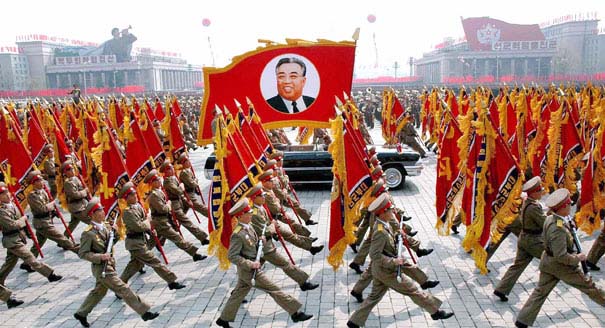
Tensions have eased slightly on the Korean Peninsula, but after years of playing international powers against each other to enhance its own position, Pyongyang may not be receptive to calls from the United States, China, and South Korea to return to six party talks.
North Korea’s behavior over the past two years—or one could say sixty years—indicates that it has every incentive to use the threat of instability and conflict to enhance its diplomatic maneuverability, gain resources, and reinforce its leadership succession. South Korea, China, the United States, Russia, and Japan have been frustrated in their efforts to denuclearize and stabilize the peninsula. Now it appears some new progress might be made—although it may prove only temporary—because the fundamental incentives for the North to make trouble do not yet appear to have changed.
Between the three big Korean events of 2010—the sinking of the corvette Cheonan in March, and the November revelation of a new uranium enrichment facility and shelling of Yeonpyeong Island—China’s calculation of the risks on the peninsula seems to have changed. With the initial incident, China prevented UN Security Council action against North Korea, evidently continuing to judge that pressurizing Pyongyang is more dangerous for stability than what the North was doing to get attention. This was of a piece of China’s policy for most of the past two years to resist doing anything that might promote instability in North Korea.
With the disclosure of the uranium facility and the breach of the armistice in shelling the island, however, China’s reaction shows evidence of change. In a phone call with U.S. President Barack Obama, Chinese President Hu Jintao used stronger language than before to show concern about the situation. Hu sent his diplomatic troubleshooter, Dai Bingguo, to both Seoul and Pyongyang with a new call for talks and presumably a warning to Kim Jong Il to back off.
In the aftermath of the killing of four South Koreans on Yeonpyeong Island, Obama placed a call to Hu and reportedly left a tough message that North Korea’s missile and nuclear programs are endangering America’s
security with implications for U.S. countermeasures. He offered to send his top China team members, Deputy Secretary of State James Steinberg and NSC Senior Director Jeffrey Bader, to Beijing to discuss a way forward on the peninsula as well as plans for Hu’s January 19 state visit to Washington.
The impending state visit may have added focus to China’s thinking about North Korea. It is hard to imagine Hu would want to spend the bulk of his last major visit to the United States trying to defend the indefensible behavior of Pyongyang.
The U.S. team reportedly left a double edged message with Beijing during its December visit: America will not sit idly by as North Korea ratchets up tensions and Washington is prepared to talk with the North if the terms can be made right, including an end to armed provocations. The Obama administration wisely coordinated closely with its South Korean ally to insure that the twin messages of toughness and talks would not undercut Seoul’s enhanced cooperation with the United States since Lee Myung-bak became president.
For its part Seoul demonstrated that the era of passively reacting to the North’s provocations is over by conducting a series of large scale military exercises and issuing strong statements, despite fiery threats from Pyongyang to retaliate. In that event, North Korea backed down from its threats against the South, leaving observers to infer that China came up with some package of disincentives and incentives to adjust Kim Jong Il’s behavior, even if only temporarily.
Having established his hard line credentials, President Lee yesterday publicly declared willingness to get back to the six party talks, based on the reported conditions that the North cease its nuclear activities, re-admit inspectors from the International Atomic Energy Agency (IAEA), and cease violations of the Korean War armistice.
It remains to be seen whether Pyongyang will accept these conditions and devise a domestic rationale for backing down from its belligerent stance in the coming weeks. China remains well motivated to keep pressure on Kim through the January 19 state visit and for a decent interval thereafter. But more important will be evidence that China has permanently adjusted its previous calculus about instability on the peninsula and decided that the principal threat comes from its North Korean ally and not from pressures to constrain him.
But years of North Korea playing powers against each other to enhance its own position will not be abandoned lightly. And China’s risk averse, conservative leadership style could allow it to drift back into passivity with regard to the peninsula. Priority needs to be placed on using this momentary window of reduced tension to establish a basis for more permanent stability. This should be a key objective in the most private talks between Obama and Hu in January.

Distinguished Fellow, Asia Program
Paal previously served as vice chairman of JPMorgan Chase International and as unofficial U.S. representative to Taiwan as director of the American Institute in Taiwan.
Recent Work
Douglas H. Paal


Douglas H. Paal, Tong Zhao, Chen Qi, …
Carnegie does not take institutional positions on public policy issues; the views represented herein are those of the author(s) and do not necessarily reflect the views of Carnegie, its staff, or its trustees.
A leak of Russian gas price data helps establish that China is paying Russia far less than Central Asian countries and Gazprom’s former European customers.

Sergey Vakulenko

China’s political future will be shaped between now and next October. As the Communist Party enters its intense “campaign season” to prepare for a major political transition in 2027, reading Beijing's actions and responses may become more difficult as domestic politics weigh on its behavior more than usual.

Damien Ma

Japan’s long-term security policy is driven by concerns about China, and there is little appetite for (or interest in) pursuing a confrontation with Moscow.

James D.J. Brown

Russia is testing the waters of NATO’s mutual defense clause. What do strikes in Romanian territorial waters mean for the alliance’s posture toward Moscow?

Dimitar Bechev

China has showcased its engineering prowess with small modular reactor demonstration projects. But turning these technological achievements into commercial success will be a greater challenge.
Tong Zhao