• Research
  • Emissary
  • About
  • Experts
Carnegie Global logoCarnegie lettermark logo
DemocracyIran
  • Donate
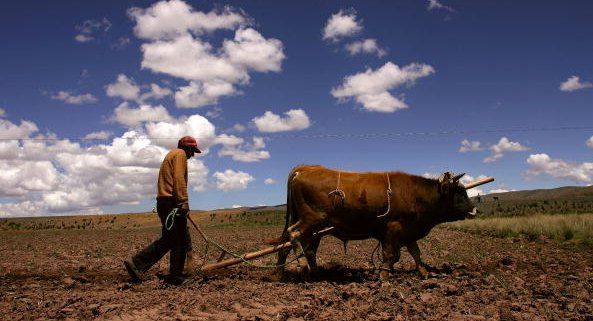
Challenges to Democracy Promotion: The Case of Bolivia

Source: Getty

Paper

Challenges to Democracy Promotion: The Case of Bolivia

Bolivia has embarked on a democratic experiment which differs in significant ways from Western liberal models. While this poses a challenge to traditional democracy promotion efforts, external actors still have the potential to play a constructive role in the country.

Link Copied
By Jonas Wolff
Published on Mar 30, 2011

Additional Links

Full Text
Program mobile hero image

Program

Democracy, Conflict, and Governance

The Democracy, Conflict, and Governance Program is a leading source of independent policy research, writing, and outreach on global democracy, conflict, and governance. It analyzes and seeks to improve international efforts to reduce democratic backsliding, mitigate conflict and violence, overcome political polarization, promote gender equality, and advance pro-democratic uses of new technologies.

Learn More

Bolivia offers a critical, but atypical, case for international democracy promotion. The ongoing political transformation initiated by President Evo Morales constitutes one of the few experiences in the world of a serious effort to build a democracy different from the existing Western liberal models. And this presents a significant challenge to democracy promotion efforts. 

The United States and Germany—two main external actors in Bolivia—have been compelled to react to this challenge. In the case of the United States, an initial phase of wait-and-see escalated in 2008 into an open crisis in bilateral relations. Attempts to adjust U.S. democracy assistance to the evolving political situation in Bolivia failed and by the end of 2009 USAID’s democracy program was closed on demand of the Bolivian government. The German government, on the other hand, explicitly supported the political changes initiated by Morales. Bilateral relations between Bolivia and Germany are characterized by general continuity and in terms of democracy assistance Germany largely adjusted its programs to the preferences of the new Bolivian government.
International democracy promoters often argue that they are not trying to impose a specific form of democracy from the outside and Bolivia has tested the U.S. and German commitments to this ideal. In fact, both governments have not stuck dogmatically to their particular models or concepts of democracy, but have shown some surprising flexibility. Negative reactions to Morales, especially in the case of the United States, were actually triggered by disagreements on specific policy issues.
 
Bolivia’s ongoing democratic transformation suggests that the best external democracy promoters can do under such circumstances is to support processes of inclusive dialogue and constructive conflict resolution. Instead of focusing on a specific political end point—a given model of democracy—support should push for a peaceful and inclusive political process of constructing a model appropriate for Bolivia. This, however, requires external actors to unequivocally respect Bolivia’s claim to democratic self-determination that encompasses not just the shape of its political system but also its foreign, economic, and narcotics policies.

About the Author

Jonas Wolff

Wolff is an executive board member and the head of the Intrastate Conflict research department at the Peace Research Institute Frankfurt.

Jonas Wolff

Wolff is an executive board member and the head of the Intrastate Conflict research department at the Peace Research Institute Frankfurt.

Jonas Wolff

Additional Links

Full Text
North AmericaSouth AmericaPolitical ReformDemocracy

Carnegie does not take institutional positions on public policy issues; the views represented herein are those of the author(s) and do not necessarily reflect the views of Carnegie, its staff, or its trustees.
More Work from Carnegie Endowment for International Peace

  • Woman flashing a peace sign in front of a blue sign
    Commentary
    Emissary
    Morocco’s Historic Gender Equality Moment That Won’t Move the Needle

    Fatima El Mansouri is the country’s first female prime minister. She’s also a privileged insider in a largely ceremonial position.

      • Sarah Yerkes

      Sarah Yerkes

  • Commentary
    Strategic Europe
    How Le Pen Benefits from the Stalemate in Ukraine

    The domestic impacts of how long it is taking to end the war in Ukraine have pushed the French electorate to the political extremes and compromised the country’s diplomatic capacity.

      • Rym Momtaz

      Rym Momtaz

  • Commentary
    Carnegie Politika
    How the Kremlin Achieved Its Latest Implausible Election Results

    Sergei Kiriyenko used Russia’s parliamentary vote to further hone his strategy of corporate mobilization that is designed to maximize votes for United Russia.  

      Andrey Pertsev

  • Ukraine Poland Zelensky Tusk Enlargement EU
    Commentary
    Strategic Europe
    The Uncomfortable Truth About EU Enlargement

    Before the next wave of EU enlargement takes place, the union needs to grapple with thorny questions of how power is distributed among its members.


      • Ditte Brasso Sørensen

      Emil Sondaj Hansen, Ditte Brasso Sørensen

  • Commentary
    Carnegie Politika
    Will the Far Right Change Europe’s Russia Policy?

    The European far right might fail to steer EU policy in the direction Russia wants, but they will create enough chaos inside Europe to benefit the Kremlin.

      Dimitar Bechev

Get more news and analysis from
Carnegie Endowment for International Peace
Carnegie global logo, stacked
1779 Massachusetts Avenue NWWashington, DC, 20036-2103Phone: 202 483 7600
  • Research
  • Emissary
  • About
  • Experts
  • Donate
  • Programs
  • Events
  • Blogs
  • Podcasts
  • Contact
  • Annual Reports
  • Careers
  • Privacy
  • For Media
  • Government Resources
Get more news and analysis from
Carnegie Endowment for International Peace
© 2026 Carnegie Endowment for International Peace. All rights reserved.