

Q&A
Sami Moubayed
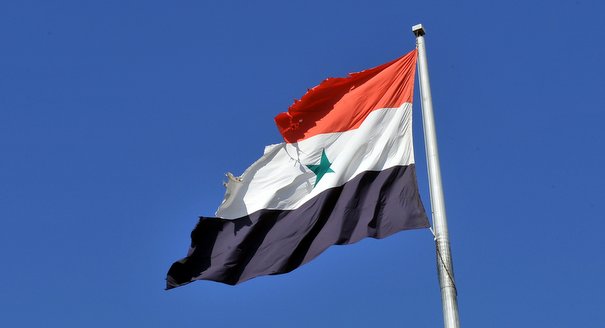
Source: Getty
The role of Vice-President Farouk al-Sharaa may hold the key to the smoothest transition to a post-Assad Syria.
Syria’s two highest-profile defectors have been hitting the diplomatic circuit. They’re lobbying foreign capitals in search of support for their candidacy as potential leaders of any future Syrian transitional government, whether arising peacefully through a political process or violently through a long war between the Free Syrian Army and government forces.
Manaf Tlass, a former brigade commander in the Syrian Republican Guard, arrived unannounced in Jordan on September 8 for private talks. According to political insiders, he met with senior Jordanian officials and possibly King Abdullah II as well, though anonymous official sources say he sat down with other Syrian military defectors in the kingdom. Meanwhile, former Prime Minister Riyad Hijab, who defected in early August, met the French foreign minister, Laurent Fabius, and the diplomatic adviser to the French president, Paul Jean-Ortiz, in Paris on September 19.
But attention is focused on the wrong people. The senior Syrian official to keep an eye on is the current Syrian vice president, Farouk al-Sharaa, who has rarely been seen in public since July 2011. Some opposition figures privately view him as a suitable “president-in-waiting” based on Article 92 of Syria’s revised constitution, which provides for the vice president to assume power for an interim period of sixty days should the presidency fall vacant. Others argue that at seventy-three, Sharaa is too old, autocratic, and aloof to serve as interim president. But among opposition political circles inside Syria, he is emerging as a likely compromise candidate to head, or at least be part of, any transitional government.Farouk al-Sharaa’s position cannot be analyzed properly without tracing the development of his career since the outbreak of the Syrian uprising in March 2011. From the outset he made it known to his close associates, as well as friends in the opposition, that he was opposed to the use of violence, especially after the Syrian Army was called into action in his native Deraa in April.
Far from retiring into obscurity or defecting, Sharaa made a statement on August 29 that sounded wholly unlike someone preparing himself for political obscurity. He welcomed the mission of the new joint United Nations and Arab League envoy Lakhdar Brahimi, and emphasized that violence needs to stop on all sides. He gave a nod to Kofi Annan’s six-point plan and the recommendations of the Geneva Conference on June 30, without going into detail. That plan, it must be remembered, called for a transitional governing body composed of members of the current Syrian government and opposition figures. This body would run the country in parallel with Assad for one year, during which time it would prepare for free parliamentary and presidential elections to be held in 2013. Sharaa made an open gesture toward Iran by emphasizing the need to include it in any effort to resolve the Syrian crisis, and welcomed the formation of a “Contact Group” composed of Egypt, Turkey, Saudi Arabia, and Iran.
Former Visiting Scholar, Carnegie Middle East Center
Moubayed, a political analyst and historian, focuses his research on Syria, Lebanon, Iraq, and the Arab-Israeli conflict.
Recent Work
Sami Moubayed
Sami Moubayed
Carnegie does not take institutional positions on public policy issues; the views represented herein are those of the author(s) and do not necessarily reflect the views of Carnegie, its staff, or its trustees.

Putin’s conservative staffing policies and search for ever greater control have cemented parliament’s transformation into a bureaucratic appendage of the executive branch.

Andrey Pertsev
Reconciliation councils are emerging throughout the country to mediate in intracommunal disputes, many from the war years.
Natacha Danon
The civil war in Syria may have ended, but the country continues to serve as a source for the trafficking of illegal substances into and via Jordanian territory.

Armenak Tokmajyan, Laith Qerbaa

Ex-president Gurbanguly Berdimuhamedov remains interested in politics, but his son Serdar, Turkmenistan’s current president, is becoming increasingly independent and willing to break with his father’s legacy. If their covert rivalry goes too far, both risk losing power.

Galiya Ibragimova

A notable degree of participative democracy has firmly arrived in Europe. But to have more far-reaching impact, democratic deliberation needs to move into a radically new phase.

Richard Youngs