

Commentary
Uri Dadush
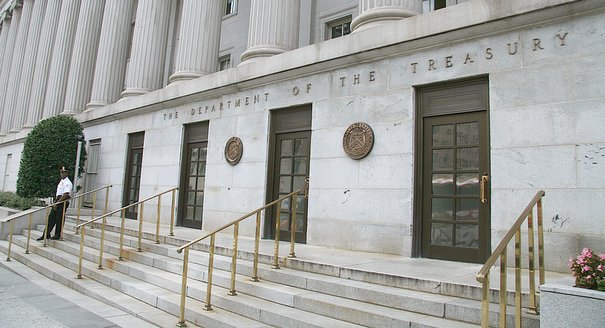
Source: Getty
Even a cursory review of the hard facts confronting recent Treasury secretaries suggests that the current nominee may end up facing the most difficult job of any of them.
The position of Treasury secretary of the United States is not for the fainthearted. Yet even a cursory review of the hard facts confronting Treasury secretaries in the postwar period suggests that the current nominee—current White House Chief of Staff Jacob J. Lew—may end up facing the most difficult job of any of them.
Assuming Jack Lew’s appointment is confirmed by Congress, he will build on the legacy of Hank Paulson and Tim Geithner. Both had to confront the outbreak of a massive financial crisis and find ways to rescue some of the world’s largest financial institutions and automobile companies. Mr. Lew will have to continue the work of cleaning up and, by all accounts, Mr. Lew is eminently well qualified for the task. He has served as director of the Office of Management and Budget and as chief of staff to the president during periods of exceptional economic turmoil.
But Mr. Lew would begin his first day on the job with the highest deficit and debt as a share of GDP of any postwar Treasury secretary as well as the highest rate of unemployment (see table). The budget deficit, at 7 percent of GDP, easily exceeds the next highest—4.8 percent—that awaited Secretary James Baker III under President Reagan in 1985.The net debt-to-GDP ratio at 67.7 percent exceeds the next-highest ratio of 61.6 percent that confronted Secretary George Humphrey under the Eisenhower administration. And the unemployment rate, at 7.8 percent, is the highest any incoming secretary has faced since World War II. Cutting deficits is hard to do and so is reducing unemployment, but doing both together is tougher still.Yet even these statistics do not convey the full scope of the economic challenges confronting the new secretary. In fact, the toughest budget nut to crack does not feature in this backward-looking table, and that is the projected rise in healthcare spending.
The United States already spends 18 percent of GDP on healthcare, including public and private spending—about 8 percentage points higher than the OECD average. The IMF projects that U.S. government healthcare spending could rise from roughly 10 percent of GDP to 16 percent by 2030.
The Treasury secretary is also the top official responsible for international economic policy, at a time where the global economy’s impact on the United States is increasing just as it is everywhere else.
Mr. Lew will inherit the chronic European sovereign debt crisis, a very dangerous morass that, if not carefully managed, could turn into a Lehman-sized debacle. He will also have to contend with continuing trade frictions, multilateral trade negotiations in tatters, and Bretton Woods institutions—namely the IMF and World Bank—that confront a crisis of legitimacy.
But the domestic political obstacles the new Treasury secretary will confront as he tries to come up with workable solutions to U.S. economic woes will be even more daunting.
He will have to negotiate with a House of Representatives (which takes the lead on budget and economic issues) dominated by the opposition, for one. That is not unusual for an incoming secretary—ten times out of 24 since 1952, the opposing party has controlled the House (and it controlled the Senate for eight of those ten times as well). And Republican control of the House dates to the Clinton era.
However, in this case, the opposition contains a very large faction—the Tea Party—that is adamantly opposed to nearly all the current administration’s policies. The looming battles over the debt ceiling and budget will provide a baptism of fire for the new secretary.
The politics of budget reform is made much tougher by the fact that, over the last thirty years, the United States has seen soaring income inequality, now the highest among advanced countries. A huge share of the fruits of growth has accrued to the very top of the income distribution.
The political and policy implications of the skewing of the income distribution are significant. It has become very difficult to tackle the deficit by raising a broad-based tax or by reducing social spending—beginning with healthcare and social security—on which the nation’s struggling middle class increasingly relies.
To be sure, Mr. Lew will confront these unprecedented challenges with the U.S. economy on path toward a slow recovery, not in a tailspin, as was the case for his predecessor. Nor will inflation have to feature high on his list of concerns, as was the case for Treasury secretaries in the 1970s and 1980s. And the U.S. economy still exhibits a dynamism, flexibility, and innovative capacity that are the envy of developing and advanced countries alike.
It will require more than just remarkable talent and determination to grapple successfully with one of the world’s toughest jobs. The next Treasury secretary will also need plenty of luck.

Former Senior Associate, International Economics Program
Dadush was a senior associate at the Carnegie Endowment for International Peace. He focuses on trends in the global economy and is currently tracking developments in the eurozone crisis.
Recent Work
Uri Dadush
Uri Dadush
Carnegie does not take institutional positions on public policy issues; the views represented herein are those of the author(s) and do not necessarily reflect the views of Carnegie, its staff, or its trustees.
Amid celebrations of bilateral ties was a deeper focus on stability in the Middle East.

Amr Hamzawy

Canadian Prime Minister Mark Carney has twice inspired praise for standing up to U.S. President Donald Trump: at the 2026 World Economic Forum in Davos and on Canada-U.S. trade negotiations. Is Carney showing a third way better than the EU has in dealing with the Trump administration?

Rym Momtaz, ed.

Middle Eastern states should welcome an accelerated U.S. disengagement from their region.

Michael Young

Xi, Putin, and other regional leaders are back-slapping in Bishkek, but the SCO has yet to answer the most serious questions about continental Asia's economic future.

Evan A. Feigenbaum

In an interview, former ambassador Charles Freeman assesses the Trump administration’s war against Iran.
Michael Young