

Research
- +10
Rosa Balfour, Frances Z. Brown, Yasmine Farouk, …
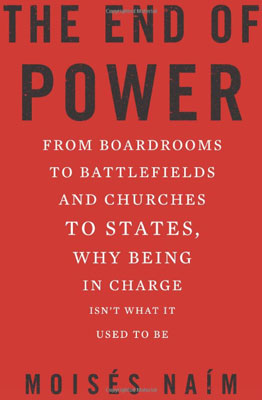
Those in power today are more constrained in what they can do with it and more at risk of losing it than ever before.
Source: Basic Books
We know that power is shifting: From West to East and North to South, from presidential palaces to public squares, from once formidable corporate behemoths to nimble startups and, slowly but surely, from men to women. But power is not merely shifting and dispersing. It is also decaying. Those in power today are more constrained in what they can do with it and more at risk of losing it than ever before. In The End of Power, award-winning columnist and former Foreign Policy editor Moisés Naím illuminates the struggle between once-dominant megaplayers and the new micropowers challenging them in every field of human endeavor. Drawing on provocative, original research, Naím shows how the antiestablishment drive of micropowers can topple tyrants, dislodge monopolies, and open remarkable new opportunities, but it can also lead to chaos and paralysis. Naím deftly covers the seismic changes underway in business, religion, education, within families, and in all matters of war and peace. Accessible and captivating, Naím offers a revolutionary look at the inevitable end of power—and how it will change your world.“The End of Power will change the way you read the news, the way you think about politics, and the way you look at the world.”
—William Jefferson Clinton
“In my own experience as president of Brazil I observed first hand many of the trends that Naím identifies in this book, but he describes them in a way that is as original as it is delightful to read. All those who have power—or want it—should read this book.”
—Fernando Henrique Cardoso
“Moisés Naím’s extraordinary new book will be of great interest to all those in leadership positions—business executives, politicians, military officers, social activists and even religious leaders. Readers will gain a new understanding of why power has become easier to acquire and harder to exercise. The End of Power will spark intense and important debate worldwide.”
—George Soros
“After you read The End of Power you will see the world through different eyes. Moisés Naím provides a compelling and original perspective on the surprising new ways power is acquired, used, and lost—and how these changes affect our daily lives.”
—Arianna Huffington
“Moisés Naím is one of the most trenchant observers of the global scene. In The End of Power, he offers a fascinating new perspective on why the powerful face more challenges than ever. Probing into the shifting nature of power across a broad range of human endeavors, from business to politics to the military, Naím makes eye-opening connections between phenomena not usually linked, and forces us to re-think both how our world has changed and how we need to respond.”
—Francis Fukuyama
“This fascinating book...should provoke a debate about how to govern the world when more and more people are in charge.”
—Foreign Affairs
“Naím produces a fascinating account of the way states, corporations and traditional interest groups are finding it harder to defend their redoubts… (He) makes his case with eloquence.”
—Financial Times

Distinguished Fellow
Moisés Naím is a distinguished fellow at the Carnegie Endowment for International Peace, a best-selling author, and an internationally syndicated columnist.
Recent Work



Rosa Balfour, Frances Z. Brown, Yasmine Farouk, …
Moisés Naím
Carnegie does not take institutional positions on public policy issues; the views represented herein are those of the author(s) and do not necessarily reflect the views of Carnegie, its staff, or its trustees.
A leak of Russian gas price data helps establish that China is paying Russia far less than Central Asian countries and Gazprom’s former European customers.

Sergey Vakulenko

China’s political future will be shaped between now and next October. As the Communist Party enters its intense “campaign season” to prepare for a major political transition in 2027, reading Beijing's actions and responses may become more difficult as domestic politics weigh on its behavior more than usual.

Damien Ma

Rubio’s recent visit brought welcome attention, but more capital requires governance changes that may be a hard sell for regional governments.

Jennifer B. Murtazashvili

Japan’s long-term security policy is driven by concerns about China, and there is little appetite for (or interest in) pursuing a confrontation with Moscow.

James D.J. Brown

China has showcased its engineering prowess with small modular reactor demonstration projects. But turning these technological achievements into commercial success will be a greater challenge.

Tong Zhao