• Research
  • Emissary
  • About
  • Experts
Carnegie Global logoCarnegie lettermark logo
Democracy
  • Donate
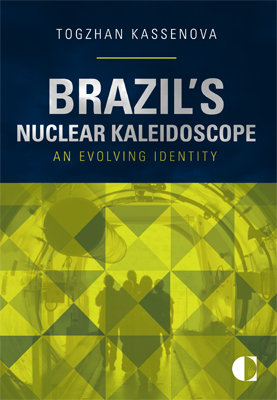
Brazil’s Nuclear Kaleidoscope: An Evolving Identity
Report

Brazil’s Nuclear Kaleidoscope: An Evolving Identity

Remarkably little attention is paid to Brazilian voices on the country’s nuclear policy. Brazilians paint a picture of an emerging power seeking nuclear independence and searching for its role in the global order.

Link Copied
By Togzhan Kassenova
Published on Mar 12, 2014

Additional Links

BriefFull Textportuguês
Program mobile hero image

Program

Nuclear Policy

The Nuclear Policy Program aims to reduce the risk of nuclear war. Our experts diagnose acute risks stemming from technical and geopolitical developments, generate pragmatic solutions, and use our global network to advance risk-reduction policies. Our work covers deterrence, disarmament, arms control, nonproliferation, and nuclear energy.

Learn More

There is no shortage of international commentary on Brazil’s nuclear policy, especially its advanced nuclear fuel cycle and nuclear submarine program. But remarkably little attention is paid to Brazilian voices on these issues. Brazilians paint a picture of an emerging power seeking nuclear independence and searching for its role in the global order.

The State of Brazil’s Nuclear Program

  • Currently, Brazil mines and mills uranium, produces nuclear fuel, operates two nuclear power plants, and is building a third.
  • The Brazilian navy is key in the nuclear field. It developed uranium conversion and enrichment technology, and, since the late 1970s, it has been working on developing a nuclear-powered submarine.
  • Rivalry with Argentina was among the drivers of Brazil’s nuclear program. Today, the two countries work together in a bilateral nuclear safeguards regime to verify their nuclear activities are peaceful.
  • Brazil has not signed an IAEA Additional Protocol on nuclear safeguards, primarily because it is reluctant to accept additional nonproliferation obligations as long as nuclear-weapon states do not achieve meaningful progress toward nuclear disarmament.
  • Demonstrating Brasília’s potential to be an active player in global nuclear politics, Brazil and Turkey persuaded Iran to sign a 2010 joint declaration outlining a nuclear fuel swap, though the deal fell through.

Understanding Brazil’s Policy Drivers

Negative past experiences help explain why Brazil seeks nuclear independence. Brazil struggled to obtain nuclear technology from abroad, prompting Brasília to develop domestic capabilities.

The nuclear industry is more ambitious than the government. Industry representatives believe Brazil could industrialize uranium conversion and enrichment if the government prioritizes the effort.

The nuclear submarine program has multiple drivers. Brazil is pursuing development of a nuclear submarine to protect its coast and offshore natural resources and to stave off potential enemies approaching from the sea. Naval bureaucratic interests also drive the program. But above all, this quest reflects Brazil’s desire to bolster its international standing.

Brazil will forcefully defend its interests on the global nuclear scene. Brasília’s assertive nuclear policy is indicative of the tensions intensifying within the global nuclear order between nuclear-armed and non-nuclear-weapon states, between disarmament and nonproliferation, and between nonproliferation and peaceful uses of nuclear energy. Brasília, for the foreseeable future, will criticize the unfairness of the nuclear order while attempting to carve out a role for itself in it.

For Brazil, the nuclear order is a microcosm of the world order. Brazil sees the global nuclear order and the world order more broadly as unfair and antiquated.

Read Full Text
Togzhan Kassenova
Nonresident Fellow, Nuclear Policy Program
Togzhan Kassenova
North AmericaUnited StatesSouth AmericaNuclear PolicyArms ControlNuclear Energy

Carnegie does not take institutional positions on public policy issues; the views represented herein are those of the author(s) and do not necessarily reflect the views of Carnegie, its staff, or its trustees.

More Work from Carnegie Endowment for International Peace

  • Aerial shot of protesters marching down a street
    Commentary
    Emissary
    Federal Accountability and the Power of the States in a Changing America

    What happens next can lessen the damage or compound it.

      Mariano-Florentino (Tino) Cuéllar

  • Stack of Iranian newspapers featuring Trump's face and a burning American flag
    Commentary
    Emissary
    The United States Should Apply the Arab Spring’s Lessons to Its Iran Response

    The uprisings showed that foreign military intervention rarely produced democratic breakthroughs.

      • Sarah Yerkes

      Amr Hamzawy, Sarah Yerkes

  • Three men shaking hands at once
    Commentary
    Emissary
    Trump Wants “Peace Through Construction.” There’s One Place It Could Actually Work.

    An Armenia-Azerbaijan settlement may be the only realistic test case for making glossy promises a reality.

      • Garo Paylan

      Garo Paylan

  • Commentary
    Strategic Europe
    Taking the Pulse: Is It Time for Europe to Reengage With Belarus?

    In return for a trade deal and the release of political prisoners, the United States has lifted sanctions on Belarus, breaking the previous Western policy consensus. Should Europeans follow suit, using their leverage to extract concessions from Lukashenko, or continue to isolate a key Kremlin ally?

      Thomas de Waal, ed.

  • A New Era of Nuclear-Powered Submarines Is Making Waves in Nuclear-Weapon-Free Zones
    Research
    A New Era of Nuclear-Powered Submarines Is Making Waves in Nuclear-Weapon-Free Zones

    As states without nuclear weapons develop nuclear-powered submarines, can NWFZ regimes adapt to manage new technical, legal, procedural, and normative challenges?

      Jamie Kwong, ed., Toby Dalton, ed., Celia McDowall, ed.

Get more news and analysis from
Carnegie Endowment for International Peace
Carnegie global logo, stacked
1779 Massachusetts Avenue NWWashington, DC, 20036-2103Phone: 202 483 7600Fax: 202 483 1840
  • Research
  • Emissary
  • About
  • Experts
  • Donate
  • Programs
  • Events
  • Blogs
  • Podcasts
  • Contact
  • Annual Reports
  • Careers
  • Privacy
  • For Media
  • Government Resources
Get more news and analysis from
Carnegie Endowment for International Peace
© 2026 Carnegie Endowment for International Peace. All rights reserved.